
Tanker trucks may move Kentucky nerve agent waste that can’t be disposed of on site
Clarification: An earlier headline wasn’t specific about the portion of the nerve agent destruction and disposal process that didn’t meet safety specifications.
The hazardous waste from deadly nerve agents could be transported from Madison County by tanker trucks to complete destruction because a $4 billion disposal operation doesn’t have the technology to do so safely.
This is a “Plan B,” according to Craig Williams, a member of the Chemical Demilitarization Citizens’ Advisory Commission and co-chair of the Chemical Destruction Community Advisory Board, both of which are connected to the Blue Grass Army Depot’s chemical weapons operation and recommended transporting the waste elsewhere.
The Blue Grass Chemical Agent-Destruction Pilot Plant near Fayette County is where the U.S. Army nerve agents, including sarin and VX, are being destroyed. Originally, the plan was to destroy the weapons with two main steps: neutralize the nerve agents being stockpiled first, then properly destroy the resulting chemical waste — hydrolysate. Step one has been successful, but not step two.
“The secondary treatment process that was intended to be used did not perform up to safety standards during its initial operational period,” Williams said.
Blue Grass planned to use for destruction a process known as supercritical water oxidization. It would subject the hydrolysate to very high temperatures and pressure, which would break it down into carbon dioxide, water and salts, according to the plant’s website.
That water oxidization process isn’t yet “capable of routinely supporting chemical weapons disposal,” according to the formal recommendation letter from the citizens’ advisory commission.
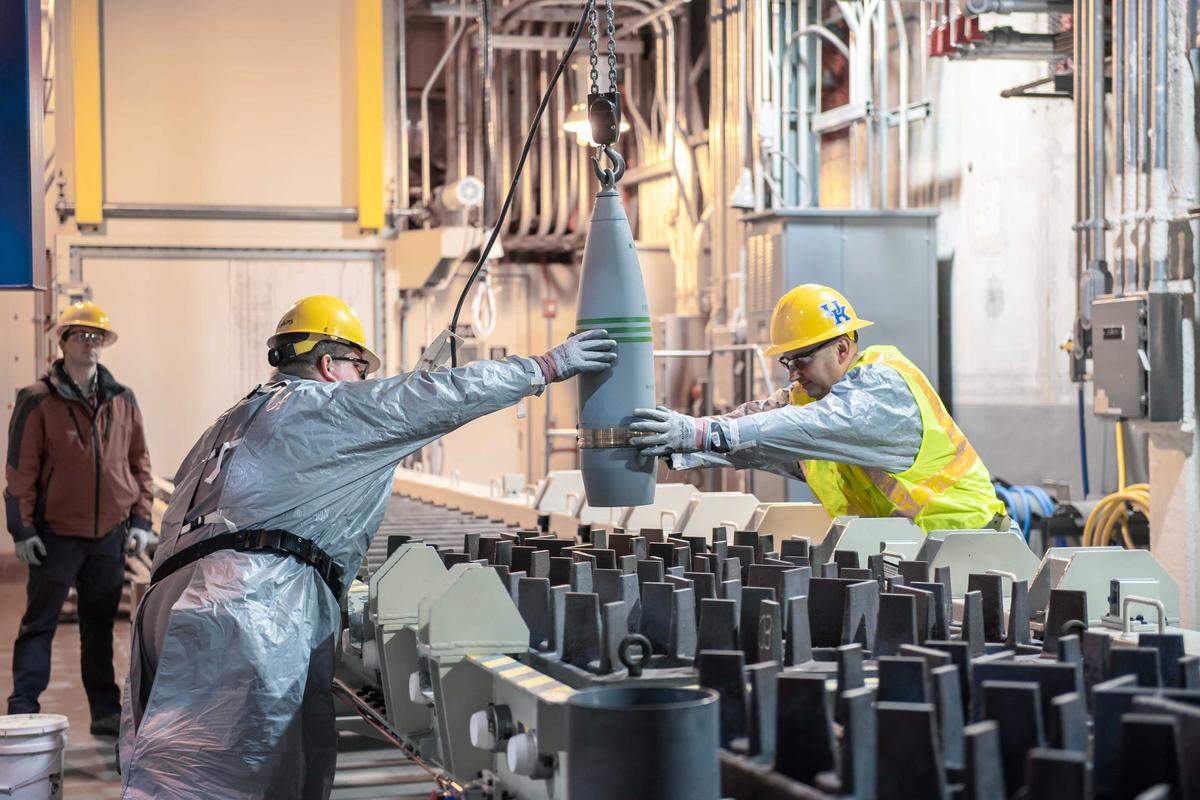
If the Defense Department approves the transport recommendation, the hydrolysate will be taken to a location that hasn’t yet been determined for proper destruction in step two. The neutralization process would remain at the Blue Grass plant.
The recommendation was made “with great reluctance” because the commission always wanted to keep as much waste on site as possible, Williams said.
“We’ve always tried to make treating as much material on site as possible a priority,” he said. “We recognized the dynamic and knew what we had to do,” he added.
Williams said there already was an off-site transportation backup plan, so the destruction timeline would likely stay intact with completion by 2023.
“There was a plan B, basically, and that’s now going to be engaged,” he said. “So, there is no anticipated impact on the destruction schedule.”
Plan B would be faster than the alternative, according to the citizens’ advisory commission. Waiting for the waste disposal technology to be made safer would cause “unacceptable” delays to the destruction process, according to the recommendation letter.
The supercritical water oxidization process (known as SCWO) will continue to be worked on and developed, according to the recommendation letter, in the hopes it will eventually become fully functional.
The plant isn’t ready to transport the chemical waste yet, Williams said. The waste has to reach a certain neutralization level before it can be moved.
How safe will it be to truck chemical waste on interstates?
The idea of a deadly nerve agent being carried over U.S. interstates may be scary to some, but Williams said that the hydrolysate waste is not the same as the initial chemical compound. The neutralization process breaks down the chemical bonds that combined to make the lethal agents, which are odorless and tasteless and affect the nervous system if inhaled or absorbed through the skin.
“It doesn’t make it benign,” he said. “You don’t want to put it on your breakfast cereal. But it’s not anything like what you started with.”
The change would only affect the disposal of nerve agent weapons. It wouldn’t impact the plant’s destruction of mustard agent weapons, which is ongoing, according to plant spokeswoman Sarah Marco. The plant announced Wednesday that it had destroyed half of its total mustard agent stockpile.
The trucking option also is likely to have minimal impact on employment at the plant, Williams said. As of the end of July, the plant had employed 1,350 people and paid out over $1 billion in payroll, according to the plant’s website. But the destruction of waste “was not the major component of the overall project as far as employment numbers go,” Williams said. Most of the current employees were either working on neutralization or destroying mustard agents.
In total, the plant has destroyed about 14 percent of its total chemical weapons stockpile. It originally held 523.4 tons of chemical weapons. That quantity has decreased to 450.3 tons.
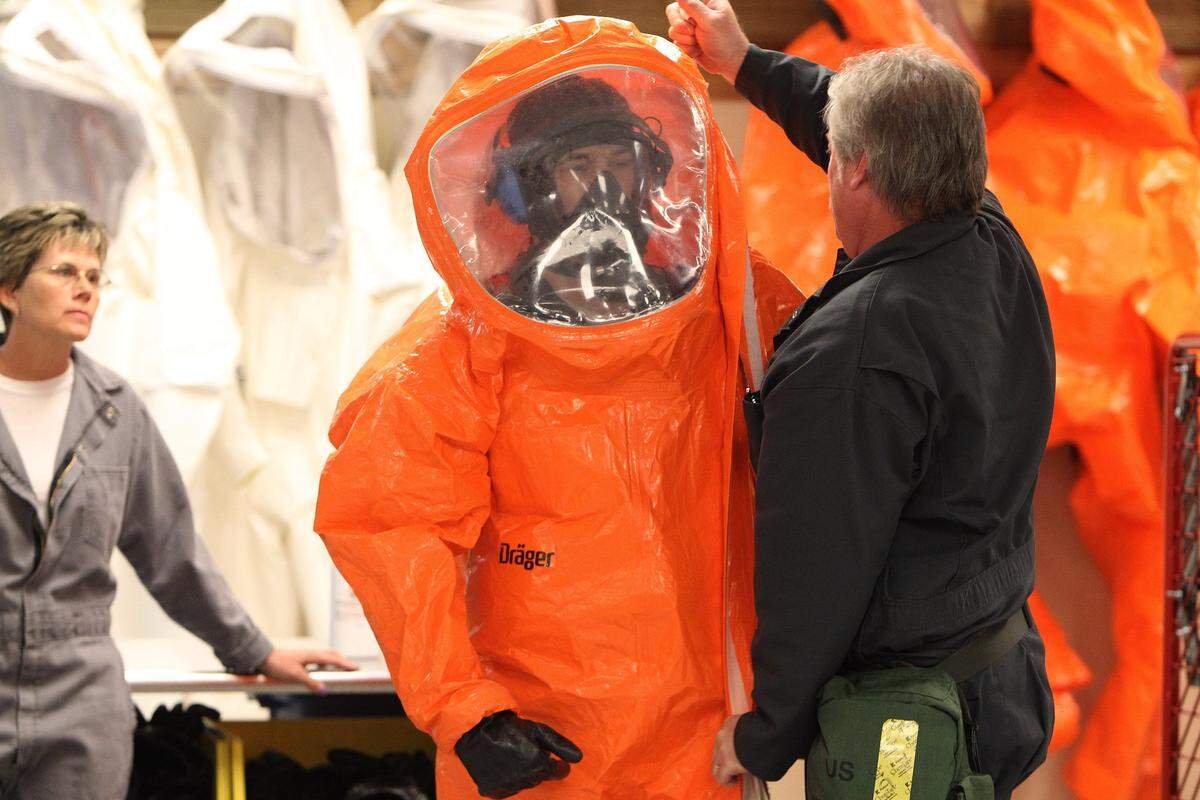
The processes for weapon destruction which the plant is carrying out are alternatives to incineration, which was the U.S. Army’s original plan, Williams said. Trucking waste elsewhere to complete destruction is still safer than burning it, Williams said.
Incinerating the weapons would rely on a combustion process that would burn the chemical weapons and then release the byproducts into the air through smokestacks, Williams said. Incineration leaves the potential for disastrous outcomes, Williams said.
“Even when it works right, you’re still emitting toxic material constantly into the atmosphere,” he said. “When it works wrong, there’s a possibility, and, in fact, there have been instances, where chemical agent has escaped out of the stack.”
The need to destroy the chemical weapons stockpiled at the Blue Grass Army Depot stemmed from the Chemical Weapons Convention, a treaty to ban the production, storage and use of chemical weapons. It went into effect in 1997.
Williams has been working as an advocate for safe chemical weapon destruction for more than 20 years, he said. He worked with the U.S. Army and government officials, convincing the Army to change its plan from incinerating Kentucky’s weapons to neutralizing them.
Editor’s Note: The headline on the story was updated on Sept. 5.
This story was originally published September 4, 2020 at 3:53 PM.