New life is coming to historic Richmond buildings, but locals want more downtown options
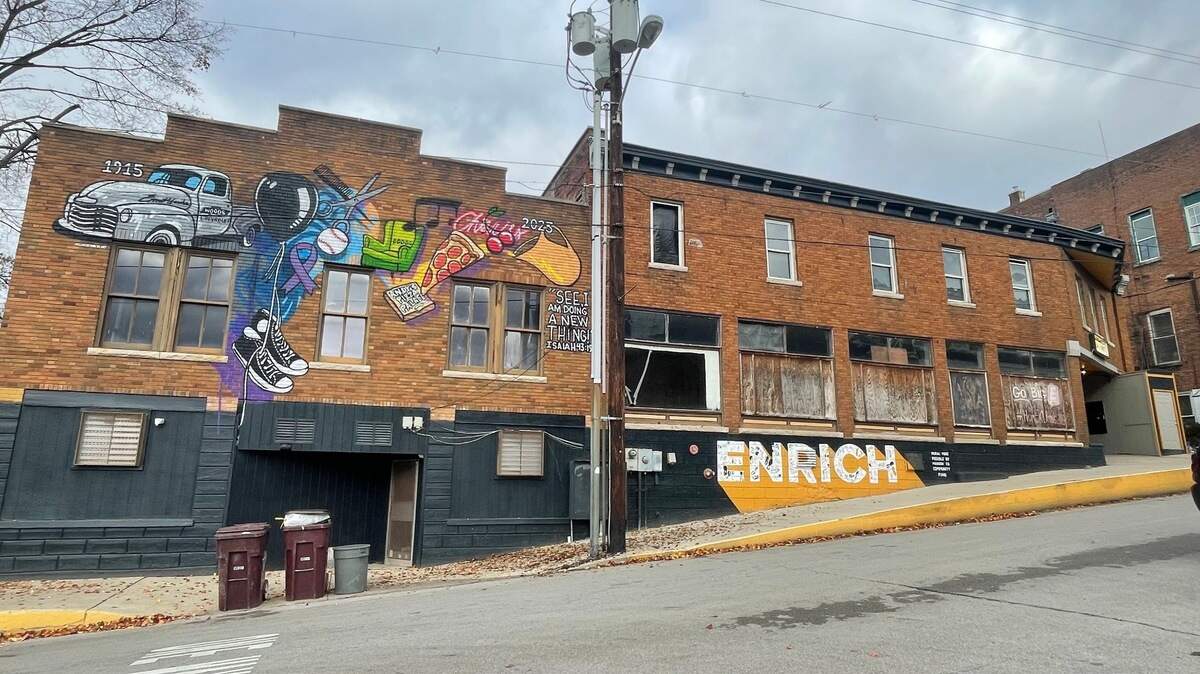
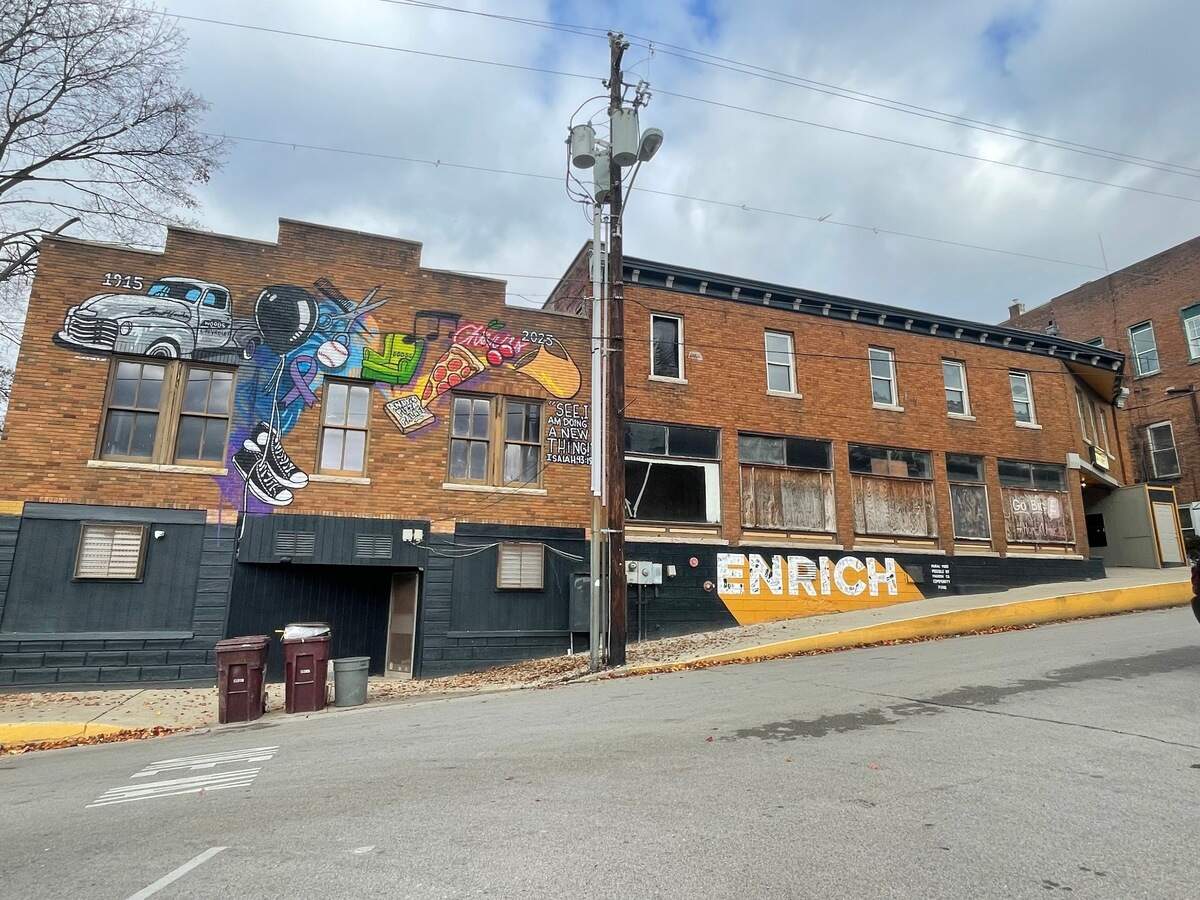
Richmond’s 110 South Second Street has been home to many businesses since its completed construction in 1915: a Chevrolet dealership, Wood’s Motor Company, Andy’s Pizza Palace and a slew of night clubs, including the Cherry Pit.
It’s been awhile since the building has been home to anything, but it’s getting new life once again, as Dan and India Kirstein plan to open Enrich Corporation, a non-profit organization that will run a venue space, restaurant and sober living apartments. The company will offer second-chance employment to those recovering from addiction.
The couple publicly announced the creation of the organization in 2019.
Through their personal and professional experience — Dan Kirstein a city police sergeant and India Kirstein previously a therapeutic foster care regional director — and their faith, the couple felt called to do something to fill a need in Madison County. Their approach is three-pronged: structured housing, employment and community.
After sharing the idea, Enrich raised enough money to buy the Second Street property, thanks in part to $100,000 in matching grants from the city of Richmond.
The Kirsteins wanted to implement their own pancake breakfast restaurant concept, but are instead in the process of partnering up with a well-known second chance employer out of Lexington to “bring a new, exciting, and meaningful dining experience to their space.”
“We were very excited about the restaurant concept our team brought to the table, but are even more excited for the opportunity at hand. Running a restaurant is very challenging, especially a new start up — and especially downtown,” Dan Kirstein said. “The opportunity at hand would put the most qualified individuals possible in a position to succeed in more ways than one.
While people expressed concerns about the business’ location downtown — specifically parking — the couple always wanted to be downtown for two reasons: accessibility and culture.
Transportation is a huge barrier for recovery and employment, so removing that is huge, India Kirstein said.
“But we want to be a part of the culture. We want to be ingrained in downtown, in the Richmond culture,” India Kirstein said. “We wanted to be embraced by this city. I am not saying you can’t do that on the bypass or in the Richmond Center, but I just think it is less part of the small town of Richmond which is what we wanted. The identity and purpose of our mission is Richmond.”
Renovating historic downtown buildings is a hurdle
The work to open Enrich will still take awhile, according to the Kirsteins. The building was dilapidated; it was full of clutter, 45 construction bins of garbage and rundown space.
The cost to renovate is probably the biggest deterrent from people occupying historic spaces, Richmond City Manager Rob Minerich said.
Down the street from what will become Enrich, the historic Glyndon Hotel could also get new life, depending on the results of an undergoing feasibility study. The Richmond City Commission approved a two-phase, $45,000 study for the property, hiring Louisville-based company Weyland Group earlier this year. Results from the study are expected to be presented in February 2024. The Glyndon opened in 1889 and closed shortly after 2008.
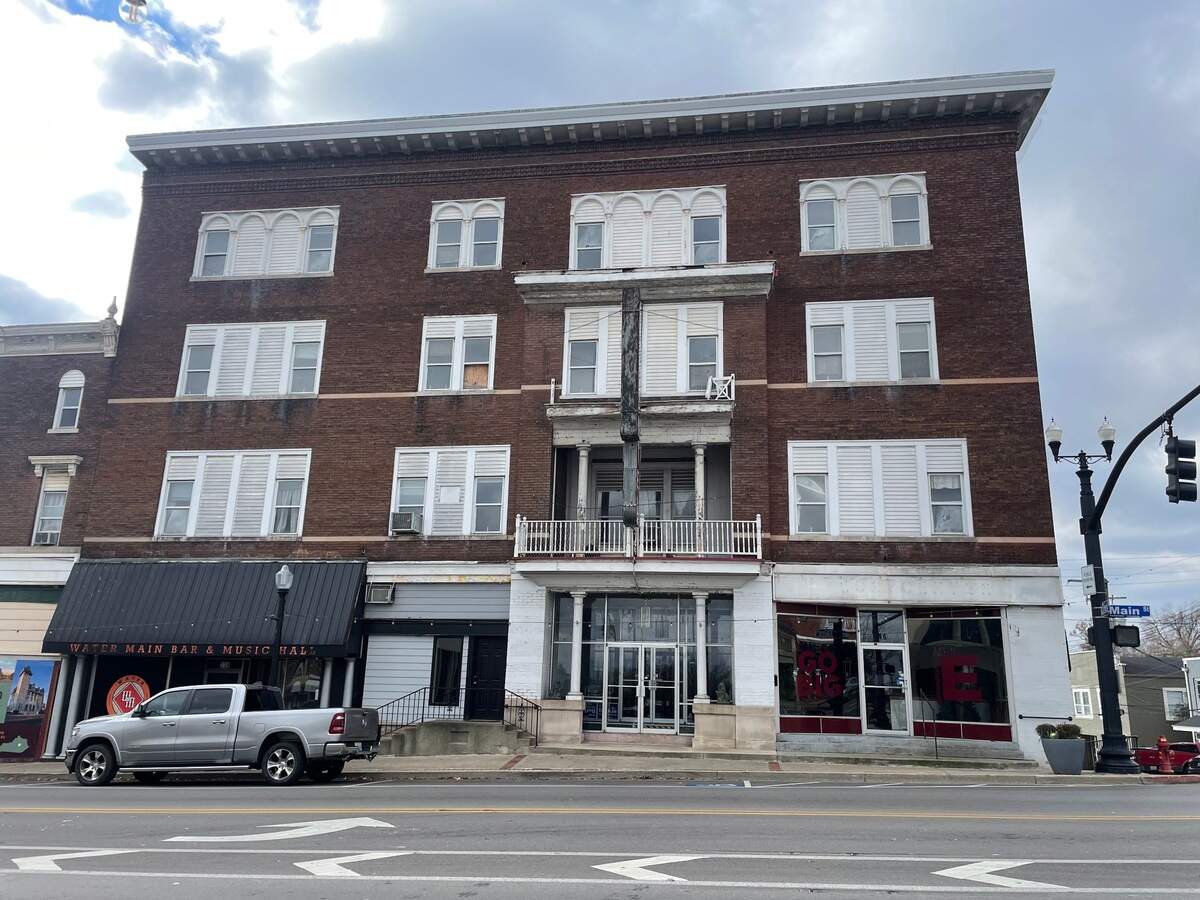
City officials and the building’s owners, Rodney Davis and Bryan Kirby, discussed how to update the building prior to the COVID-19 pandemic. The owners had ideas to include a boutique hotel with 35 rooms for guests, rooftop bar, and lobby. But the plans were halted, and prices to complete renovations have now increased by millions of dollars due to inflation, according to Minerich.
“Our job (is) to facilitate everything we can to make that project happen but it is going to come down to private sector to renovate and operate it,” Minerich said.
These two buildings are some of many that sit empty in Richmond’s historic downtown – which residents say they want remedied by local government.
About 32% of 77 people surveyed by the Herald-Leader said their highest priority for Richmond was recruiting small businesses into downtown. Fewer than 10% said they were interested in recruiting large businesses in the same survey.
Despite this, city officials are narrowly focused on strengthening the industry component in the city limits.
“We have positioned Richmond to be very business-friendly when it comes to large industries, and we are excited about that,” Minerich told the Herald-Leader.
Since the start of Mayor Robert Blythe’s tenure, 700 new jobs have been created as a result of industry recruitment including Buc-ees, Asahi Forge, Menards, and Framebridge, according to Minerich.
Recent movement on a 1,400-acre tract of farm land in Madison County has brought with it rumors of a major economic development taking place there, but nothing has been confirmed about what could fill that space.
“In the process of getting that land ready, people think you’ve got a prospect ready to land there, but it doesn’t really work that way,” Richmond Economic Development Director David Stipes said. “Because to get the prospects to look at you first, you have got to have land that is ready.”
While the farmland is preemptively zoned for industry and deemed “shovel-ready,” the city is sitting on a downtown landscape that has empty and historic buildings waiting to be used.
Survey: residents ‘negatively perceive’ downtown
Both previous and current residents feel Richmond’s downtown has potential for growth and success, according to Tyler Johnson, Richmond’s former community development director.
His wife owned a downtown boutique for seven years, which the couple lived above for four, and he worked next door at Richmond City Hall – giving him a “triple viewpoint” into the matter.
“My thought is downtown is very important and could attract a lot of new visitors and business if they feel like some of the spaces were improved upon,” Johnson said. “...The ultimate goal is you want to attract people to come who don’t have an agenda for the day. People who are visiting want to pop in and out of stores and go to restaurants.”
The city hired Missouri-based consulting company Downtown Strategies, who conducted an analysis around September 2021 and determined a major finding in the report was the number of vacancies within the downtown area.
Results from their study showed 47% of 748 respondents did not feel downtown was “headed in the right direction.” In an analysis of the survey, it was revealed that 23 businesses — 10 restaurants and 13 retails spaces — had closed their doors since 2016.
When respondents were asked what they thought was great about downtown Richmond, many answered “nothing” or “not much,” but mentioned downtown had potential.
Some described the downtown area as dismal, colorless, lifeless, dreary, vacant, boring and dried up. Respondents said downtown lacked business diversification, building maintenance and parking. The five improvements ranked in the survey as being most important were a retail and restaurant mix, safety, parking, entertainment offerings and walkability.
In November 2021, the city voted to enact a downtown tax increment financing district, which establishes a baseline tax assessment for occupational taxes within the area. Once the area’s tax increment financing designation is activated, any revenue above the established baseline will be recorded and set aside for improvement in the development area.
Various residential and commercial properties are located in that tax increment district, with an estimated 150 structures within the boundaries. The downtown tax increment district account currently has about $138,000, according to Minerich.
“We have made tremendous progress – not necessarily on downtown business space – but on abandoned homes that have become dilapidated and lived in by the homeless and are dangerous to the community, in fighting them to a point where we put a lien on the property and selling the master commission and someone buys it and puts a new house on it,” Minerich said.
The most prominent vacant space within the tax increment financing district boundaries includes the main floor of the Elks Building, the Family Dog building, the old Manhattan Club and the historic Glyndon Hotel.
According to the results of the Downtown Strategies survey, seven properties evaluated downtown showed an annual economic impact loss of $4.3 million.
“The days of sprawling malls, big box stores, and corporate restaurant/retail driving the market is over – small, local businesses located in experience-heavy downtown districts are popping up across America as we return to the pre-1990s model of business and downtown residential living,” the analysis — presented to the Richmond commission — said.
Could a vacancy tax be the solution?
In an effort to remedy downtown building vacancies, residents have called on city officials to look for solutions like a vacancy tax.
A vacancy tax is designed to charge a specific tax for property owners whose properties are unused or underused, and thus create a financial penalty for letting properties sit empty.
Such measures have been implemented with success in Hazard, or Perry County, where 50% of downtown properties have seen improvement in some way, according to Bailey Richards, the Hazard downtown coordinator.
In the last five years, 55 business have opened in Hazard’s downtown. In those five years, 14% have closed for one reason or another, Richards said. On average nationally, 18% of downtown businesses close in the first year and 50% close in the first five years, according to Richards.
But Minerich hesitated when asked about imposing a vacancy tax, saying he didn’t think it would be something the city is interested in “at this time.”
Minerich deferred the decision to the city’s five-seat commission and said, “it is not for me to say what they want to do, it is for me to set the table. If they wanted to do it they would have to do it.”
Minerich said the city wouldn’t consider declaring eminent domain on any of the privately-owned properties, which would give the government power to take the property with payment.
Minerich urged residents to bear in mind the successful businesses already downtown that include mostly restaurants, a music store, a couple men’s and women’s clothing boutiques and a jewelry store. Recently it was announced a local pizzeria, Apollo, will partner with Blue Stallion Brewing for a new brewery connecting to the old Copper Still building. It will feature Holler Burgers and House of Que BBQ.
In 2023, Richmond has approved approximately 400 new business licenses and has another 50 in the works, according to Minerich. In the downtown limits, the city has worked to replace streetlights and repair sidewalks.
Other big projects are in the works, including a 280-acre sports complex slated to be open in Spring 2026. Four new housing developments are also under construction which will include over 1600 single family homes, 235 duplexes and 1,110 apartment units.