
Nerve-agent rocket motors can still be stored safely at Blue Grass Army Depot, analysis says
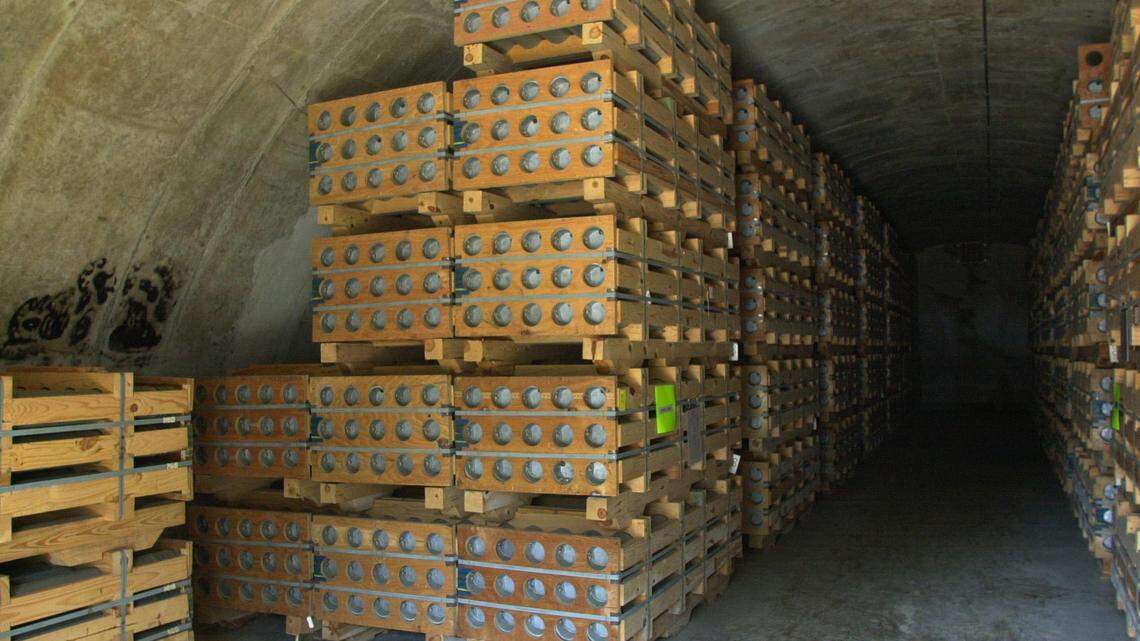
RICHMOND — Nerve-agent rocket motors can continue to be safely stored at Blue Grass Army Depot in Madison County, a government analysis found.
If the analysis had found that the rockets were no longer able to be safely stored, "it would have been a major setback to the objective" of their destruction, said Craig Williams, chemical weapons project director for the Kentucky Environmental Foundation.
"We would have been having to grope for some immediate emergency reaction to the findings," he said.
The results of the analysis conducted in 2014 and this year were shared Wednesday at a quarterly meeting to discuss issues related to destruction of the chemical weapons stored at the depot.
Last year, the propellant sections of 42 nerve-agent rockets were separated from the warheads, and 23 of those motor sections were shipped to a testing facility in New Jersey. The other 19 motor sections remain at the depot for future testing. (The warhead is the part that contains deadly chemical agent.)
The samples tested were classified as being in the best possible category, meaning they are safe to handle, store and/or transport, said John Trosper, quality assurance specialist for Blue Grass Chemical Activity, the part of the depot responsible for the safe storage of the weapons.
The analysis also determined that there is no concern for the 52-year-old propellant sections to ignite on their own.
A decision has not been made on where those propellant sections will be destroyed. They might be destroyed at the plant built for weapons disposal in Madison County or they might be destroyed elsewhere on the depot property or somewhere outside Kentucky.
The warheads with chemical agent will be destroyed at the plant, which is 96 percent complete.
This story was originally published June 17, 2015 at 4:30 PM with the headline "Nerve-agent rocket motors can still be stored safely at Blue Grass Army Depot, analysis says."