Matt Bevin pardoned a KY man who rioted in prison. He was there for killing his son.
A Lexington man serving a 20-year sentence for killing his infant son before Gov. Matt Bevin freed him had a role in an infamous 2009 riot and costly fire at a state prison while he was behind bars.
Kurt Robert Smith, now 35, was 17 in 2001 when he was charged with murdering his 6-week-old son, Blake.
Smith initially lied about how his son got hurt, claiming he had dropped Blake accidentally and that he landed on his head, but later admitted during tearful testimony that he hurt the baby.
Smith said he got frustrated because Blake, who’d had surgery to correct a problem digesting formula, had been fussy, refused to eat and couldn’t be quieted.
Smith told jurors he “lost it” and shook the baby, sending his head “flopping back and forth.”
“I shook him and let him go. He went head first into the floor ... I picked him up ... I rocked him and he quit crying faster than I thought he would,” Smith said, according to a Herald-Leader story from the trial in January 2002. “I laid him back in the bassinet, and I went back to sleep.”
Smith’s step-mother called 911 a few hours later when she saw the baby was in distress, and staffers at the hospital at the University of Kentucky called police because they suspected child abuse, according to a court record.
The baby’s mother, also a teenager, and other relatives decided three days later to take him off life support.
An autopsy showed Blake had suffered blunt trauma to the head and “serious bruising throughout his body,” according to a state court decision.
A medical examiner testified that the baby had been shaken violently and received blows to the head that caused a skull fracture and severe swelling of his brain, calling into question Smith’s account of the injury.
Smith’s own attorney called the crime “morally reprehensible.”
Circuit Judge Gary Payne sentenced Smith to life in prison in March 2002, shortly after he turned 18. The newspaper reported that the sentence meant he’d be eligible for parole in 20 years.
“It’s going to be up to you and the parole board how much you’re going to serve,” Payne said at the time.
Except it wasn’t, as it turned out.
Bevin issued an order Dec. 6 commuting Smith’s sentence to time served, meaning he could be released immediately, and also pardoned him of the crime. Smith had spent more of his life behind bars than free.
“I am confident that he will become a productive member of society and encourage him to use his life experience to educate and help others,’ Bevin said in the order.
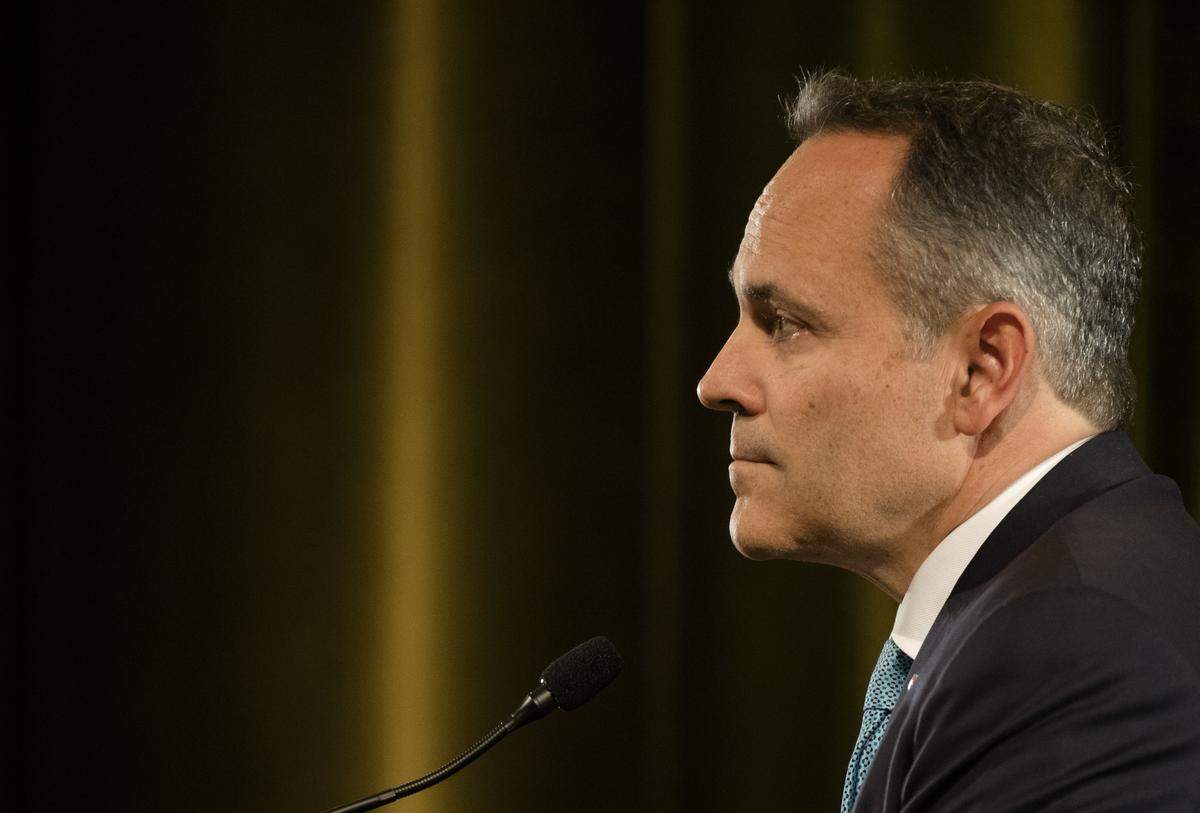
Bevin, a Republican, said in the order that Smith had been “duly punished for his criminal actions” that happened more than 18 years ago.
But that wasn’t Smith’s only crime. Part of his experience behind bars included taking part in a riot at Northpoint Training Center near Danville in 2009.
Inmates set fires that destroyed six buildings and damaged others. Several inmates and correctional officers were injured in the melee. It reportedly cost more than $18 million to rebuild the prison.
An investigation by the state Department of Corrections concluded that inmates were mad over a lockdown and restrictions imposed after a fight between inmates.
There were also indications that inmates were upset over the food at the prison, but the report from the Department of Corrections said that was not the primary cause of the riot.
Smith was among several inmates charged after the riot. A grand jury indicted Smith in March 2010 on one charge of third-degree assault for allegedly hitting a guard with an object and injuring him, and one count of taking part in the riot.
Both were Class D felonies punishable by up to five years each in prison.
Smith pleaded guilty later that year to both charges as part of a deal for a five-year sentence to be served at the same time as the life sentence in the Fayette County murder conviction.

Smith later filed an appeal on his own, claiming his defense attorney didn’t represent him well.
One reason he gave was that his attorney failed to find out about a recording in which a guard allegedly said he knew it was another inmate who threw the rock that injured him.
Smith said if he’d known about the recording, he would have gone to trial on the assault charge instead of pleading guilty.
However, the Court of Appeals said Smith’s bare-bones claim about the recording didn’t disprove he took part in the riot or threw a rock at the guard.
The court dismissed the appeal.
Attorneys representing Smith in his request for clemency said Bevin’s decision to commute his sentence and pardon him was well-deserved.
Smith has matured in prison and worked hard to improve, getting his high-school equivalency degree and a career-readiness certificate and completing a job-coaching class, according to a clemency petition prepared by Amy Robinson Staples, who is with The Exoneration Project, and Timothy G. Arnold, with the Department of Public Advocacy.
Smith has been baptized and has trained more than two dozen dogs as part of a program in which inmates prepare dogs to be adopted, the petition said.
Smith’s advocates said he received an excessive sentence for a crime that, while terrible, was the rash act of a teenager working two jobs to help care for the son he loved.
“Kurt Smith is not a cold-blooded killer; he was an overwhelmed, sleep-deprived teenager who broke during a moment of extreme stress and committed a horrible act — an act for which he is extremely remorseful and for which he has been adequately punished,” Staples and Arnold said in the September petition to Bevin.
The petition said Smith got a longer sentence than other people who committed similar crimes because his attorney didn’t offer a defense at trial, instead relying on a strategy of trying to win sympathy for Smith as a teenager who snapped.
Smith argued in an appeal that his trial attorney failed to consult a mental health expert to consider a possible defense that he acted under extreme emotional disturbance, which could have reduced the homicide from murder to manslaughter.
The attorney knew Smith had shown “disturbing” behavior before Blake’s death, such as angry outbursts and classroom disruptions, likely rooted in his parents’ bitter divorce and the way it affected Smith, according to one court ruing.
The state Court of Appeals ultimately ruled that Smith’s attorney made a conscientious effort to provide the best defense possible “in the face of highly unfavorable facts.”
The U.S. 6th Circuit Court of Appeals reached a different conclusion, saying the decisions Smith’s lawyer made about not consulting a mental-health expert were “based on insufficient investigation.”
Still, that court upheld the ruling that Smith’s representation was not deficient, noting it was required to rule under the presumption that his lawyer’s work was reasonable.
Smith’s clemency petition did not address the charges resulting from the prison disturbance. Staples and Arnold said in a message that while Smith would acknowledge his behavior was a problem in his early years in prison, he ultimately became a model prisoner with nearly nine years of clear conduct when he applied to Bevin for clemency.
“He is exactly the person the clemency and pardon power was created to help, and we are grateful that Governor Bevin considered his case and granted him relief,” Staples and Arnold said in an email. “We are confident that society will not regret that decision.”
This story was originally published December 17, 2019 at 9:08 AM.