From murder to manslaughter: How felony mediation works to reduce backlogged caseload
While the resolution of some recent Fayette County homicide cases has taken years, the new use of mediation in Fayette County has allowed some cases to move much quicker, including the case of a 27-year-old man who has admitted guilt in a deadly shooting that happened just over one year ago.
Danzell Cruse was originally charged with murder, possessing a handgun as a convicted felon and being a persistent felony offender following the shooting of 38-year-old Jocko Green in a parking lot outside of an apartment complex in July 2021.
After Cruse’s defense and prosecutors came together to mediate the case with a retired judge, Cruse pleaded guilty to second-degree manslaughter. He will be sentenced in August.
Felony mediations were only recently introduced and encouraged in Fayette County in April 2021 by Kentucky Supreme Court Judge John Minton, in efforts to reduce a backlog in criminal cases caused by COVID-19. The pandemic significantly slowed down the progress on the courts system.
Since that time, Fayette Commonwealth’s Attorney Lou Anna Red Corn said there have been 25 mediations, 19 of which involved murder charges.
Cruse’s case is one of nine murder cases that have been successfully negotiated and resulted in a guilty plea from the felony mediation process.
How murder charges get reduced through mediation
Oftentimes, reduced charges in deadly incidents are the result of a negotiated plea agreement. Mediation is an informal process in which a neutral third person – a retired judge – called a mediator, facilitates the resolution of a dispute between two or more parties. Any case can be mediated with the exception where one party may pose a risk to other participants, such as domestic violence cases.
Mediations are intended to reduce the volume of cases in circuit court dockets in Kentucky, provide significant savings in court resources, utilize the unique knowledge and experience of retired judges to mediate felony cases, and provide restorative justice to parties involved in felony mediation, according to documentation from the Administrative Office of the Courts.
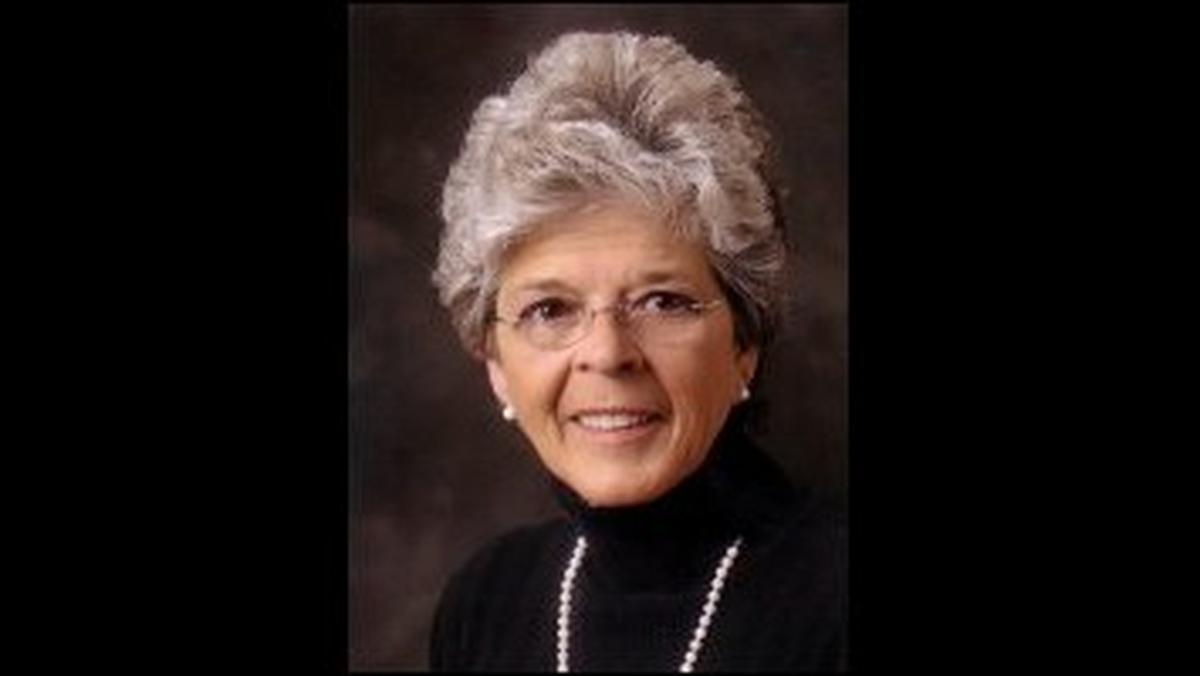
Julia Adams, a retired judge who facilitates mediations, said court “is a very formal process.”
“With COVID it became difficult in addressing the backlog – like rushing through a bus terminal,” Adams said. “Victims and defense felt like they were not getting a good opportunity to be heard, and with mediation, this gives both the victim and defendant that opportunity.”
While mediation has only been utilized in Fayette County for a little over a year, it has been used in other counties for decades.
‘COVID kind of pushed the idea forward’ in Fayette County
Chris Tracy, bluegrass regional manager/assistant general counsel for the Kentucky Department of Public Advocacy, said the mediation process is something he fully supports. He took part in the process for the first time in 2017 in Boyd County, but it was years before Fayette County contemplated doing it.
“I kept saying we should start and mentioned it to prosecutors and judges and some came around to the idea,” he said. “Everyone knows the number of cases we have right now. That is a real thing, the amount of backlog is real and makes it tough for everyone. It was kind of a problem we have found ourselves in, and no one is at fault, other than COVID.
“But, COVID kind of pushed the idea forward.”
He feels there is still a long way to go.
“We are still climbing out of our own way and it took far too long for (mediations) to get started but we are eternally grateful that it has begun,” he said.
Why prosecutors want to mediate some cases
According to Fayette Commonwealth’s Attorney Lou Anna Red Corn, her office frequently finds themselves in a situation where they have to negotiate pleas.
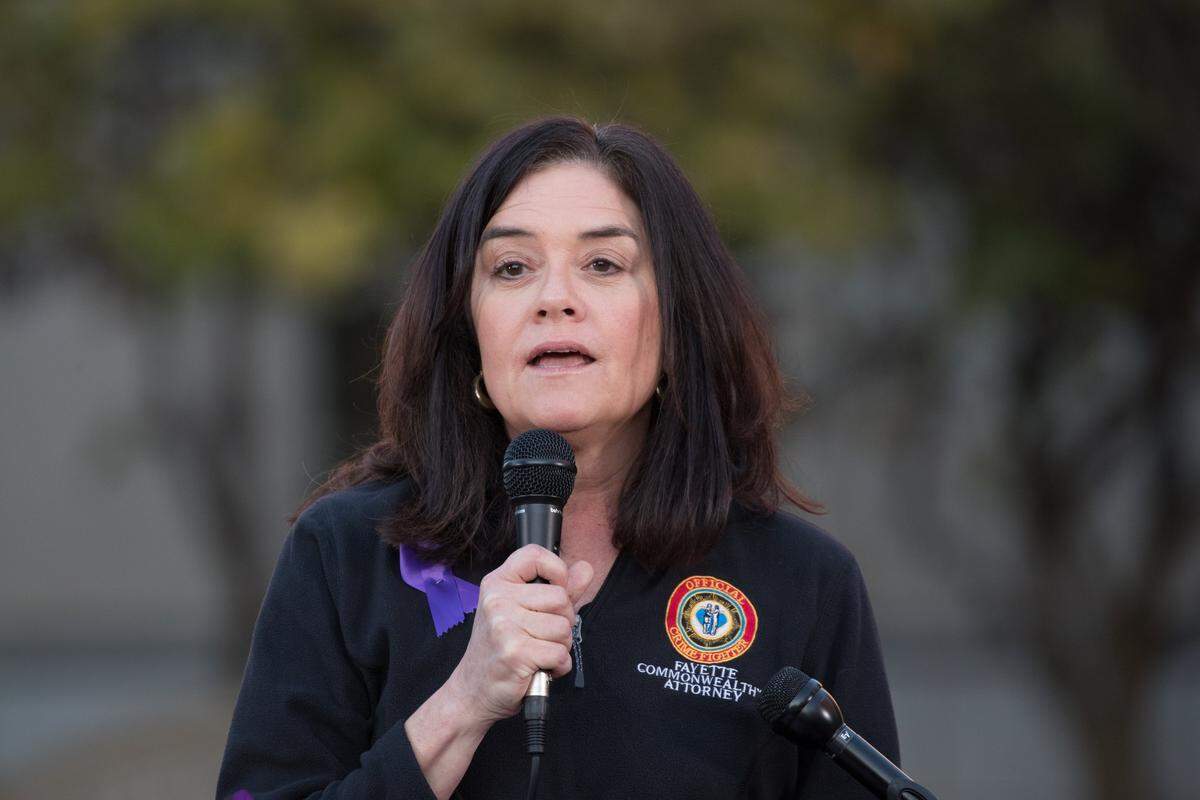
“Our primary goals in resolving cases are offender accountability and justice for the victim,” Red Corn said. “Amendments to criminal charges are sometimes necessary to account for the evidence that the prosecutor can present at trial. The prosecutor must establish proof beyond a reasonable doubt and all twelve jurors must agree to convict a person.
“Any decision to amend an offense in exchange for a guilty plea is based upon the admissibility and strength of the evidence and the prosecutor’s assessment of the likely outcome of the trial. “
When someone is charged with murder, it indicates that police have investigated and charged the individual because they have probable cause to believe they committed the crime. Then the case is turned over to the prosecutor’s office which, in order to convict at a trial, have to prove beyond a reasonable doubt to 12 jurors that that person committed the crime.
Not all cases go to a jury trial. Before that time comes, prosecutors work with defense attorneys and the judge to go through arraignments, preliminary hearings, motion hours, and pre-trial hearings. What happens in those hearings can change the trajectory of a case.
Cases can go years without a trial. Mediation speeds up process
Not only do mediations help reduce the number of cases on Kentucky’s court dockets, but it helps those involved in the case and justice system as well. For the commonwealth’s attorney, the choice to mediate can help manage their caseload and provide a speedier resolution on the case.
It also gives someone charged with a felony the chance to provide their own perspective alongside their lawyer, instead of just having their lawyer speak on their behalf in other court proceedings.
For a defendant, mediation can help expedite the process for access to justice in an informal setting, with an opportunity for a second opinion in a “safe environment,” which can lead to a tailored agreement.
Adams, the retired judge who has handled mediation in Lexington, has worked as a mediator for 14 years since her retirement in 2008. She has helped mediate 478 felony cases in her career and has had a settlement rate of 85%, according to the Court of Justice. Prior to that, she served as a judge for 25 years in Clark and Madison counties,
“We have had people throughout the state in pretrial detention for two or three years without a trial,” Adams said. “That is not only a strain on resources, it isn’t right. It presents troubles to both the prosecutor and the defense, and ultimately we decided to try this process.”
The defense also reaps benefits of a more managed caseload, with an ability to effectuate a more creative and fair agreement for their client.
Tracy said there really is no downside to participating in mediation.
“We go (to mediation), and we might be able to get a favorable solution, one we wouldn’t be able to get before,” Tracy said. “Even if we don’t, we stand to learn a few things and hear from the commonwealth their thoughts on the case.”
He said there are other “intangibles” of mediation. In some instances, a defendant in custody gets a chance to see their family and work through the process alongside them.
“I can have the defendant’s family there so they can see them, and come and get in a hug. It is not the normal fodder of court and gives the parents a chance to be a part of court and help potentially younger clients that are looking at a murder charge,” Tracy said. “It is helpful to have mom and dad there to help talk it out. There is really no downside to be had.”
How victims get a voice in mediation
Red Corn and Adams agreed mediation can also give a better opportunity for the victim’s family to participate in the process and be heard, as opposed to just sitting silently in a courtroom for months, or even years.
“It allows crime victims to be more involved in the process,” Red Corn said. “Victims or their families often go to court and listen but don’t get a chance to speak. In a mediation, if a victim chooses to participate, they have the opportunity to speak to the mediator and I believe that is helpful.
“Sometimes these victims sit for months or years and never get a chance to say anything. It gives some finality if we have a successful mediation with a guilty plea and they have no concern over sitting through a trial and perhaps the defendant receiving a not-guilty verdict.”
Adams said the nature of the court system is very foreign to most individuals and can be hard for victims, their families, and the defendant’s families to sit in court for numerous hearings.
“It can seem as if it never ends, this need to be in court,” she said.
Adams said the mediation process “condenses” what can be a long court process, and it provides certainty to the end of a case. She said those responsible in a felony case also get a chance to express remorse.
According to the Kentucky Supreme Court, mediation is also designed to benefit the taxpayer. Most jail expenses are borne by the local tax base. Felony mediation can help reduce the jail population, which in turn benefits the jailer, decreasing the risk of liability.
While the process can benefit prosecutors, victims and those charged with a crime, mediation efforts don’t always result in a resolution.
“It is not a panacea, and it doesn’t always work. We have had a couple that have not resulted in resolution,” Tracy said. “One may not work out in mediation, but it can work out later. We can get a deal, but maybe it didn’t have an agreement at that time. A lot of times it is the end of the road. Other times it is the beginning of something that works out and gets the job done, which is worth it.”
This story was originally published July 18, 2022 at 1:00 PM.