Jurors questioned outside courtroom as selection goes into 2nd day of ex-LMPD cop’s trial
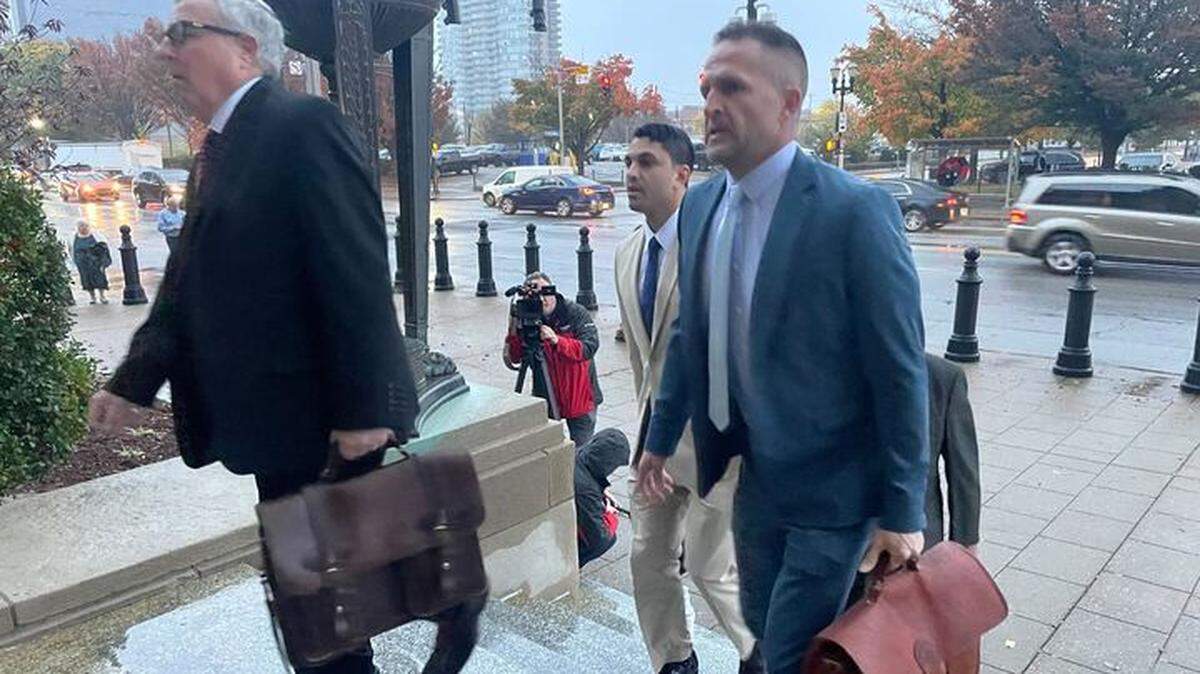
Jury selection for the high-profile trial of an ex-Louisville Metro Police Department detective entered its second day on Tuesday — with most of that process being held behind closed doors.
Brett Hankison, a former LMPD detective who fired his gun into Breonna Taylor’s apartment during the shooting that killed her, is charged with two federal counts of violating the civil rights of Taylor, her boyfriend Kenneth Walker, and her neighbors by using unreasonable and unjustified force.
Hankison was not the officer who shot Taylor, but he became a crucial figure in the investigation. He fired his gun from outside the apartment building into multiple apartments and was charged with wanton endangerment in state court, making him the only officer involved in the incident to face charges at the state level. But he was acquitted at trial.
His federal charges were handed down last year. Federal law makes it a crime for an official to use or abuse authority given to that person by the government to violate someone’s civil rights, which federal prosecutors argue he did.
Taylor’s death at the hands of police in 2020, along with George Floyd’s death in Minnesota that same year, prompted months of racial justice protests across the United States.
Hankison’s federal trial started Monday with jury selection, but that process carried into Tuesday, and it was unclear how much progress the court had made on narrowing dozens of prospective jurors down to 16. U.S. District Judge Rebecca Grady Jennings went on the record just after 9:30 a.m. Monday in her courtroom, but everyone left the courtroom shortly after and didn’t return at any point Monday. Potential jurors, attorneys and the judge were outside the courtroom for much of Tuesday too.
“Jury selection will not be completed today, but is expected to be completed by tomorrow,” Grady Jennings said when she returned to the courtroom Tuesday afternoon.
Court officials confirmed Tuesday that the court still needed to question dozens of potential jurors before a final jury could be selected.
Jurors questioned outside courtroom: here’s why
Monday and Tuesday’s proceedings consisted of the voir dire process, which entails questioning prospective jurors to see if they are qualified to serve in the trial. This process allows the judge and attorneys to narrow their jury pool to 16 people; 12 jurors and four alternates. Questions can look to detect jurors’ potential bias, personal experience, background, opinions, and knowledge of the case.
Typically, all jurors would be seated in the courtroom gallery, have their juror number selected at random, and approach the judge’s bench to answer questions when called. Some of this process happens off the record.
“...But this case is a little bit different,” Grady Jennings said, according to Monday’s court transcripts.
Court transcripts show that on Monday, the only conversation that happened in open court included Grady Jennings sharing case details with the jury pool: the importance of the jury, an overview of the case, who the attorneys are and what is expected of the jurors.
More than half of the 32-page transcript detailing Monday’s proceedings was redacted.
With two written questionnaires filled out by jurors, the judge said the remainder of both Monday and Tuesday’s in-person questioning took place in the court library with only lawyers and the judge present, according to court transcripts.
“Most of what we would need to ask you here today would be answered under the white noise so we are going to do that process slightly different today,” Grady Jennings said.
With increased privacy, Grady Jennings told jurors they were more likely to give honest answers, and there was less likelihood of them exposing other jurors to bias, deteriorating the ability to be fair and impartial.
The court library was reserved Monday and Tuesday from 9 a.m. to 5 p.m., according to the clerk’s calendar. The calendar shows the trial taking anywhere from three to four weeks.
Tuesday morning, Grady Jennings re-read voir dire rules around 1 p.m.
This story was originally published October 31, 2023 at 2:09 PM.