Could the Bevins face charges for allegations of child abandonment? The answer is unclear
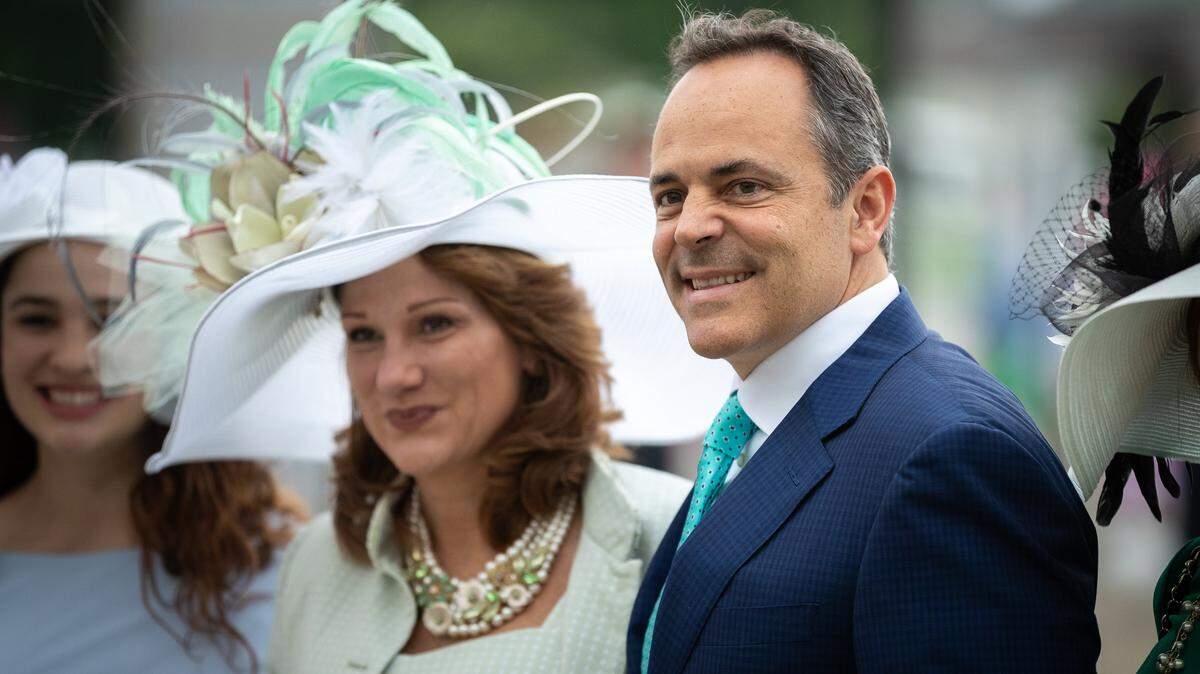
When news broke alleging that the former first family of Kentucky abandoned one of their adopted children at an abusive boarding school in Jamaica, Kentuckians demanded to know what legal ramifications — criminal or otherwise — could be next.
But the answer remains unclear. Lawyers and experts have been hesitant to weigh in on the allegations against former Kentucky Gov. Matt Bevin and his estranged wife, Glenna, and several would talk only off the record.
In early July, a story in the London Times alleged that the Bevins allowed one of their adopted sons, a 17-year-old boy called by the pseudonym “Noah,” to be sent to a Jamaican boarding school, and then didn’t pick him up when the school was raided and shut down by Jamaican authorities over allegations of abuse.
Bevin, a Republican elected in 2015, vowed to reform Kentucky’s foster care and adoption system after the Bevins’ attempt to attempt to adopt in 2012 was rejected by state officials. The couple eventually adopted four children from Ethiopia in addition to their five biological children.
But, according to the London Times story, after Bevin was ousted from the governorship in 2019 by then-Attorney General Andy Beshear, the child identified as Noah was sent to a facility in Florida, and then transferred to Atlantis Leadership Academy on Jamaica’s Treasure Island.
The academy was eventually shut down, and five employees were charged in April with child cruelty and assault, the Times said. They were accused of beating children, placing them in stress positions such as a plank for hours at a time, and forcing them to work out until they vomited.
That same month, the London Times reported, a guardianship hearing was held for Noah. But the Bevins were a no-show, and the child became a ward of Jamaica.
Noah returned to the United States in May, according to a nonprofit foundation working on the case. So far, neither Matt nor Glenna Bevin has commented publicly on the matter.
Public outcry was swift. State Sen. Whitney Westerfield said on X that “heartbreaking” and “disgust” were insufficient to describe the allegations. U.S. Rep. Morgan McGarvey, in a letter to a constituent, called the accusations “horrific.”
But it’s still unclear if the Bevins will, or even could, be held legally liable.
What charges could the Bevins face?
In Kentucky, most cases involving child abuse are known as dependency, neglect and abuse, or DNA, cases. Those cases are intended to ensure a child has a right to be free from abuse and neglect.
State law defines a dependent child as one who is receiving improper care through no intentional act by the parent or caregiver, while a neglected child is defined as receiving inadequate care with intent by the parent or caregiver.
A child is considered abused when the parent or caregiver emotionally or physically abuses the child or allows someone else to abuse the child.
It’s unclear if the allegations in the London Times story fit any of those criteria, especially since none of them happened in Kentucky.
DNA cases are not criminal, and parties are not subject to jail time. Separate, criminal cases are opened when the allegations are serious enough that the parent or caregiver is deemed criminally liable for the child’s abuse.
Another possibility is a charge of abandonment of a minor, a Class D felony in Kentucky. Abandonment applies when a parent or guardian who is legally responsible for a minor intentionally deserts the child somewhere that puts their life or health in danger.
It appears unlikely, at this point, that the Bevins would face criminal charges in Kentucky. Most lawyers and experts declined to weigh in on a specific analysis of the case.
Stephanie French, a spokesperson for the secretary of the Cabinet of Health and Family Services wrote in an email: “This administration works to prevent child abuse and ensure the safety and well-being of all children. The state does not have any involvement in this particular case.”
Dawn Post, an attorney who worked with the abandoned boys at the Jamaican school, shared on social media a post she’d written in mid-May on the American Bar Association’s website about abuse at the school and the wider “troubled teen industry.”
“The behavioral health industry in the United States is massive and preys on parents and state systems that are suffering severe shortages of community-based therapeutic placements as well as adequate mental health providers and treatment strategies,” Post wrote.
Post wrote that federal and state officials were unhelpful while lawyers tried to get the boys resettled after the boarding school closed, and she noted that adoptive parents, “especially those with no interest in fulfilling their responsibilities to their children,” benefit from the troubled teen industry because of gaps and loopholes in many states.
This story was originally published August 14, 2024 at 5:00 AM.