234 people have died in Kentucky jails since 2020. Critics call it a ‘systemic failure’
When Terri Beth Mays was arrested in October 2021 for drug possession and trafficking, she told Whitley County Detention Center staff she had a seizure disorder.
She had been at the jail several times before, with a documented history of seizures that required hospitalization.
But for the last eight days of her life, Mays, 32, did not receive her prescribed medication, according to a lawsuit filed by her mother, Tammy Webb.
Mays’ breath became ragged and harsh. Surveillance footage showed her delirious and falling on the floor. She hit her head on the toilet in her cell before collapsing.
Thirty minutes later, a staff member entered Mays’ cell and found her unresponsive. The employee left the cell, despite having a radio clipped to her side to call for help, according to a lawsuit.
Mays was eventually taken to a hospital, and she died soon after. Her Nov. 4 death was ruled an “accident,” the result of cardiac dysrhythmia due to dehydration, according to death records.
She didn’t live to see her first court hearing.
Just months before Mays’ death the Department of Corrections conducted an inspection of the Whitley County Detention Center that found eight violations. During a subsequent inspection five months later, 21 violations were recorded, including overcrowding, lack of medical training for staff and failure to conduct observation checks, according to inspection records.
Five more people died inside the detention center over the next two years.
Mays’ death was one of hundreds in Kentucky jails in recent years — 234, in all, between 2020 and 2024, a six-month Herald-Leader investigation reveals.
Critics argue the deaths are the result of jails that are ill-equipped to provide health care for inmates who often come into their jails with preexisting health conditions.
Of the 234 people who died, 165 — roughly 7 of 10 — had not been convicted of the crime for which they were being held, according to public records and other data analyzed by the Herald-Leader.
And the deaths have been increasing.
Between 2008 and 2019, the most deaths recorded in a single year in Kentucky jails was 32. That happened in 2015, and again in 2019.
In 2021, that number jumped to 56, and it peaked at 63 in 2022, the Herald-Leader analysis reveals.
By 2024, it had fallen back to 34, though that still marked a slight increase from the pre-2020 years.
The state began tracking local jail deaths in 2008.
Wrongful death lawsuits like the one filed by Mays’ family in September 2023 have cost the state about $5 million since 2020.
Those are among the findings in the analysis of five years of Kentucky Department of Corrections death logs and lawsuits and dozens of autopsy reports and death certificates.
Corrections officials blame the fatal trend on a few factors, including COVID-19, the rise of high-potency drugs, and general lifestyle dangers of many inmates, including unsanitary drug habits, preexisting conditions and transient conditions.
But advocates and researchers say Kentucky has an urgent problem. It has one of the highest incarceration rates in the U.S. and worldwide, with nearly 1 in every 125 residents incarcerated at any given time, according to Prison Policy Initiative, a Northampton, Mass.-based non-profit that advocates for criminal justice reform, and deaths have mounted in recent years.
Paul Croley, Webb’s lawyer, described Mays’ death — and the others in Kentucky — as a “systemic failure.”
“It is systemic not just in the Whitley County Detention Center, but it many places across the state…. Terri Beth Mays was a mother and a daughter who should not be judged on her worst day but treated with basic human dignity.”
Croley represents the family of another person, Aaron Burnette, who died in a Kentucky jail, too. Between Mays and Burnette, nine children were left without a parent.
What Kentucky’s jail numbers show
County and local jails like the ones analyzed by the Herald-Leader are designed to be temporary holding facilities for people charged with crimes as they wait for their cases to go to trial.
Crime suspects often post money to be released ahead of their trial date, but those who can’t afford bail — or are denied it by a judge — wait in jail.
Once someone is convicted of or pleads guilty to a crime, they are usually moved to a state or federal prison to serve their sentence.
As of October 2024, Kentucky had 70 full-service jails that, in addition to housing county prisoners, also housed state prisoners. Kentucky also has four regional jails, and three that do not house state prisoners.
In 2020, those jails released many of their low-level offenders during the initial outbreak of the COVID-19 virus. But a year later, deaths spiked — from 29 in 2020 to 56 in 2021. They increased again a year later, peaking at 63, before decreasing the past two years.
Still, the 2024 number — 34 deaths — was higher than any single year between 2008 and 2020. Jails blamed a few factors, and there was no single, clear answer for the spike.
The jails that have reported the most deaths since 2020 are Jefferson County, with 20; Madison County, with 12; Fayette County, with eight; and Christian County, with seven.
Whitley, Hardin, and Laurel county jails reported six deaths apiece.
Experts say suicides, drug overdoses and the catch-all term “natural causes” make up an alarming trend of a lack of continuity of care and medical training in Kentucky jails.
And the death toll could be even higher if it was measured differently, said Wanda Bertram, communications strategist with the Prison Policy Initiative.
“I would say it’s highly possible that Kentucky jails are under-reporting deaths,... especially if you think of deaths that take place when someone has just left jail,” Bertram said. “People can get bailed out or released to hospitals, and then they die five hours later. That happens frequently.”
According to autopsy records for deaths at those seven jails, 40% were attributed to natural deaths; 31% were deemed accidental; 20% were ruled suicides; one homicide was recorded; and one manner of death was undetermined.
Two death records could not be obtained because arrangements were handled out of state, and one investigation is still pending.
‘Natural’ deaths problematic classification
Bertram said the classification of “natural” jail deaths can be problematic. People booked into jails and prisons often have preexisting health conditions, she said, but if they continued to receive the care they received outside the jail, death would not be the result.
A natural death ruling means a person’s death was caused by a natural process or disease, and not by an external factor.
But take Mays’ death, for example. Although her cause of death was ruled an accident, it came as a result of her preexisting seizure disorder. But, Bertram asked, is that really an accident if she died after not receiving her medicine?
Michele Deitch, professor and director of the Prison and Jail Innovation Lab at the University of Texas said just because a death is labeled natural doesn’t mean it isn’t preventable.
“Treat those causes of death as windows to conditions inside the facility. .... These are human beings that are in the jail under a system being operated in our name,” Deitch said.
The Kentucky Department of Corrections said in a statement they are “committed to ensuring the safety and well-being of all individuals who fall under the department’s oversight,” but noted they aren’t responsible for setting medical standards in local jails, which must report deaths and other “extraordinary” events to the state department.
“The Beshear-Coleman administration believes adequate and accessible healthcare is a basic human right,” said Department of Corrections spokesperson Morgan Hall. “Every life is worth fighting for, and the administration has worked to ensure medical care for those incarcerated helps them heal physically, mentally, and emotionally.”
Former jailer: Inmates receive ‘better access to health care’
Madison County has seen the second-most deaths over the past four years of any jail in Kentucky with 12 — and 13 if you count a woman’s stillborn birth 34 weeks into her pregnancy after she did not receive her prescribed Suboxone inside the Richmond facility, according to a lawsuit she filed against the jail.
Former Madison County Jailer Steve Tussey worked his whole adult life in corrections and served as jailer from 2019 until his retirement in January, two years before his term was set to expire.
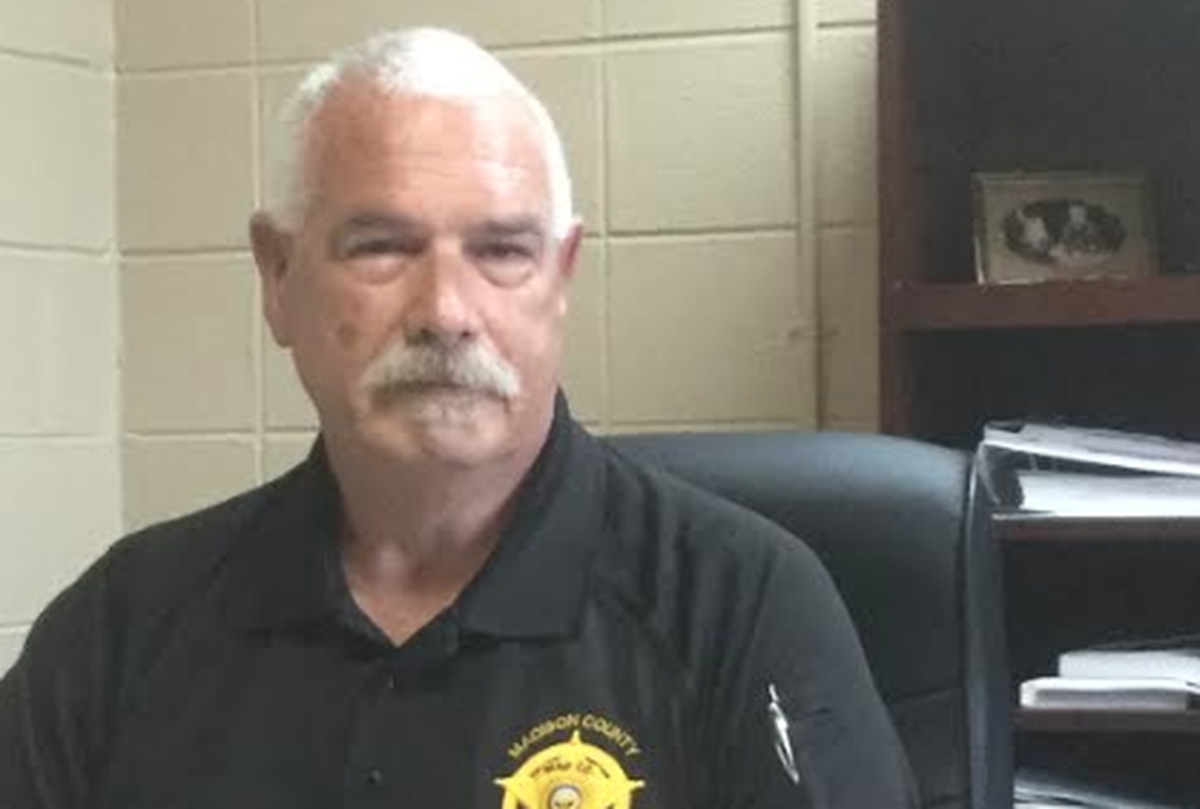
The Richmond jail contracts its medical services — as most do — with Comprehensive Correctional Care based in Benton. The contract provides the jail with 24/7 medical services and nursing staff. Tussey said he thinks the jail’s health care is more than sufficient.
“Inmates here really have better access to health care than the general public,” Tussey said in a December 2024 interview.
John Rees, the former commissioner of the Department of Corrections, agreed. People in jails are under 24-hour supervision, giving them superior health care than they would have outside the facility, he said.
The increase in jail deaths can be attributed to typical jail problems, said Tussey and deputy jailer Tom Jones — namely understaffing and overcrowding.
But Jones suspects there’s another factor at play, too. Older people with chronic health conditions are arriving at their jail, tragically ill, coupled with impending withdrawals, alcoholism and lack of resources on the outside.
“We’re seeing now the aging out of folks caught up in the opioid pandemic, that these people are now getting to the age where the consequences are catching up,” Jones said.
Deitch is skeptical of that explanation.
“It simply doesn’t make sense that there are suddenly all these older people being arrested, brought to the jail, and dying of old age or medical conditions during the short time they are there,” Deitch said.
“To be sure, older people are going to be more vulnerable to, say, COVID and may have more medical issues that the medical team at the jail needs to ensure are being treated. But if they are suddenly dying in larger numbers there due to these medical conditions, it is far more likely that there are problems with the health care delivery system at the jail.”
According to data analysis from 2020 to 2025, the average age of individuals who died in the Madison County Detention Center is 47.
Rees also said the medical problems and lifestyle of people in jail are “not a simplistic issue.”
“That works on an individual’s body,” Rees said. “You may have a 50-year-old that looks like he’s 70 and with medical issues that someone in their 70s would have. It is not something you can look at every case in the same way.”
Jones said when he first started in corrections, the biggest issue was inmates sneaking in a marijuana joint. Over his 24-year career, he’s booked in generations of families who struggle with an addiction to higher potency drugs — primarily heroin.
Jones said his staff cares deeply about the people in their care and is devastated each time something happens to them. The public perception that jailers and deputies are “dispassionate” is not accurate.
What people don’t see is the number of lives they do save with the use of Narcan, reversing overdose, and their robust recovery programming, Jones and Tussey said.
Laurel County Corrections Jailer Jamie Mosley has served in the position for 14 years. He said having an in-custody death is “gut-wrenching” but believes the public perception of what happens in the jails can be skewed.
He said the public doesn’t understand the complexities of what jailers do from an administrative perspective. Jails, he said, are running a hospital, laundromat, restaurant, hotel, mental health facility and rehabilitation center. Each one of those individual entities would typically have its own administrator.
A jailer is responsible for all of those requirements under one roof.
When a person in a jail’s custody dies, Mosley said the emphasis is placed on the last eight hours of a person’s life, which is unfairly narrow.
“There’s so many contributing factors that have taken place before we ever even received some of these people,” Mosley said. “It’s almost like that becomes the microfocus is just those last few hours that’s hard to overcome.
“You know, it’s hard to turn around 20 years of neglect and we try, but the odds that we are up against sometimes are impossible to overcome, and I’m not sure that that always is fully considered.”
Another factor is the jail has no right to refuse inmates, regardless of overcrowding problems, Jones said. If 200 people are arrested in Madison County, 200 people come to the county jail.
“We can’t say we’re full. Matter of fact, we have asked everyone we can ask, ‘What is our maximum capacity?’” Jones said. “’What is the point where I’m legally obligated to say, ‘This building can no longer take one more person?’ and no one will answer this.”
About 89,000 people are booked into Kentucky jails annually, according to the Prison Policy Initiative. That number accounts for individual people booked into jail and does not account for those who cycle through jails multiple times in a year.
State pays out millions for inmate death lawsuits
In addition to the human cost, jail fatalities have a monetary cost to taxpayers: State-affiliated insurance companies have paid at least $5 million in jail death lawsuits since 2020.
The Kentucky Association of Counties is the primary insurance company for local governments across the state, including jails.
Their organization represents more than 1,500 county-elected officials but is not directly publicly funded. Instead, it’s sustained by fees from government memberships.
“Of course, a settlement is not an admission of liability of any party,” said Timothy Sturgill, the general counsel for the organization.
KACo assisted in paying $370,000 in settlement funds on behalf of the Madison County Detention Center for two lawsuits in 2018 and 2022.
Some jails and local governments don’t recieve coverage through the Kentucky Association of Counties — a group that advocates on behalf of local governments — or don’t have specific coverage provided that would supplement wrongful death liability.
For example, Fayette, Laurel, Muhlenberg and Jefferson Counties do not receive this coverage. Their money comes from the local government’s pocketbook.
Laurel County Corrections has paid $600,860 for inmates’ rights violations or wrongful death lawsuits since 2019, according to documents obtained through the Kentucky Open Records Act.
The Whitley County Detention Center denied all claims made by Mays’ mother, Tammy Webb. They asked for the case to be dismissed.
The case is ongoing, with a trial scheduled for February 2026.
This story was originally published February 27, 2025 at 5:00 AM.