Feds argue against new trial for Kentucky man pardoned by Bevin before new conviction
A man pardoned on a Kentucky homicide conviction but later found guilty in federal court based on the same shooting should not receive a new trial, a federal prosecutor has argued in a court filing.
The motion is the latest development in a long-running court battle involving Patrick Baker, who is serving a sentence of 39 years and six months in federal prison for the May 2014 murder of a drug dealer.
Attorneys for Baker, 46, filed a motion in June seeking a new trial for him.
The motion alleged that three other attorneys who represented Baker at his August 2021 trial failed to properly investigate a potential way to get seek dismissal of the charge against him, and did such an ineffective job defending him that it violated his Constitutional right to effective representation.
In a response dated Monday, Assistant U.S. Attorney W. Pearce Nesbitt said that Baker’s attorneys were not deficient in representing him and asked a judge to deny Baker’s request.
Understanding the court maneuver requires some history.
Baker was initially convicted in state court of killing Donald Mills, 29, during a robbery at Mills’ home in Knox County.
Baker was addicted to pain pills at the time and allegedly went to Mills’ house to rob him of drugs and cash while posing as a police officer.
Witnesses later testified Baker told them Mills pulled a gun and that he had to shoot Mills before fleeing.
A jury in state court convicted Baker of reckless homicide, first-degree robbery, impersonating a police officer and tampering with evidence, and a judge sentenced him to 19 years in prison in December 2017.
In December 2019, however, then-Gov. Matt Bevin commuted Baker’s sentence and pardoned him.
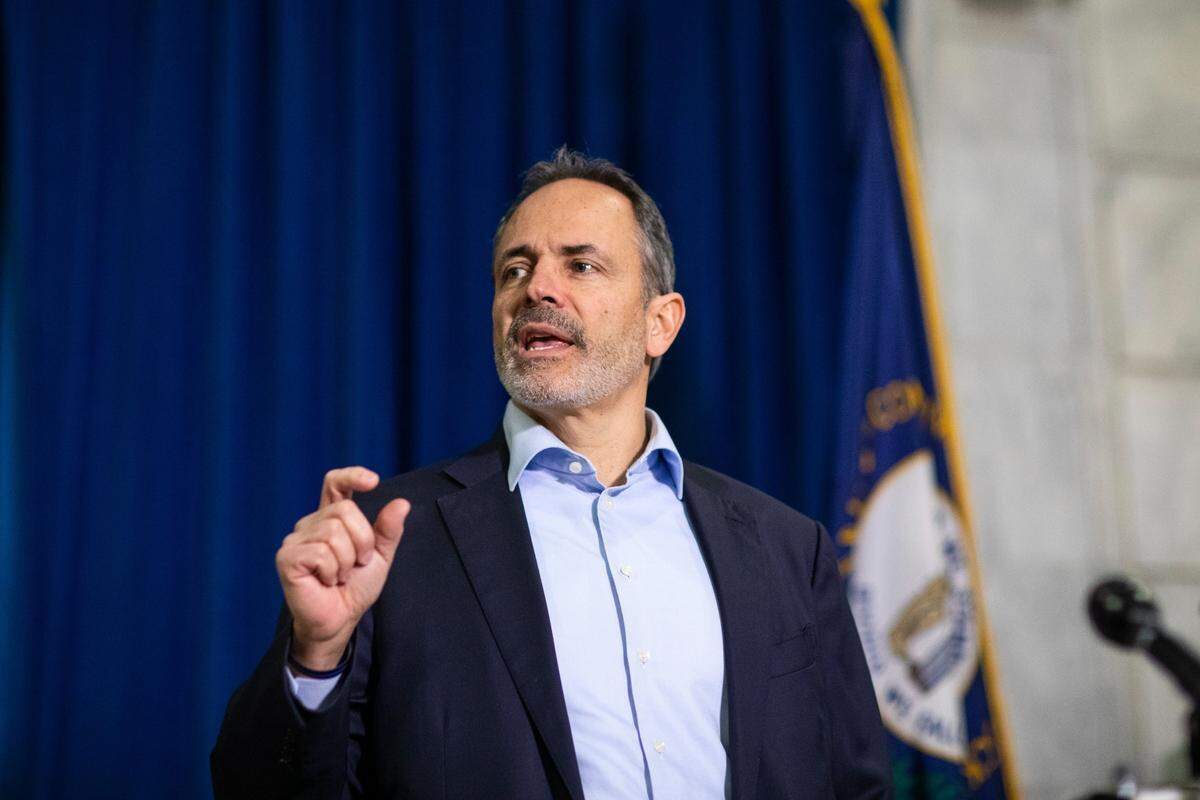
Bevin, a Republican, issued hundreds of pardons and commutations in the final days of his term after losing reelection, but his decision on Baker was among the more controversial ones.
One reason for the controversy was that members of Baker’s family had held a fundraiser for Bevin in 2018, raising $21,500 to pay debt left from his 2015 campaign.
Some state lawmakers said the pardon raised an appearance of corruption, but Bevin denied that politics played a role in the pardons for Baker or others.
Federal indictment
The case took another turn in May 2021 when a federal grand jury indicted Baker on a charge of murdering Mills while committing a drug crime.
Defense attorneys argued the new charge violated the rule against punishing someone twice for the same crime, but U.S. District Judge Claria Horn Boom ruled that different sovereign governments, Kentucky and the United States, could prosecute a person based on the same conduct.
The federal court charge also differed from the one in state court.
Baker swore he didn’t kill Mills and tried to point the finger at another drug dealer in Mills’ community, but jurors rejected his defense, convicting him after about six hours of deliberation.
Boom sentenced Baker to 42 years in prison but gave him credit for the 30 months he served in state prison, leaving his sentence at 39 years and six months.
Baker appealed the conviction, arguing that there was insufficient evidence to convict him and that federal authorities’ decision to prosecute him was vindictive.
The U.S. 6th Circuit Court of Appeals upheld the conviction, ruling that there was sufficient evidence of Baker’s guilt.
The latest court action
That’s where the latest wrangling picks up.
In the motion filed in June, attorneys for Baker argued that three other attorneys who represented him in his 2021 trial didn’t do a good job developing a claim that the federal prosecution of Baker was vindictive, which could have been the basis of a request to dismiss the indictment.
The motion also argued that the attorneys backed away from defending Baker as vigorously as they should have because of a concern about being held in contempt of court.
Boom had cautioned defense attorneys not to present out-of-court statements from witnesses, and said one of Baker’s defense attorneys, Steve Romines, violated that ruling during his opening argument by referring to a statement from a witness made outside court, according to the court record.
Soon after, Boom said Romines had again violated her order by presenting inadmissible information and warned him he could face sanctions.
The desire of Baker’s trial attorneys to avoid contempt sanctions created a conflict of interest with their duty to represent him zealously, according to his motion for a new trial.
The government responds
Monday’s response from the government argues that Bakes trial attorneys did not fall short, however.
On the issue of vindictive prosecution, the defense attorneys were aware of that potential claim and the record proves they looked into it before the trial, according to the prosecution’s response.
Attorneys for Baker raised the vindictive prosecution claim after the trial and again on appeal, and judges rejected it, Nesbitt noted.
And on conflict of interest issue, the prosecutor said the court record shows that Baker’s defense attorneys continued to “vigorously advocate” for Baker even after the issue of possible sanctions came up.
Nesbitt pointed to Romines making reference to out-of-court statements in trying to discredit the testimony of a prosecution witness, refuting the claim that Boom’s rulings “caused Mr. Romines such concern that he shied away from using hearsay.”
Boom also made clear that defense attorneys could consult with her about potential testimony to make sure it didn’t run afoul of her rulings, and that the potential for contempt sanctions would only apply for violations, the prosecutor said.
Baker’s request for a new trial “decisively fails” under the applicable legal standards, the prosecutor said.
It’s not clear when a judge will rule on Baker’s request for a new trial.