Ky. man sought public records from police. Instead, the chief arrested him, lawsuit says
An Eastern Kentucky police chief at the center of a lawsuit filed recently by his former deputy chief for retaliation is now the defendant in a second lawsuit accusing him of arresting a man for seeking public records, according to court documents.
Dallas Campbell, a resident of Perry County, filed suit in September in circuit court against Hazard Police Chief Darren Williams and the city for claims of wrongful arrest and assault by Williams after he requested open records from his department.
Campbell, 36, is suing for malicious prosecution, violations of the Kentucky Open Records Act, battery and false arrest, according to court documents.
Last week, the Herald-Leader reported on another lawsuit against Williams by his former deputy chief, Jessica Cornett. In that lawsuit, filed Nov. 25 in federal court, Cornett claimed she was demoted and eventually fired after reporting an incident of excessive force by Williams.
Campbell’s lawsuit is now a second public allegation against Williams that involves accusations of improper force.
The Herald-Leader could not immediately reach Williams for comment Thursday.
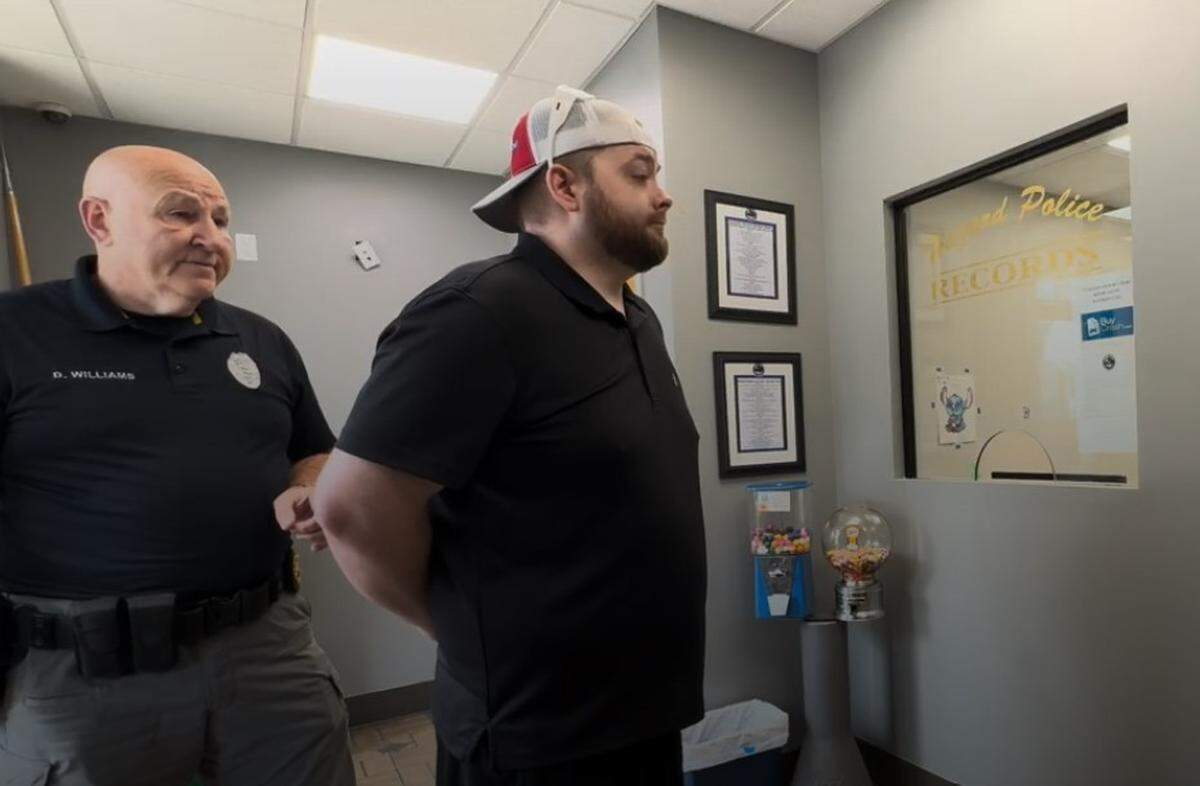
On July 29, Campbell arrived at the Hazard police station in an effort to submit an open records request for the names of police officers, their hire dates and salaries, the suit says.
Campbell thought he would be in and out of there in a matter of minutes, he told the Herald-Leader. He wanted the information for his own investigation about alleged abuse of overtime hours and excessive ticketing.
These items are all subject to open records laws and public documents, according to Kentucky law.
Despite this, the clerk in the lobby, Amber Hensley, told Campbell he could not have the records and the salaries were not subject to public inspection. Campbell was recording the interaction inside the station’s lobby and claimed he was a member of the media with a YouTube channel, Appalachian News First.
Williams was standing behind Hensley in the reception area behind a glass window. Both refused to give the records he sought, and when they discovered he was recording, they told Campbell it was “illegal to record in a police station.”
Mike Abate, an attorney for the Kentucky Press Association, said recording the police in a public-facing part of the station is protected by the First Amendment. Based on the facts of the complaint, he said the inclination that Campbell couldn’t record was “completely false.”
Campbell did not stop recording, and Williams told him to “beat it.”
When he didn’t leave, Williams went into the lobby and came face-to-face with Campbell, who asserted that as a member of the public, he had a right to the information.
“You work for the people,” Campbell said.
“I work for the city of Hazard; I don’t work for you,” Williams replied.
Things escalated to the point that Williams arrested Campbell for menacing and disorderly conduct. While he was waiting to be transported to jail, Hensley approached Campbell, took his phone and deleted video on his phone with Williams standing nearby, Campbell’s suit alleges. Campbell did not give Hensley permission to delete the video or seize his property.
“Since Campbell had been arrested and would be imminently charged with a crime, the deletion of the video on Campbell’s phone constituted tampering with evidence of a crime,” Campbell’s attorneys argued in the complaint.
Although Campbell’s video footage was thought to be deleted, it was recovered. In order to corroborate the footage, Campbell’s attorneys, Joshua Harp and Rex Kilburn, requested camera footage from the station lobby.
The county attorney responded to their request and said police did not have the lobby footage, according to court documents. They claimed the video footage was purged and recorded over before it could be preserved.
“If Darren Williams and the Hazard Police Department actually believed that Dallas Campbell committed any crimes in their own lobby on July 29, then surely they would have wanted to preserve all evidence of those crimes, including video footage from their lobby and video recorded by Mr. Campbell himself,” Harp told the Herald-Leader. “Their failure to preserve and produce the lobby video —especially after it was requested by Mr. Campbell — not only implies that they knew it was not evidence of any crimes, but suggests that someone willfully allowed it to be ‘lost’ because they knew it tended to prove that Mr. Campbell was innocent.”
The criminal charges against Campbell were dismissed Nov. 4 by the county attorney after she viewed Campbell’s video footage. Until that time, Campbell was barred from the police station and not allowed to contact with the clerk or chief.
Abate said based on the facts alleged in the complaint, the police clerk and chief had “no appreciation of their obligation to open records law.”
“They should have taken the request, responded in the appropriate amount of time, however was appropriate,” Abate told the Herald-Leader. “It is extremely troubling, if true, and a serious abuse of police power, trying to silence someone who is seeking transparency.”
Campbell has still not received the original information he requested about Hazard’s police force. He and his attorneys followed up with a two additional and more thorough requests submitted to the city attorney, Rebecca Patterson, on Sept. 16 and Oct. 4. They have not yet received a response for either request, which violates the open records act.
Kentucky law requires public agencies respond to a request within five business days.
“The calendar math is not particularly difficult here,” Kilburn wrote in a letter to Patterson. “There can be no legitimate excuse for the city’s outright disregard for the requirements of the Act. The provisions of the Act are not merely suggestions; they are — in fact — actual laws.”
Campbell is seeking a ruling which would entitle him to the documents he requested, $25 per day his records are withheld, punitive damages and trial by jury.
Campbell encourages citizens to know their rights when seeking government documents, and to ask questions of government leaders.
“Nothing is wrong with asking questions of public officials,” Campbell said. “They should know that going into government. I am more likely to believe they don’t care about open records laws. That is just the only way they know.”
This story was originally published December 5, 2024 at 2:04 PM.