City of Louisville, Department of Justice sign consent decree to reform police department
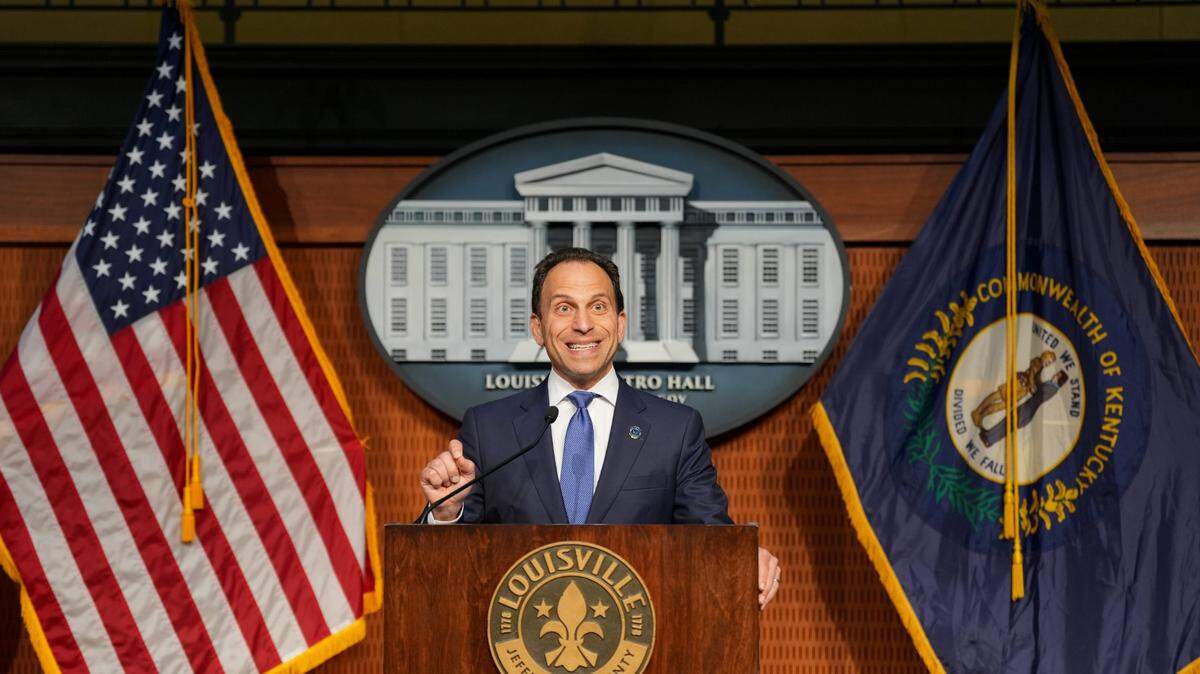
Louisville has signed a ‘historic’ consent decree with the United States Department of Justice to reform the city’s troubled police department.
Announced Thursday, the 242-page consent decree “builds upon and accelerates the transformational reform of community policing that has been ongoing in Louisville,” according to Mayor Craig Greenberg.
“The Department of Justice saw the action we’ve already taken and our commitment to aggressively implement police reform,” Greenberg said in a statement. “As a result of these improvements, we have a consent decree unlike any other city in America.”
The court-enforceable agreement outlines changes that must be made to Louisville Metro Police Department policies, including use of force, reporting, data collection, search warrants, street enforcement, arrests and citations to name a few.
Other cities that have previously entered into consent decrees include Baltimore, Seattle, New Orleans, Minneapolis and Chicago.
The consent decree is the “result of more than 65 meetings, plus countless phone calls and document reviews equaling thousands of hours logged by members of the Louisville Metro Government negotiating team,” the city said in a news release.
Greenberg said the agreement is financially responsible for the city, capping the annual cost of the independent monitor and expects the department will be in full compliance in five years or less. The city will be required to pay no more than $1.475 million a year for the “monitorship” of the decree’s execution for the first two years.
The finalized consent decree comes more than a year after U.S. Attorney General Merrick Garland announced that a DOJ investigation revealed that LMPD and Louisville Metro Government violated the First and Fourth Amendments, the Civil Rights act of 1964, the Safe Streets Act and the Americans with Disabilities Act.
That announcement — made in March 2023 — was a result of a two-year investigation following the fatal police shooting of Breonna Taylor, a 26-year-old Black woman and emergency room technician.
The investigation found LMPD uses excessive force, conducts searches through unlawful stops, unlawfully arrests people of color, executes no-knock warrants unlawfully, violates protected speech and discriminates against those with behavioral health disabilities. They also found LMPD has deficiencies in investigating domestic violence and sexual assault cases.
At that time, the DOJ said it would enter into a consent decree with LMPD, and the department would have to work with the DOJ to improve on the department’s issues.
During Thursday’s news conference, Assistant Attorney General for Civil Rights Kristen Clarke said she has every confidence the city and police department will fulfill the conditions of the agreement. She acknowledged the city has already taken steps to change their policing.
At the end of the decree, Clarke said she expects LMPD will be a “model police department.”
Louisville Metro Government will soon post the Request for Qualification for applicants interested in serving as the independent monitor for the consent decree, which will ensure Louisville is meeting its compliance benchmarks.
This will be a public selection process, according to Clarke.
Chief Paul Humphrey will attend several community meetings next year for Louisville residents to hear about implementation progress, a dashboard will be available for the public to monitor that progress, and progress updates will be provided at regular press briefings.
Humphrey said while the agreement serves as a guiding document, the Department of Justice is not making decision for the city of Louisville or LMPD.
“This is our city, our department,” he said.
This developing story will be updated.
This story was originally published December 12, 2024 at 11:47 AM.