Wrongfully convicted Kentuckians don’t receive compensation. This bill could change that.
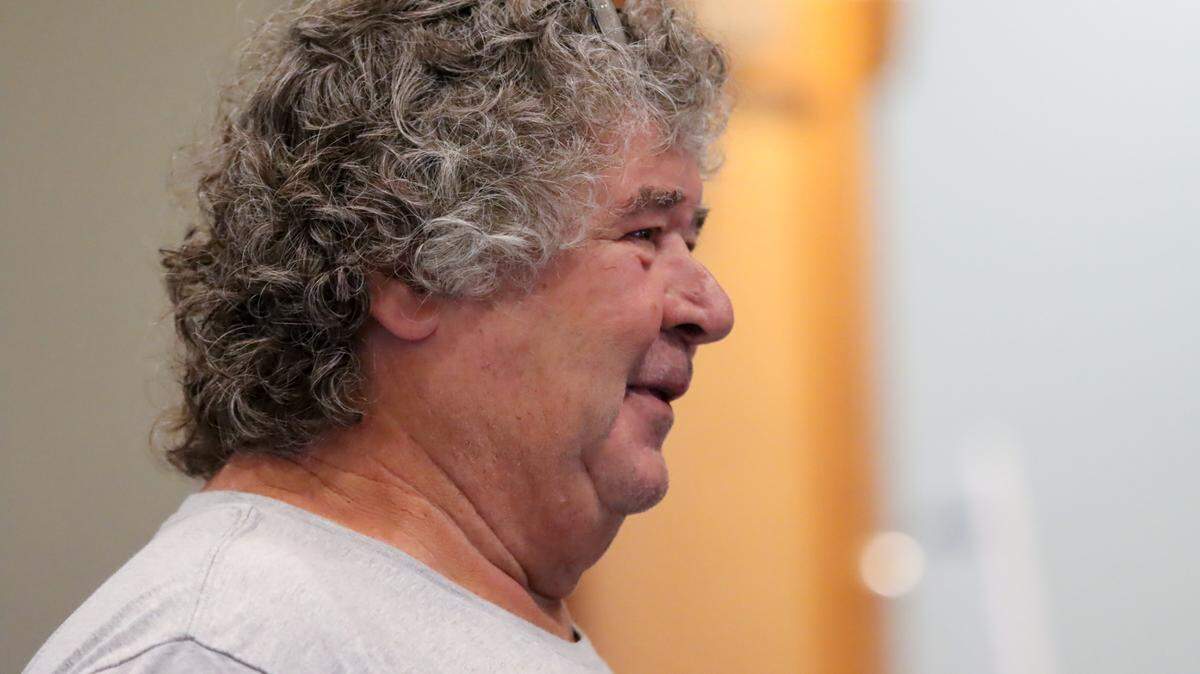
For much of his life, Michael VonAllmen didn’t have much of an opinion about Kentucky’s courts system.
He would gawk at grotesque, rage-inducing crimes on the news — “They’ve got to kill that guy,” he recalls thinking — but that was about it. The criminal legal system wasn’t part of his world.
That changed, though, when he was convicted in 1983 of a crime he didn’t commit. VonAllmen was sentenced to 35 years in prison for sexual assault and robbery after an a witness incorrectly identified him as the culprit.
Now, he sees the potential for flaws in the state’s legal system. And he sees the glaring needs of people who, like him, have had their lives upended by a wrongful conviction.
The most obvious one: money to help rebuild their lives when they get out of prison.
Kentucky is one of just 12 states that does not provide financial compensation for people wrongfully convicted. But a bill introduced Jan. 10 by Jason Nemes, a Republican from Louisville, would change that.
“It is important that we acknowledge mistakes were made — some not in bad faith,” Nemes said in an interview with the Herald-Leader. “What you have done is taken these people’s lives ... and put them upside down.”
One of the bill’s backers is VonAllmen, who scratched his way to clearing his name after spending 11 years in prison and now pushes the legislature to make changes like financial compensation for those who are wrongfully convicted.
“(Flaws) can occur. We write the laws as best we can to prevent things like wrongful conviction, but they still occur,” VonAllmen said in an interview with the Herald-Leader. “It is still a human endeavor and it is still subject to the flaws of human beings.”
What House Bill 206 would offer
Since 1989, at least 22 people in Kentucky have been wrongfully convicted of a crime in Kentucky, spending an average of 10 years behind bars, according to The Innocence Project, which tracks wrongful convictions.
Nemes’ bill, House Bill 206, is designed to create a framework for people to make a civil claim of innocence after their conviction.
If that claim is granted by Kentucky courts, and the person successfully proves their innocence, the person would receive a certificate of innocence, financial compensation, and support services.
“It’s putting that mechanism in place to have something we can fight with,” VonAllmen said. “So we aren’t shieldless and standing out in the open.”
House Bill 206 is modeled on compensation statutes recently passed in Idaho, Montana, and Kansas. If enacted, it would:
Provide $65,000 per year of wrongful imprisonment, plus up to $32,500 for years spent on parole, in post-prison supervision, or on the sex offender registry.
Provide access to re-entry services including health care and counseling, housing assistance and personal financial literacy assistance.
Ensure a straightforward process by filing claims through the courts, so eligibility is determined by judges and courts.
Seal records associated with the wrongful arrest and conviction, and provide exonerees a certificate of innocence so they can clear their names and move on with their lives.
This is the third year the bill has been introduced to the legislature, Nemes said, and it has support in both the House and Senate.
It’s time Kentucky catches up with the rest of the country when it comes to wrongful conviction, he said.
What happened in VonAllmen’s case
In 1981, a 22-year-old woman was abducted, beaten, raped, and robbed in Louisville.
The victim described her attacker as a tall, heavyset man with blue eyes and curly dark-brown hair.
VonAllmen became a suspect due to a license plate match, and he was identified by the victim in a photo lineup, despite having brown eyes.
At his 1983 trial, VonAllmen presented an alibi, but he was convicted and sentenced to 35 years in prison anyway, largely based on the witness identification.
He passed two polygraph tests post-conviction, prompting police support for his parole in 1994.
Later, evidence suggested that Ronald Tackett, who resembled VonAllmen and was involved in a similar 1978 crime, was the likely perpetrator. In 2010, VonAllmen’s convictions were overturned, and his charges were dismissed.
But VonAllmen said he was left with: “Oops, my bad.” He didn’t receive any compensation from Kentucky.
The experience, he said, pushed him toward his current advocacy.
“Through my experience, I have learned to not be so quick to judgment on an event. There is always more information to be known,” VonAllmen said. “I reserve my judgment and reserve my punishment if it is necessary. I stay reserved, and accept what the world brings.”
This story was originally published January 30, 2025 at 5:00 AM.