KY family says waiting 15 years for murder trial is like ‘Groundhog Day’
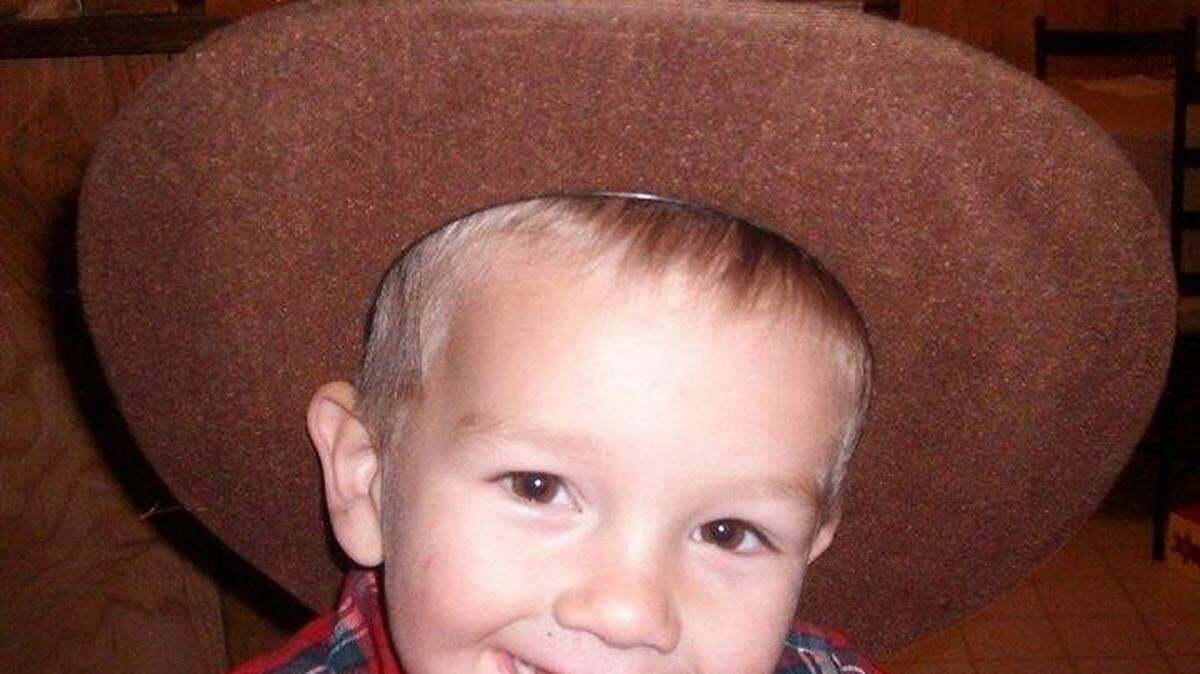
Taylor May was only 9 when her 2-year-old brother, Nathaniel Jones, was killed in Morehead.
She remembers him, though just barely, as a happy and fun child. Most memories are of the 15 years — and counting — of trauma that followed his death.
She often wonders what Jones, who would now be 18, would be like.
“I don’t have awesome memories to remember,” she said. “A majority of my memories of Nathan are traumatizing, and I gain more and more through this court system that is not doing anything with this,” she said.

Brian Gallagher, Nathaniel’s mother’s boyfriend at the time, was charged with murder May 10, 2010, just a little more than a year after the boy’s death.
But nearly 15 years later, the case is no closer to resolution than it was on the day of Gallagher’s arrest.
The legal saga has been long and winding. There have been 10 trial delays, multiple recusals by judges, and even a criminal conviction of the prosecutor who indicted Gallagher.
The wait has been grueling for everyone involved.
For Gallagher, the case has stretched so long that he says his right to a fair trial has been lost, revealing what he says is a corrupt local court system.
“Rowan County is a very corrupt place,” Gallagher told the Herald-Leader in an interview. “It’s all the same judges, and they are all tied in together, and they do not do it by the law. They make their own law on the go.”
For Nathaniel’s family, the seemingly endless delays have left them wondering if justice would ever be served for the boy’s murder, and frustrated by what they say is a defeatist attitude from prosecutors.
“It seems there is a constant rotating door of people involved,” said Don May, Nathaniel’s father. “You almost never talk to the same people twice. It’s like Groundhog Day — it’s a new day with new people, but the same case and same result.”
What happened to Nathaniel Jones?
Nathaniel Jones died from blunt force trauma March 30, 2009, at the St. Clair Regional Medical Center in Morehead. State police reported he suffered the injuries at the home of Gallagher and his mother, Tiea Jones.
Jones and Gallagher were both charged the following year. Jones entered an Alford plea in 2016 to a charge of second-degree criminal abuse, meaning she did not admit guilt, but acknowledged prosecutors had enough evidence to obtain a conviction.
Jones has not been sentenced. Her lawyer, Ben Shields, declined to comment for this story.
Gallagher, meanwhile, was charged with murder, child abuse and being a persistent felony offender. Prosecutors said he and Jones regularly abused the child throughout his short life, eventually killing the boy.
Gallagher has been free on bond and awaiting trial since 2011
Gallagher and his family argue the boy’s death was caused by injuries he suffered when he was kicked by a calf. A fall off a slide at day care may have played a role, too, they say.
Brian’s father, Clarence Gallagher, has spent the past 15 years trying to prove his son’s innocence.
A longtime farmer in Rowan County, Clarence Gallagher traded his farm labor for law libraries in Frankfort. He’s replaced his harvesting tools with a large briefcase of court documents, CDs of proceedings and a tape recorder with every conversation he’s ever had with judicial officials.
“I am trying to do everything as right as I can possibly do it, and I have got everyone else trying to do it so wrong,” Clarence said of his son’s case.
But Nathaniel’s family — including Don May, the boy’s father — say they have no doubt Gallagher and the boy’s mother are guilty.
Don May said autopsy photos showed his son battered and bruised, with chunks of hair missing from his head.
There was so much damage, May said, makeup could not successfully cover the bruises at his funeral.
Victim’s father: Case is ‘coordinated series of fumbles’
In the 15 years since Gallagher was charged with murder, court officials in Eastern Kentucky have found themselves on both sides of the judge’s bench.
Ronnie Goldy, the former prosecutor for Menifee, Bath, Montgomery and Rowan counties who presented the indictment against Gallagher, was sentenced in May 2024 to 51 months in federal prison on six charges of fraud and bribery.
That case was not related to the Gallagher murder charge — Goldy was found guilty of doing legal favors for a defendant in exchange for sexually explicit photos and videos of her.
But it did slow down court cases in the 21st Judicial Circuit, which serves about 70,000 residents in the four counties. Everyone who testified against Goldy — Judge William Lane, Judge David Barber and special prosecutor Brandon Ison — also played a role in Brian Gallagher’s case over the past 15 years.
Lane recused himself from Gallagher’s case in 2019 after Gallagher claimed Lane gave him an unreasonable bond amount upon arrest in 2010. Gallagher also claimed the judge had personal and inappropriate knowledge of some of the facts of the case.
That same year, around the time Ison took over as special prosecutor in the Gallagher case, he also took over prosecuting the crimes of Misty Helton, the woman Goldy was accused of harassing.
Before Goldy was removed as a prosecutor, though, he told another worker on the case there was “no evidence” to prosecute Gallagher’s case, according to Zoom court transcripts.
And perhaps most unusual: Goldy hired Gallagher’s lawyer, Michael Curtis, to represent him at trial.
In 2023, Barber, the second judge, recused himself, too.
The whirlwind of activity has caused a seemingly endless string of delays, leading the May and Gallagher families to feel like justice for Nathaniel has been overlooked.
Don May said the case has seemed to be a “coordinated series of fumbles and misdirections.”
“It is hard to believe that this case could be handled so poorly by accident,” May said. “I say that with great care, because I don’t buy into things being more complicated than they seem. But there is no explanation of how this could be mishandled this much.”
What remedies are there?
Three lawyers interviewed by the Herald-Leader confirmed 15 years is an unusually long time to wait for a trial.
“It is definitely not the norm,” said Lexington criminal defense lawyer Patrick Nash. “I don’t perceive this kind of problem to be at all common.”
Court dockets can get overwhelmed, leading to longer wait times for trials and hearings, Nash said. That was especially true during the height of the COVID-19 pandemic, when illnesses and remote work slowed many parts of the judicial system to a crawl.
Still, 15 years — and the myriad reasons for delays, including the pandemic, two recusals and a prosecutor’s arrest — is extraordinary.
“Two of these events are doubly unusual, but you have four events that have caused a long delay,” Nash said.
At the federal level, a suspect can invoke their right to a speedy trial under the Sixth Amendment of the U.S. Constitution.
When that right is invoked, under the Speedy Trial Act, passed in 1974, the courts have 70 days to remedy any pending proceedings delaying the case, such as evidence collection or testing.
But in Kentucky, no such maneuver is available to people charged with a crime.
“Kentucky has the provision that defendants should have a speedy and public trial,” Nash said, “but there is no statute that makes that right any more specific.”
University of Louisville law professor and civil rights attorney Dan Canon agreed. He said Kentucky has speedy trial requirements in name only, and there is no meaningful method of enforcement under state law.
Martín Sabelli, a legal expert who has taught for more than 20 years at the National Criminal Defense College in Georgia, said 15 years is “extremely unusual” and more common in countries that do not have reliable justice systems.
“Neither the accused nor the alleged victims can live their lives without justice being done,” Sabelli said.
Ison acknowledged in an interview that the delays aren’t ideal for prosecutors, either. Witnesses become unavailable over time, and evidence can be lost or destroyed.
“The length of this case is not typical in my experience,” Ison told the Herald-Leader. “Most cases like this do not last more than a couple of years. ...I have met with the victim’s father and his family, and they are frustrated with the slow progress on this case, and I completely understand.”
Father: ‘I don’t care if it takes 100 years’
Brian Gallagher said no matter how long it takes, he refuses to take a plea deal. He and his father are adamant he is innocent, and Gallagher wants his day in court.
“I just want a fair trial,” Gallagher said.
Don May feels the same — but about proving Gallagher’s guilt.
“I don’t care if it takes 100 years. It is not a matter of a lack of patience,” May. “We just want to see justice for him. We want both (Jones and Gallagher) to be behind bars. Neither of them is innocent.”
Special Judge Brian McCloud, from the nearby 20th Judicial Circuit, was assigned to the case June 10. Gallagher’s next hearing is scheduled for August.
Meanwhile, the wait continues.
Taylor May has another brother who was born about six months before Nathaniel. When she looks at him, she thinks of Nathaniel and how life would be different if he had been allowed to grow up.
“I look at him every day and wonder at this point what Nathan would be like,” she said. “Would they be best friends? Would they be into everything? What would he be like if he were still here? That is what I have to think about.”
This story was originally published June 25, 2025 at 5:00 AM.