In latest push to restore death penalty, KY AG pressures other officials
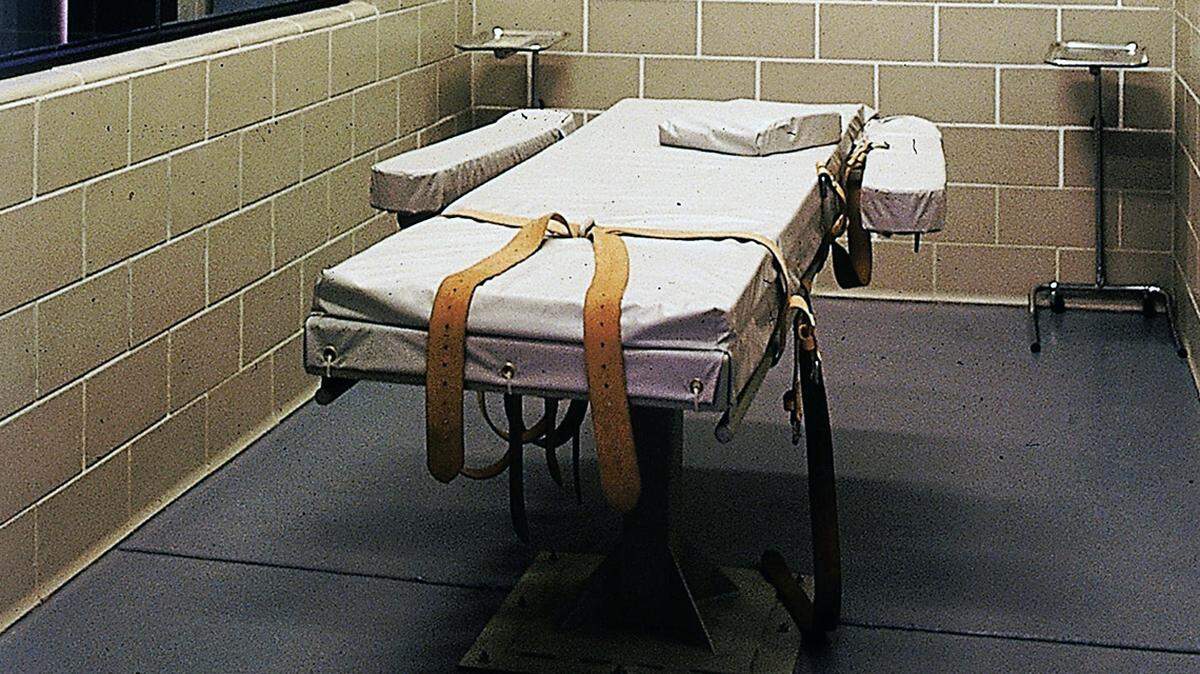
Kentucky Attorney General Russell Coleman has had an eye on restoring the death penalty since his 2023 election.
Last year, the state’s top law enforcement official filed a motion to supersede a court’s decision to halt executions in Kentucky. He argued that new changes by the Kentucky Department of Corrections, under Gov. Andy Beshear’s administration, have addressed a court’s previous concerns about the legality of the death penalty.
Then, on July 14, Coleman filed a motion requesting that an anti-death penalty state Supreme Court justice recuse herself from hearing pending capital punishment cases because of perceived conflicts of interests that could hamper her impartiality.
Three days later, he hand-delivered a letter to Beshear and asked him to sign a death warrant for a man who’s been on death row for 30 years, and whose case was the basis of a nationwide moratorium on capital punishment in the late 2000s.
“I write to inform you of my conclusion as Kentucky’s chief law officer that you can and should sign a death warrant setting an execution date for Ralph Baze,” Coleman’s letter began.
In Kentucky, a death warrant is an executive order signed by the governor that authorizes the Department of Corrections to execute a prisoner. Such a warrant sets a date and time for the execution, and it’s required for the state to put a prisoner to death after they’ve been convicted and exhausted their appeals.
The moves mark Coleman’s latest attempts at bringing the death penalty back to Kentucky. The letter is the first time in decades that a Kentucky attorney general has sent a letter to request a death warrant, Coleman’s office said.
The case at hand involves Baze, a now-55-year-old man convicted of killing a sheriff and a deputy in Powell County. A jury sentenced him to death in 1994.
He’s one of 24 people — 23 men and one woman — on death row in Kentucky. Each has been sentenced to death but has not had a death warrant signed by Kentucky’s governor.
Efforts to restore the death penalty in Kentucky
Before 1976, Kentucky held 424 executions, according to the Death Penalty Information Center. Since 1976, just three people have been executed. Marco Allen Chapman in 2008 was the most recent.
Coleman wants that to change, starting with Baze.
Baze’s case went before the U.S. Supreme Court in 2007, as lawyers questioned the constitutionality of lethal injection. The case prompted a seven-month pause on executions nationwide while the highest court considered a ruling.
Lethal injections resumed in many states. They did, too, in Kentucky, although only briefly, and not for Baze.
Kentucky has had a pause on lethal injections since 2010, when Franklin Circuit Court Judge Phillip Shepherd ruled that executions should be prohibited for several reasons, including the state’s lack of an automatic stay for intellectually disabled death row inmates, and changes to legal injection protocols.
Coleman’s three-page letter to Beshear outlined why he says those reasons are now moot: for example, Baze exhausted his appeals, Kentucky has updated Department of Corrections protocols and improved access to drugs necessary for lethal injection.
Shepherd responded with a ruling of his own in April. He agreed the regulations of his earlier ruling were no longer in effect, but he wouldn’t lift the injunction in its entirety because Coleman’s request was tailored to a man named Gregory Wilson, whose death sentence was commuted in 2019 by former Gov. Matt Bevin.
Shepherd told Coleman if he wanted to bring the matter to the court, he needed to do it with a person actively on death row.
Enter Ralph Baze.
Shepherd’s recent ruling means Beshear can now sign the death warrant and set an execution date for Baze, Coleman argues.
“As we understand the court’s opinion, it allows you to sign an execution warrant, at which point the court can provide any necessary clarity,” Coleman wrote.
Beshear doesn’t seem to be taking the bait.
Beshear responded to Coleman’s three pages with three paragraphs, and he said more changes needed to be resolved within the justice department.
Coleman replied Aug. 4, again disagreeing with Beshear’s evaluation.
“You lawfully can and should set an execution date for Mr. Baze without delay,” Coleman wrote.
Beshear had not responded to Coleman as of Tuesday, Sept. 23.
Beshear also has not replied to Lisa Briscoe Lally, the sister and sister-in-law of the two slain deputies, who were related by marriage. She wrote to Beshear, asking that her family members’ killer be put to death.
But she said she’s heard neither “hide nor hair” from Beshear or Shepherd’s offices.
“Every lawyer and judge who had anything to do with this injustice should be more than ashamed,” Lally said in an interview with the Herald-Leader.
Lally said she had been encouraged by previous statements made by Beshear that were favorable to the death penalty.
One such statement was made during Beshear’s 2023 bid for reelection. He said during a debate with opponent Daniel Cameron that “some crimes so terrible and some people so dangerous that I do believe (the death penalty) needs to continue to be on the books.”
But so far, since reelection, Beshear has not indicated he’s in a rush to reinstate the death penalty in Kentucky.
In his reply to Coleman, Beshear argued that the drugs necessary for lethal injection are largely inaccessible and that medical companies have refused to provide them.
Beshear included letters from pharmaceutical companies Meitheal, Alvogen and Primal Critical Care, all of which sent letters to Kentucky in recent years saying they would not provide their drugs for capital punishment.
“While Meitheal takes no position on the death penalty itself, Meitheal objects to the use of its products in capital punishment,” Chicago-based Meitheal wrote in a March letter to Kentucky officials. “At Meitheal, we strive to develop products used to save and improve patients’ lives. The use of Meitheal’s products to conduct executions is fundamentally inconsistent with this mission.”
However, on President Donald Trump’s first day in office, he signed an executive order that ordered U.S. Attorney General Pam Bondi to “ensure that each state that allows capital punishment has a sufficient supply of drugs” to carry out lethal injection.
Beshear expressed sympathy for Lally and her family in a statement to the Herald-Leader, sent by spokesperson Scottie Ellis. But he also argued that the state still needs to take several additional steps to comply with Shepherd’s recent ruling.
Ellis said Beshear stands by the comments he made about the death penalty in his 2023 campaign.
Recusal of Justice Goodwine
In June, Coleman filed a motion requesting that recently elected Justice Pamela Goodwine recuse herself from two death penalty cases, arguing she has a conflict of interest.
In one of those cases, Coleman argued that because Goodwine was the court reporter for Victor Taylor, whose death penalty case is pending before the Kentucky Supreme Court, she has a conflict of interest.
Taylor, 65, was sentenced to death May 23, 1986, for kidnapping, robbery, sodomy and murder. Taylor and another man kidnapped and killed two high school boys in Louisville.
Coleman also cited an article Goodwine wrote in 2023, before she took office this year.
Goodwine argues in the article, titled “Fighting Death: A Critique of Kentucky’s Death Penalty System” and published in the Kentucky Law Journal, that the application of the death penalty is arbitrary and therefore, not a justifiable punishment. Goodwine discusses the Taylor case — including claims now before the Supreme Court — with Taylor’s attorney, David Barron.
Coleman argued Goodwine has personal knowledge of the case that would make her partial when ruling whether Taylor should face death.
“Despite no ethical lapse or wrongdoing on the part of Justice Goodwine at the time, the conversations with Mr. Barron about this case have created an unavoidable ‘appearance of partiality,’” Coleman said.
Less than a month later, Goodwine issued a single-sentence opinion that denied her recusal.
But on Aug. 26, Coleman filed a second motion requesting Goodwine recuse herself from Baze’s case, too.
Taylor’s lawyer also represents Baze.
Goodwine has not yet ruled on whether she will recuse herself from the second case. She declined to comment on pending cases.
This story was originally published September 25, 2025 at 5:00 AM.