
Program gives Fayette County prosecutors federal experience
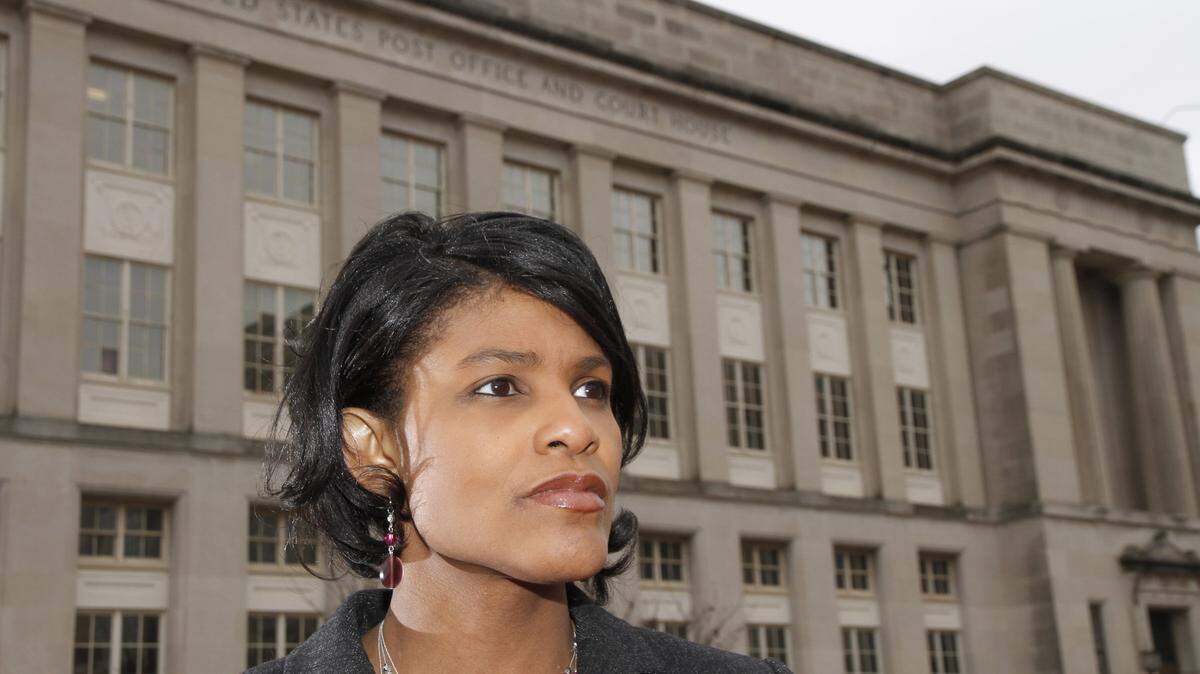
Melissa Moore Murphy and Jennifer True each handle thousands of legal cases a year as assistant Fayette County attorneys. And each handles several more as a SAUSA — Special Assistant United States Attorney.
There are attorneys throughout the country who have been appointed as special assistant attorneys, but it is unusual, if not unheard of, for assistant county attorneys who prosecute mainly adult misdemeanors, juvenile crimes and minor traffic violations to be special assistant U.S. attorneys, according to Fayette County Attorney Larry Roberts.
"It gives our prosecutors a legitimate chance to learn about our court system at a higher level than district court," he said. "The experience on their résumé is a tremendous point for them."
The office of the U.S. Attorney for the eastern half of Kentucky began using prosecutors from the county attorney's office in 2007. Then-U.S. Attorney Amul R. Thapar, who is now a federal judge, came up with the idea, Roberts said.
Initially, two assistant Fayette County attorneys were assigned as special assistants in a task force dealing with Internet predators.
Today, True and Murphy handle all sorts of federal cases while juggling a full load of cases in Fayette District Court. Roberts and other assistant county attorneys sometimes cover for them in district court proceedings, but they are still required to put in a full work week at their regular jobs, Roberts said.
In October, less than two weeks after she became a special assistant attorney, Murphy was working with Assistant U.S. Attorney Pat Molloy on the case of Derek Capozzi, a federal inmate who escaped from a transport van in April 2010. He was captured in Woodford County after a highly publicized three-day manhunt.
Prosecuting in federal court took a little getting used to, Murphy said.
At one point during Capozzi's trial, which ended in a mistrial, Murphy made a reference to "the commonwealth," then corrected herself and said "the United States."
"It's hard to remember where you are," said True, who has been in the program for more than three years. "That's one issue you have to deal with — remembering where you are."
She recalled one time in a federal courtroom when she sat at the prosecutors' table, instead of standing, when a judge was addressing her. Sitting in such situations might be OK in lower courts, but not in federal court.
"The (federal) judges have been very understanding of our situation," she said.
True said the most significant federal case she's handled was a civil rights violations case involving Carter County Deputy Jailer Keith Hollingsworth, who had sexual relations with prisoners at the Carter County Detention Center. True and Molloy prosecuted Hollingsworth in October. He was sentenced to 44 months in prison on March 14.
"Even though the victims were inmates, they were people that had drug addictions and mental illness. It was very rewarding to help those people," True said.
Murphy and True receive no pay for being special assistant U.S. attorneys. But they are given training at the U.S. Department of Justice's National Advocacy Center in Columbia, S.C., which is paid for by the Department of Justice.
Not getting paid is OK "because I know the purpose of the program," Murphy said. "We would love for it to turn into a job ... but I have something I can put on my résumé."
For Lindsay Hughes Thurston, one of the first assistant Fayette County attorneys to become a special assistant U.S. attorney, the experience led directly to a full-time job as an assistant U.S. attorney. She became a special assistant in March 2007 and was named a full-time assistant in September 2008. She said the two jury trials where she served as second chair while a SAUSA were "wonderful learning experiences."
"This partnership between the United States Attorney's Office and the Fayette County Attorney's Office has proven to be invaluable," Thurston said. "Oftentimes, federal cases begin at the local level, and a line of communication and partnership is absolutely necessary to get our goals accomplished," she said.
Kerry Harvey, the U.S. attorney for the eastern district of Kentucky, said the SAUSA program is "a mutually beneficial program that certainly extends our capabilities."
Hydee Hawkins, an assistant U.S. attorney in Harvey's office who oversees the office's SAUSA program, said assistant county attorneys, such as True and Murphy, have at their fingertips investigative resources and knowledge that can come in handy in federal cases.
"Without this partnership we were starting from scratch," Hawkins said.
SAUSA is an acronym that might bring to mind an exotic dance or dish.
But for Melissa Moore Murphy and Jennifer True, being a SAUSA is serious business.
Each woman handles thousands of legal cases a year as an assistant Fayette County attorney. And each handles several more as a SAUSA — Special Assistant United States Attorney.
There are attorneys throughout the country who have been appointed as special assistant United States attorneys, but it is unusual, if not unheard of, for assistant county attorneys who prosecute mainly adult misdemeanors, juvenile crimes and minor traffic violations to be SAUSAs, according to Fayette County Attorney Larry Roberts.
"It gives our prosecutors a legitimate chance to learn about our court system at a higher level than district court," he said. "The experience on their resume is a tremendous point for them."
The office of the U.S. attorney for the eastern half of Kentucky began using prosecutors from the local county attorney's office in 2007. Then-U.S. Attorney Amul R. Thapar, who is now a federal judge, came up with the idea, Roberts said.
Initially, two assistant Fayette County attorneys were assigned as SAUSAs in a task force dealing with internet predators.
Today, True and Murphy handle all sorts of federal cases while juggling a full-load of cases in Fayette District Court. Roberts and other assistant county attorneys sometimes cover for them in Fayette District Court proceedings, but they are still required to put in a full work week at their regular jobs, Roberts said.
In October, less than two weeks after she became a SAUSA, Murphy was working with Assistant U.S. Attorney Pat Molloy on the case of alleged federal escapee Derek Capozzi, who was captured in Woodford County after a highly publicized three-day manhunt in April 2010.
Prosecuting in federal court took a little getting used to, Murphy said.
At one point during Capozzi's trial, which ended in a mistrial, Murphy made a reference to "the Commonwealth," then corrected herself and said "the United States."
"It's hard to remember where you are," said True, who has been in the SAUSA program for more than three years. "That's one issue you have to deal with - remembering where you are."
She recalled one time in a federal courtroom when she sat at the prosecutors' table, instead of standing, when a judge was addressing her. Sitting in such situations might be okay in lower courts, but not in federal court.
"The (federal) judges have been very understanding of our situation," she said.
True said the most significant federal case she's handled was a civil rights violations case involving Carter County Deputy Jailer Keith Hollingsworth, who had sexual relations with prisoners at the Carter County Detention Center. True and Molloy prosecuted Hollingsworth in October. He was sentenced to 44 months in prison on March 14.
"Even though the victims were inmates, they were people that had drug addictions and mental illness. It was very rewarding to help those people," True said.
Murphy and True receive no pay for being special assistant U.S. attorneys. But they are given training at the U.S. Department of Justice's National Advocacy Center in Columbia, S.C., which is paid for by the Department of Justice.
Not getting paid is okay "because I know the purpose of the program," Murphy said. "We would love for it to turn into a job . . . but I have something I can put on my resume."
For Lindsay Hughes Thurston, one of the first assistant Fayette County attorneys to become a special assistant United States attorney, the experience as a SAUSA did lead directly to a full-time job as an assistant United States attorney. She became a SAUSA in March 2007, and was named a full-time assistant U.S. attorney in September 2008. She said the two jury trials she second-chaired while she was a SAUSA were "wonderful learning experiences."
"This partnership between the United States Attorney's Office and the Fayette County Attorney's Office has proven to be invaluable," Thurston said. "Oftentimes, federal cases begin at the local level, and a line of communication and partnership is absolutely necessary to get our goals accomplished," she said.
Kerry Harvey, the U.S. attorney for the eastern district of Kentucky said the SAUSA program is "a mutually beneficial program that certainly extends our capabilities."
Hydee Hawkins, an assistant U.S. attorney in Harvey's office who oversees the office's SAUSA program, said assistant county attorneys, such as True and Murphy, have at their fingertips investigative resources and knowledge that can come in handy in federal cases.
"Without this partnership we were starting from scratch," Hawkins said.
This story was originally published April 4, 2011 at 12:00 AM with the headline "Program gives Fayette County prosecutors federal experience."