
Lexington ends 2014 with 18 homicides; six are unresolved
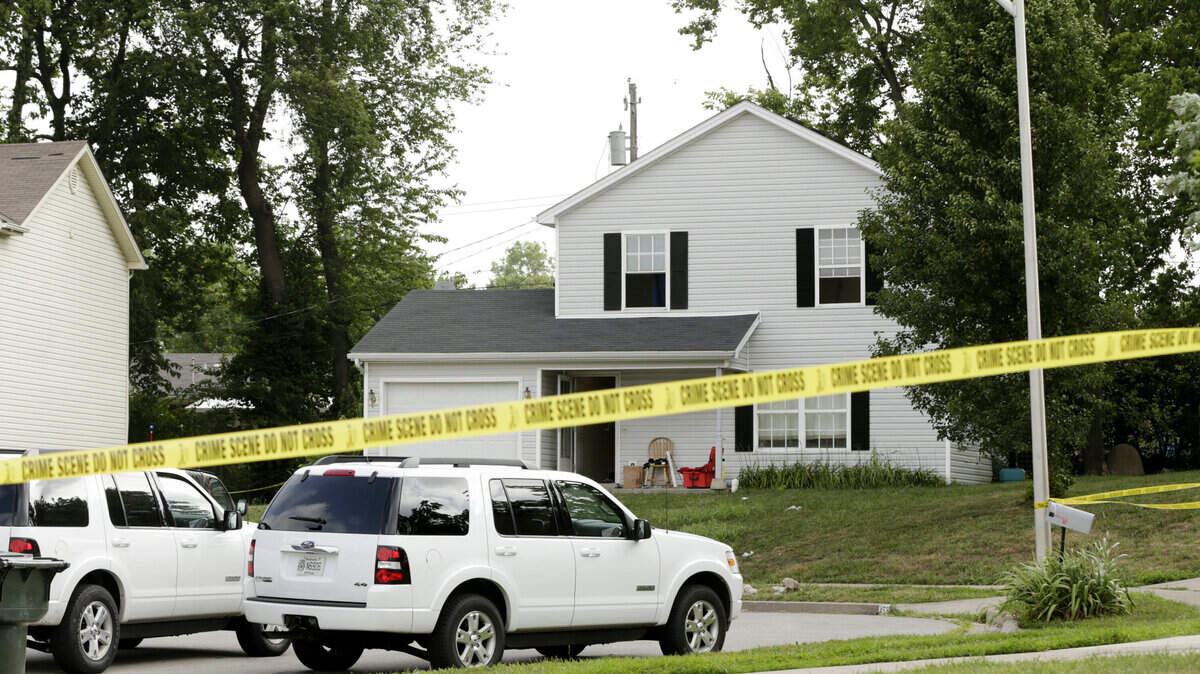
Diana Walker was at Lexington's Good Samaritan Hospital on June 30 recovering from knee surgery when she was told her daughter had been shot.
A flurry of emotions struck Walker that moment, particularly because she didn't know the severity of Kierra Green's injuries.
"I was hysterical," Walker recalled. "The medical staff gave me medicine to calm me down."
The following day Walker was taken to the University of Kentucky Chandler Hospital to authorize the medical staff to take Green off the respirator. She began to pray, asking for peace.
"I told her how good of a daughter she was and how I didn't want her to lay in that bed and struggle... 'stop fighting,'" Walker said.
Green, 18, died.
Green's death was the city's 10th homicide of the year at that point. That shooting at a house on Scottsdale Circle was one of several shootings in late June and early July that incited fear among the community and prompted police and city officials to hold a series of news conferences to reassure the public. Police also reached out to the public for help in solving homicide cases that had stalled. The rash of violence thrust public safety into the spotlight, and became a major topic during the 2014 mayoral race.
The city finished 2014 with 18 homicides; Green's case is one of six that have gone unsolved. Among those unsolved cases is the June 21 death of former Marine Jonathan Thomas Price, who was shot in the back in the parking lot at Woodhill Shopping Center.
In most years, Lexington has between 14 and 19 homicides, and the Robbery/Homicide Unit's clearance rate — the number of homicide cases that are closed by arrest — is typically 90 percent. The unit solved 100 percent of the city's homicides in 2013 and 2012.
Since 1974, when Lexington and Fayette County governments merged, there have been 706 homicides. About 90 percent have been solved, according to data obtained by the Herald-Leader.
In December, Lt. Brian Maynard and Sgt, Eric Hobson of the department's homicide unit held a news conference to address the open cases, discuss the difficulties in solving them and to urge the public to help them solve the cases.
Maynard said Lexington police have "great detectives that do outstanding work, but it all comes from the community."
"That's where it starts," he said, noting that people in the community are tired of others making "certain areas in our city miserable for good people to live and work and be productive citizens."
"It's not a police issue; it's a community issue," he said. "We can't do it alone."
Maynard would not discuss individual cases. He offered very few details about the open investigations, but said the cases are "just one eyewitness away" from being solved.
Hobson said the open cases do not appear to be related. Each case is being actively investigated, he said.
But police have said it is highly unlikely that the average citizen would be a victim of a random act of violence. Most cases have been tied to drugs or other high-risk behavior, police have said. But there were cases in 2014 in which the victims were random, such as Price.
Another example: Antonio Franklin, 20, who was caught in the crossfire of two sets of teenagers shooting at each other in Duncan Park.
Regardless of the reasons behind the killings, police say they have investigated all 18 cases exactly the same.
"Each victim has a family," Maynard said. "To the family, to the police department and to the investigator every one of them are important. We put the same amount of energy that we do in one case that will another, and it's a very exhausting task," but "there's a family out there who lost a son, daughter, mother, father, who they won't see."
Recently, police have encountered some difficulties in solving some cases because "people are scared," Hobson said.
Maynard agreed, but said the "stop-snitching" phenomenon — an unwritten street rule that deters people from talking to police and other law enforcement officials for fear of being called a snitch — comes second to the safety and well-being that witnesses might fear. Police understand that fear, he said.
In addition to those challenges, time also can stall cases. Detectives have to sift through some of the information they receive to separate fact from fiction.
"We take all the information that we get and actively work through each lead and either prove that it happened or disprove that it happened," Maynard said.
Walker said detectives have told her that her daughter's case is close to being solved, but investigators are waiting on more evidence to file official charges.
Even though she's forgiven her daughter's killer, she wants to see them in court.
Walker, a mother of four, hasn't really accepted reality. Weeks ago, she caught herself buying Christmas gifts for Green. Although it hurts, Walker said she has found peace.
"There are some songs that I hear on the radio that remind me of Kierra and I try to imitate some of her dance moves," she said while laughing. "I had peace when I laid beside her bed and held her hand. I found peace then."
This story was originally published January 1, 2015 at 8:45 PM with the headline "Lexington ends 2014 with 18 homicides; six are unresolved."