
This Kentucky university ranks first in the nation for educating black students
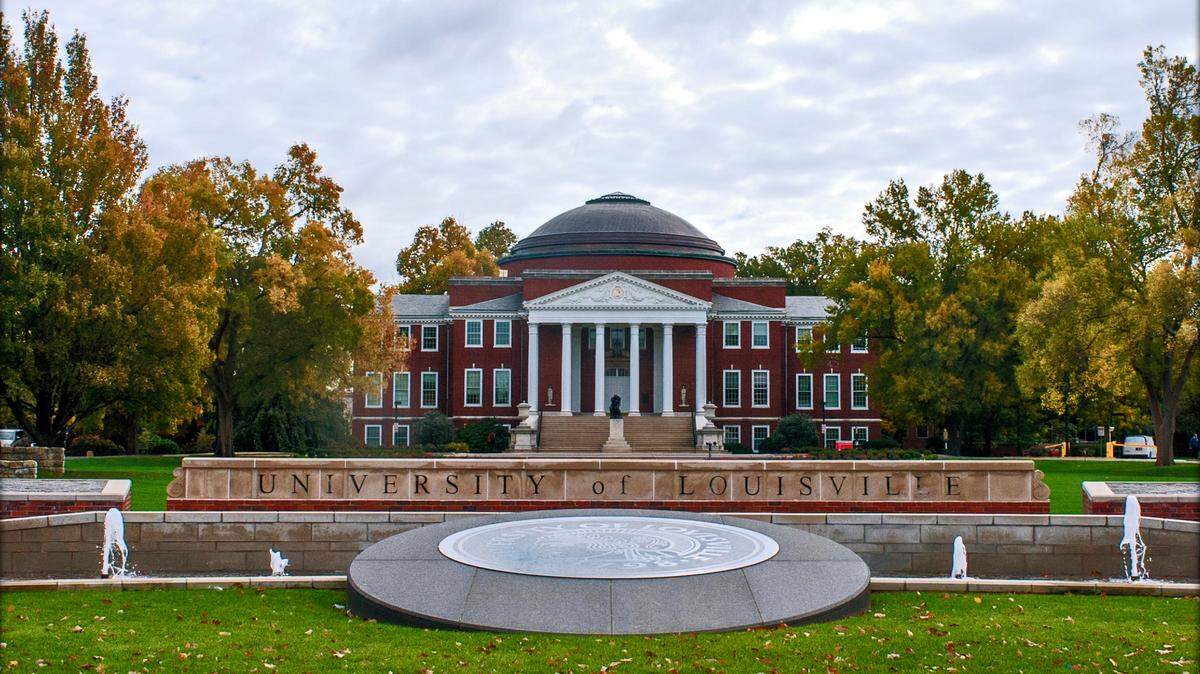
The University of Louisville received top marks for educating black students in a national report card, pushing Kentucky to fifth place in the country.
UofL tied with the Massachusetts College of Liberal Arts and the University of California, San Diego for number one in the nation, according to the report card issued by the University of Southern California’s Race and Equity Center. Most of the federal data was taken from 2016-2017.
The report card graded universities on how their black student population compared to their state’s black population, gender equity among black students, graduation rates for black students compared to overall graduation rates, and the ratio of black faculty to black students.
For example, UofL got an A grade because 11.1 percent of students are black, which is above the 10.6 percent of black 18-24 year-olds statewide. UofL received a B for graduation rates because black students have a six-year graduation rate of 46.5, compared to the school’s overall graduation rate of 53.2.
The report card used the grades to compute overall equity scores, comparable to a GPA that goes to 4.0. No state earned above a 3.5. Thanks to UofL, Kentucky received a 2.36, which put it fifth in the nation.
“Diversity is a longstanding core value at the University of Louisville,” said spokesman John Karman. “Under the leadership of our new president, Neeli Bendapudi, it has become an even greater priority. The university is proud of its reputation as an institution that welcomes students of all backgrounds. However, we realize there always is work to do to ensure that our campus remains a place that embraces a diverse student body.”
The rest of Kentucky’s public universities lagged behind in the graduation measure, with the University of Kentucky and Western Kentucky University both earning Fs in that category. UK’s black student graduation rate is 44.1 percent, compared to the school’s overall rate of 61.4. WKU’s black student graduation rate is 32.3 percent, compared to 50.6 percent overall.
UK, the state’s flagship university, got a C for representation because its student body was just 7.8 percent black, compared to 10.6 for all 18-24 year-olds in Kentucky.
UK recently revealed that its black freshman population had dropped 50 students from the year before, a decline of almost 12 percent.
“We are making progress across a variety of measures of student success,” said UK spokesman Jay Blanton. “But it is clear that we must do even more to position our underrepresented students to be successful at the same rate as other populations. A variety of efforts, including addressing unmet financial need through our nationally-recognized UK LEADS program and holistic student support through Wildcat Transitions, are designed to facilitate greater success. And we will continue to build upon these initiatives.”
None of Kentucky’s other public universities did all that well in the graduation category. Eastern Kentucky University, Morehead State University and Northern Kentucky University all received Ds. Murray State received a C, and Kentucky State University, the state’s only historically black university, was not included.
Kentucky’s Council on Postsecondary Education tracks diversity and equity, and has implemented a performance-based funding formula that includes a category for the number of underrepresented minorities who enroll and graduate.
“This scorecard indicates that Kentucky has been intentional and focused on issues of equity, including closing achievement gaps of our African-American students,” said Aaron Thompson, the council’s executive vice president. “While Kentucky should celebrate its high ranking, there is still so much work to be done. We will use this baseline score as an incentive to build better policies and practices to improve student outcomes moving forward.”
The report card’s authors said the report was intended to highlight inequities in higher education that have traditionally hurt black students.
“Our aims are to make inequities more transparent and to equip anyone concerned about enrollment, success, and college completion rates for black students with numbers they can use to demand corrective policies and institutional actions,” explained authors Shaun Harper and Isaiah Simmons, faculty at the center.
This story was originally published September 26, 2018 at 12:13 PM.