
Racial issues have plagued UK for years. Will recent protests bring lasting change?
They jeered at his memories of the Civil Rights Movement in Alabama and taunted his white privilege.
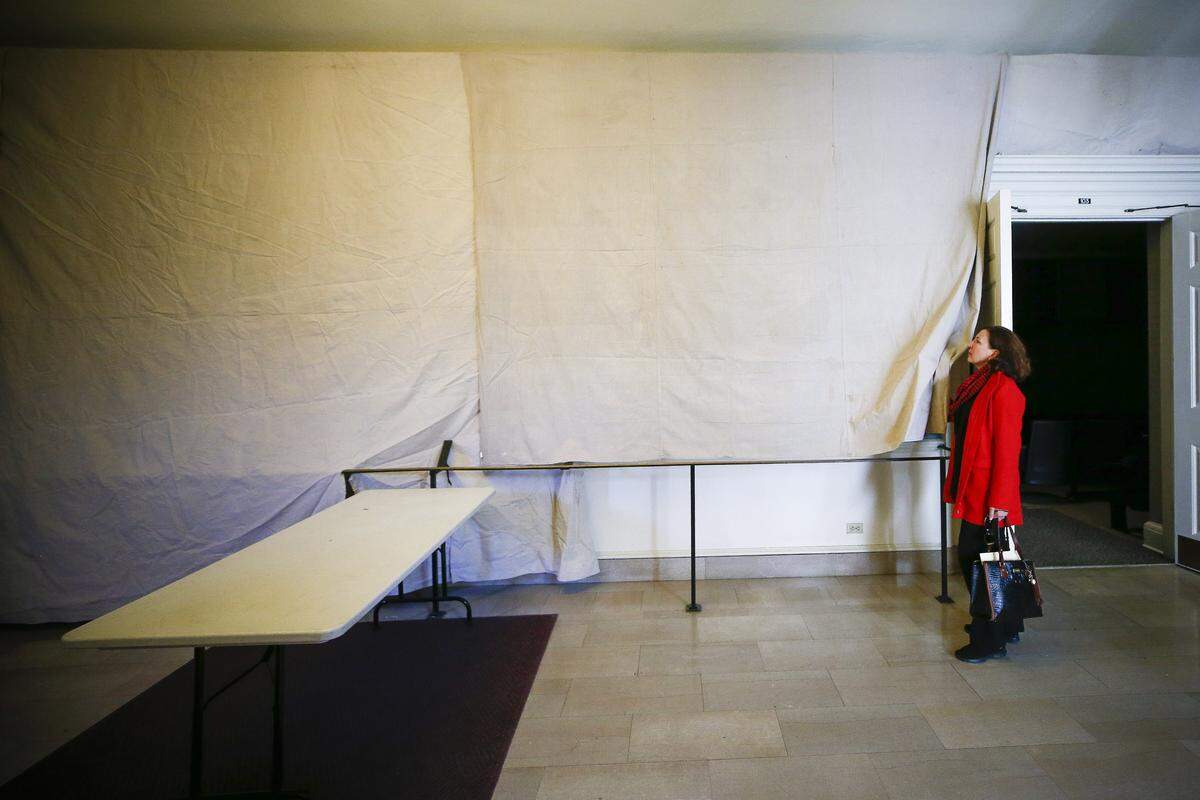
And at the end of a tense two-hour meeting on Tuesday, a group of black student protesters schooled a clearly shaken University of Kentucky President Eli Capilouto about the perennial problems facing black students at UK, as symbolized by a 1930s mural showing Lexington’s early history, including slavery.
“I understand we’re not the first people to have these conversations,” junior Mia Thompson told Capilouto Tuesday following a student occupation of the Main Building. “We’ve heard these stories. I already knew about the books you’ve read ... I know that you are doing as much as you can, but it’s not enough. And if you’re not seeing that what you’re doing is not enough, that’s a part of the problem.”
As a Jew who grew up in Alabama during much of its civil rights violence, Capilouto probably understands the issues of discrimination, race and history better than the UK presidents who came before him. But as he admitted, it was not enough. And in acceding to the students’ demands, which include covering up the Memorial Hall mural for the second time in four years, Capilouto showed that he was listening.
The question is whether his moves will be enough to erase the long and constant thrum of racial anger and tension at Kentucky’s 30,000-student flagship university, where black graduation and retention rates lag behind those of whites, where some black students rarely see faculty who look like them, and where UK’s constant physical upgrades and tuition hikes amid declining state support makes education less and less affordable.
Last fall, black enrollment, which had been growing, dropped by 50 students, a big decline at a school where black enrollment made up just 6.9 percent of student enrollment in 2017.
Tsage Douglas, chairwoman of the Black Student Advisory Council, is hopeful that lasting change will occur, in part because the administration now recognizes the council as an official representative body for black students that will continue to hold UK accountable.
In addition, she found Capilouto to be sincere.
“He was actively listening, he was actively trying to fit himself into that narrative,” said Douglas, a major from Lexington who is majoring in public health and foreign language and international economics. “If you want a diverse campus, it starts with the leadership, and I do believe the campus can change for the better when it comes to recognizing and celebrating diversity.”
In a telephone interview Thursday, Capilouto said he was surprised by the depth of feeling that continues about the mural, which he covered once in 2015 after student outrage. After a series of task forces, the mural, which features depictions of slaves in a tobacco field, was uncovered with new contextual information posted nearby. In addition, UK commissioned artist Karyn Olivier to create a piece of art in the Memorial Hall cupola that features some of the figures from the mural and other black and Native American figures from Kentucky.
“Time is moving fast and I had a roomful of students who were not part of that campus dialogue,” Capilouto said. “We haven’t outlived what are still to me our deepest emotional divides. The message is while we’re here, we all have to do our part and we have to be vigilant and we can’t become complacent.”
As for systemic change, “I think what happened on Tuesday is not enough,” he said. “What happens on the Tuesdays for the next 10 years is what’s going to matter.”
Student Coalitions
Tuesday’s meeting was precipitated by a coalition of the Black Student Advisory Council and the Basic Needs Campaign, a group of progressive, mostly white students who went on a hunger strike in hopes of getting the administration to create a centralized office to help students dealing with food and housing insecurity. Both those issues have increased in recent years, as state support has declined and UK tuition has climbed 105 percent since 2005. The council decided to join forces because so many black students are affected by the basic needs issues, they said.
Capilouto agreed to most of the demands from both groups:
▪ A permanent seat for black students on search committees for administrative officials;
▪ Revising the William C. Parker Scholarship, which was originally set up to help black students, but has been expanded over the years to promote diversity in numerous areas.
▪ More training and accountability for diversity officers across campus to confirm they are meeting UK’s strategic plan on diversity;
▪ Publicly posting campus climate and wellness surveys online. In particular, students wanted to see results from the 2016 Cook Ross report on diversity and inclusion, which found that while diversity had improved at UK, 34 percent of black undergraduates and 36 percent of black graduate students would not attend UK again if given the choice.
▪ UK has covered the Memorial Hall mural, and will re-engage with a new committee to determine a long-term plan.
▪ UK will hire a full-time staffer to coordinate UK’s basic needs resources.
▪ Establish a Basic Needs Fund, consolidating its two emergency and assistance funds into a one-stop shop to better handle requests related to food and housing insecurity.
Chester Grundy, who attended UK in the 1960s and went on to work at the institution in addition to being a civil rights activist, said “progressive white students and black students who managed to find some common ground on these issue made me a little more hopeful.”
But 70 years after Lyman Johnson first integrated UK, it’s not always seen as a welcoming place, as the Cook Ross survey indicated.
Grundy said, for example, that the University of Louisville is still seen as a better place for black students, as reflected in its higher percentage of black students, almost 11 percent.
Another example, Grundy said, is the difference in the two schools’ traditional minority scholarship programs. Both UK’s Parker Scholarship and UofL’s Porter Scholarship were created to attract more black students to their campuses. But after the U.S. Supreme Court upheld a University of Michigan ban on affirmative action in admissions in 2003, UK expanded the eligibility criteria for the Parker scholarship to first generation and Appalachian students, which means white students could receive it as well. The Porter Scholarship is still given to black Kentuckians.
“It seems like UofL has taken a position — we stand by our commitment so sue us,” Grundy said. “UK immediately revised their rules so the scholarship is no longer earmarked for black kids.”
Rev. C.B. Akins, who served on the UK Board of Trustees from 2011-2017, called the change to the Parker scholarships an “affront to anyone who knew William Parker,” the vice chancellor of minority affairs at UK from 1984 to 1990.
Akins frequently criticized the lack of diversity in Capilouto’s inner circle. That situation hasn’t changed much; the only black administrator who reports directly to the president is Sonja Feist-Price, vice president for institutional diversity.
“The leadership that will facilitate significant, sustainable change has to come from the top down,”Akins said. “What we are seeing is symptoms, and until they get to the core, there won’t be lasting change. We kicked the can down the road without the problem being solved. I hope it gets better.”
Classroom concerns
UK’s lack of diversity is still causing issues at the classroom level, too, several students have said. Cate Wright is currently appealing a dismissal from the College of Dentistry she says was caused by faculty neglect of black students. She enrolled in 2016, and within two weeks was hearing the n-word from other students.
Last May, the Office of Institutional Equity and Equal Opportunity investigated Wright and other students’ situation, documenting their complaints about how faculty gave white students preferential treatment. Wright believes her dismissal from the program is in part due to retaliation for complaining.
“There were only three black students, and we were completely ignored in the laboratory, it happened to all three of us,” Wright said. “When we reported it to academic affairs, it actually became worse.”
After the investigation, the College of Dentistry reassigned a student affairs officer to be a diversity officer in the college, UK officials said.
Also in 2016, a group of black graduate students, many of them in scientific fields, issued a “call for action,” including more accountability for hiring additional black faculty. At their town hall meeting, numerous students recounted racist behavior by fellow students and teachers.
Senior Kennedy Guess describes her experience at UK as “hell.” From Montclair, N.J., Guess said she had never heard the n-word directed at her until she moved to Lexington. She was the only black student in her communications disorder major in the College of Health Sciences, saw very few black faculty and felt isolated and dismissed.
She’s moving to the University of Houston for graduate school, but leaves UK with the belief that the Black Student Advisory Council has brought UK to a new place.
“I do think this is a turning point because I’ve never seen him react that way,” she said. “It was genuine — ‘wow my students are hurting.’
Guess said many of the students are sophomores and juniors and will hold the administration accountable. “I know they will see this change from the beginning to the end,” she said. “Racism at Kentucky has been hiding for years, but people saw us for the first time.”
This story was originally published April 5, 2019 at 10:38 AM.