
Amid COVID-19 closures, KY schools struggle to keep students from falling behind.
As the bus windows fogged up and the rain hardened, the roads leading away from Route 23 in Floyd County narrowed and eventually turned from blacktop to gravel and rock.
Three bus drivers, one of them Justin Brashear, a former athletic trainer who now teaches physical education and health at Betsy Layne High School, ran through the inventory of meals and homework packets that he and the other drivers have delivered across the district every day this week.
On Thursday, the group would deliver 101 meals to families in the Mud Creek community and in the maze of surrounding tributary hollows. Much of the route was unpaved, and some of the families were among the most-needing of meals in the county.
Like every other district in the state, Floyd County Schools is grappling with how to provide their students with food and education since schools closed following the outbreak of novel coronavirus.
On Friday, Gov. Andy Beshear said he told superintendents to extend the closure of in-person classes until April 20, extending the original two-week closure mandate that he made earlier this month.
David Cook, who oversees the state’s non-traditional instruction program that approves school districts’ learning from home plans, said all 172 Kentucky school districts are now participating. Several, including Fayette, were approved on an emergency basis within the last several days.
Brashear said the home learning has been going as well as it could be expected to go so early in the district’s closure, but that the system comes with obvious limitations.
“It’s not gonna be what they would get when they are at school,” Brashear said. “At least we’re keeping them on some kind of schedule where they’re getting some exposure to reading, or math, or science.”
“It’s better than nothing, but it’s not ideal,” he said.
The drivers delivered students a homework sheet that contains various assignments, from reading and writing to history and science, and the students can choose two assignments per day.
When they complete their work, they can send images of their homework to teachers who are working from home.
Students also get regular phone calls from their teachers — at least a phone call every other day — both to talk about learning and to check in on students who may feel lonely or isolated during the closure.
For Brashear, his students’ emotional and physical health has been his primary concern.
“The schoolwork, to me, is secondary to their well-being,” he said. “I think that’s what these meals and things are about. We’re more worried about — and it hate to say it this way, but — we’re more worried about survival than if somebody is reading for 30 minutes a day. Not to say that’s not important, but for some of these kids ... school is kind of their escape from whatever their circumstances are.”
The schools are also providing hot lunches that are available for pick-up, and are continuing the backpack meal program throughout the duration of school closures.
Along with the phone calls, teachers have also been using Facebook Live and Zoom to check in on their students and coordinate among staff.
Crissy Howell, the mother of a 4th grader at Betsy Layne Elementary School, said she’s worried that her son isn’t receiving the education he deserves, even if the district is doing all it can given the circumstances.
“I don’t feel they’re getting the education needs that are required by them being home,” Howell said.
Howell’s neice, Jasmine Howell, a freshman at Betsy Layne High School, said the assignments have been easy compared to what she would do during regular classes.
“I miss my teachers,” Howell said.
Hayden Caldwell, a junior at Lexington’s Henry Clay High School and member of the Prichard Committee Student Voice Team, said the work he has done from home mirrors what he does in the classroom, but he has missed the in-person contact this week.
“Our school is so much of a community that a lot of those things, those clubs, those sport teams that you are missing out on, seeing those people every day at school, there’s just so much more to school than simply the learning aspect,” Caldwell said. “Whenever you get just the learning aspect of school, it feels like it is just half of the experience.”
Another student voice team member Sophie Farmer, a junior from Danville, said she and her friends are feeling “a lot of confusion.”
“There are so many questions we don’t know the answers to,” Farmer said. “We don’t know when graduation’s going to happen. We don’t know how finals are going to work.”
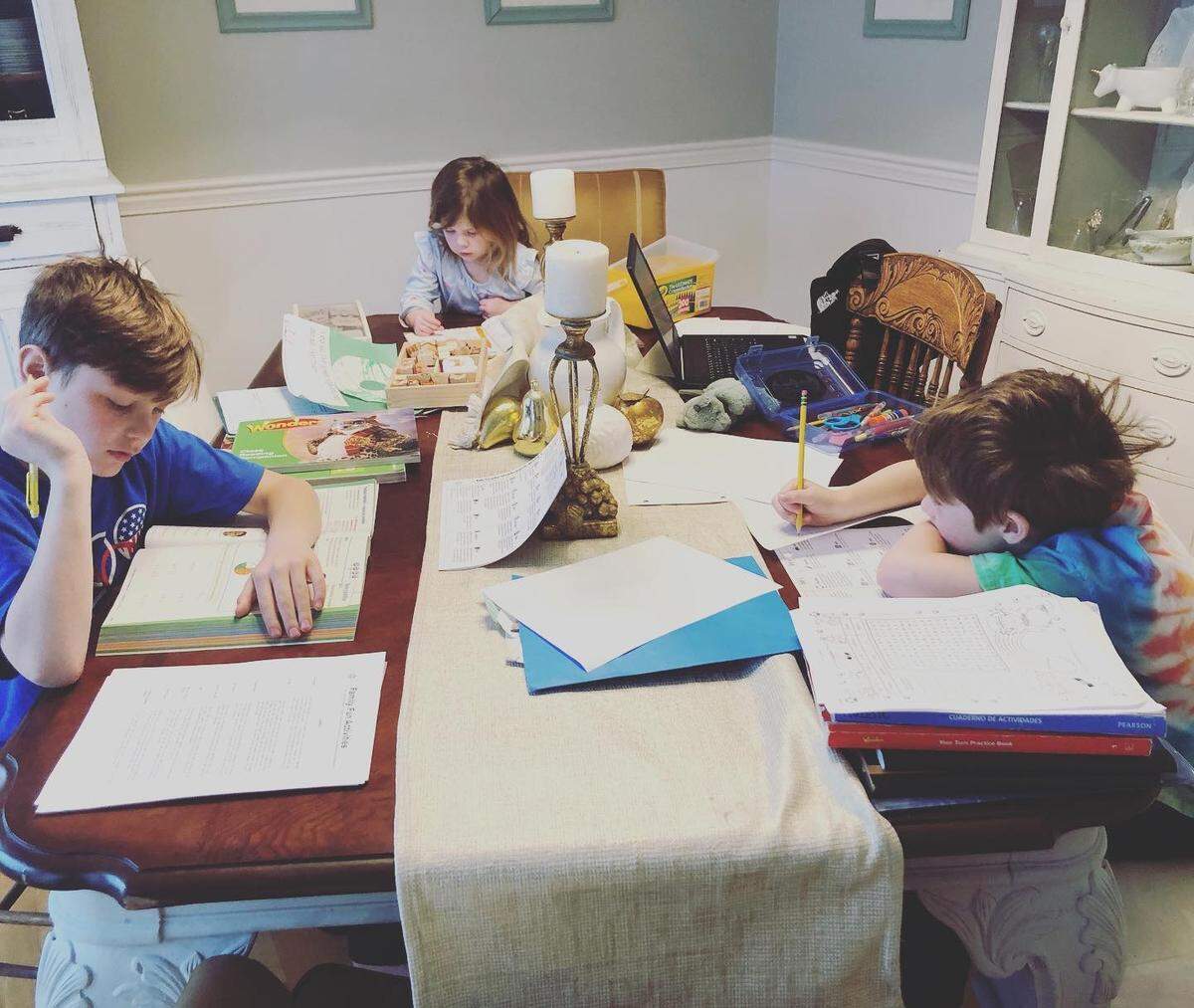
At Elizabeth Messer’s Lexington home this week, her preschooler, first grader, and fourth grader were gathering around the dining room table by 9 a.m. each day for “school time.”
With their parents rotating periods of joining them, the children “work through their assignments,” take movement breaks and follow a daily calendar recommended by their schools, Messer said.
“Today my first grader interviewed my fourth grader for one of the assignments,” she said.
Fayette County schools, along with all other districts across the state, will be shut down through at least April 20 as Kentucky battles the coronavirus pandemic.
Messer, a Fayette family court judge, said her children “are handling it very well,” and their Fayette County schools “have been excellent about sending work.”
“I am extremely impressed with the districts that have just joined this program in the last seven to ten days,” Associate Education Commissioner Kelly Foster told the Kentucky Board of Education Wednesday at a virtual meeting.
Some districts already were widely using technology and online learning before the shutdown. But other districts do not have that capability, she said.
Teachers are preparing paper learning packets, staff in Fayette and other districts are preparing two meals a day for students and in some cases school buses are delivering both.
Some teachers in Kentucky are creating new social media pages so they can interact with students daily. Foster said one parent received a call from both the school nurse as well as from a teacher just to ensure that their kids were OK and had everything they needed to complete their lessons.
“We are seeing some amazing things across the state right now as our educators really try to ensure that our students are receiving instruction while they are at home in this tough situation,” said Foster.
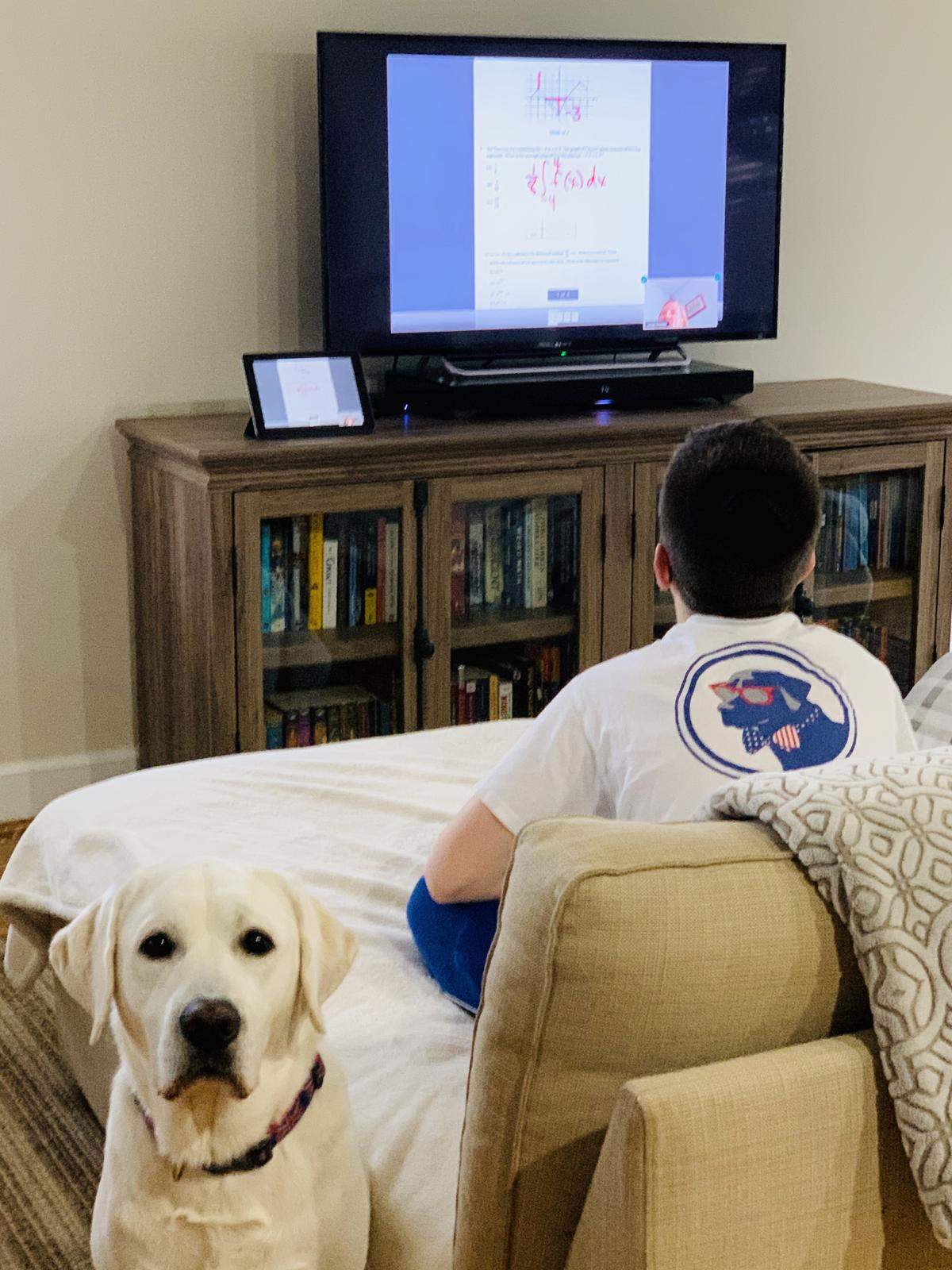
Parent Maria Kemplin said she and her son Grayson Kemplin who attends Lexington’s Henry Clay High School, received an encouraging email from his AP Calculus teacher, Linda Dewees.
“I thought I should just take a moment to check in with everyone,” Dewees wrote. “Hopefully you are safe and in your home as much as possible. I know this is a stressful time as we get used to our new realities. Sometimes it can seem very overwhelming. Students, especially, if you need to chat, please just reach out. I’m here for you.”
She offered to set up a video-conference via the online platform Zoom to work with them.
Kemplin, said Dewees was already “doing a stellar job with distance learning,” making an easy transition as schools closed.
Dewees also had print material prepared through May for students with internet limitations, said Kemplin.
“She is hosting some Fun Days on Zoom, such as national frog day – my son is looking for a frog costume,” Kemplin said.
In Letcher County, Superintendent Denise Yonts said prior to the outbreak, her district already had a non-traditional instruction plan in place and teachers had a good handle on who had a computer at home to access different platforms versus who would need a paper packet.
She said district staff was communicating with families and students and had already distributed hundreds of meals, but like many others in Kentucky’s educational system, she worries about the students who are most isolated.
“It’s one thing to have a plan for a couple of weeks. If we look at longer closures, we have some kids who don’t have Internet access. We might not be able to ... connect with them unless we do home visits,” Yonts said. “When we are all keeping social distance, it does make us worry about our children, not seeing them everyday, not being able to talk to them and know that they are OK.”
This story was originally published March 20, 2020 at 12:32 PM.