
KY schools try to fight COVID spread by installing air purifiers, HVAC upgrades
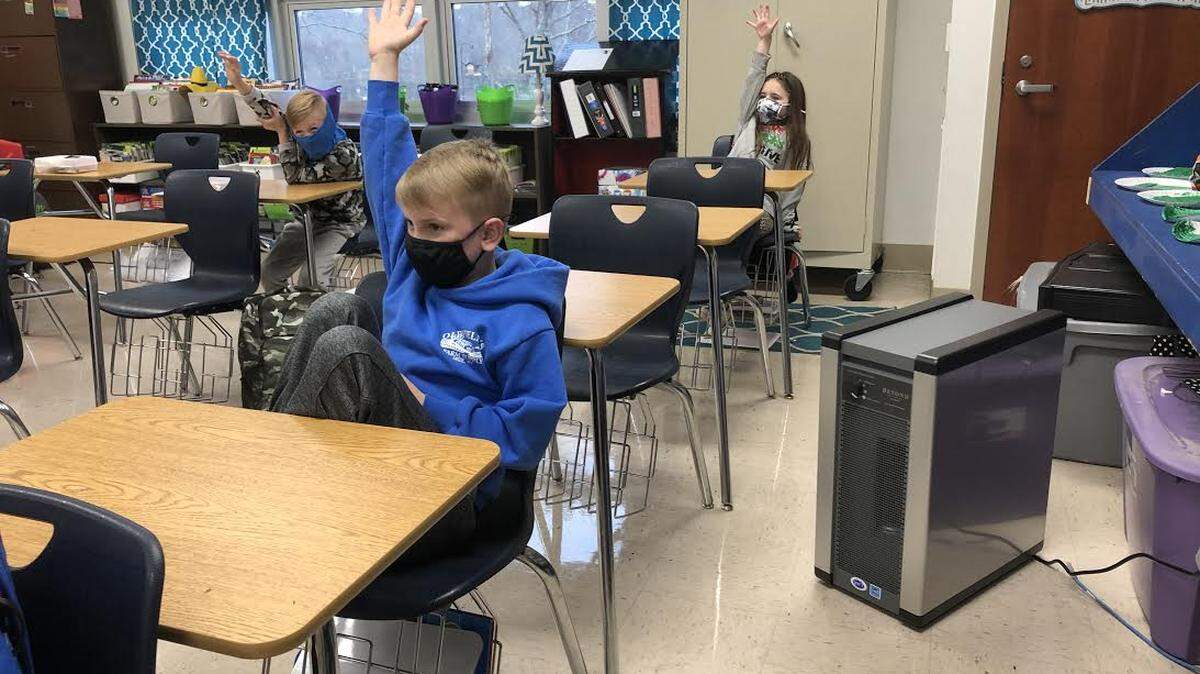
To stop the spread of COVID-19 as students return to in-person learning, Wolfe County Schools’ superintendent has installed portable air purifying units in classrooms and on school buses.
Kenny Bell is among the K-12 school chiefs in Kentucky trying to improve indoor air quality as part of reopening after the March 2020 school shutdown.
“Our staff has been elated,” Bell told the Herald-Leader. “I have gotten more ‘thank you’s’, for these than anything I have done in 13 years as superintendent. They tell me it makes the air smell fresher and like hospital air.”
On March 19, the federal Centers for Disease Control and Prevention clarified that ventilation is a strategy needed to clean and maintain healthy facilities as schools emerge from the pandemic shutdown.
The CDC is encouraging system upgrades or other improvements for the delivery of clean air in classrooms to dilute possible contaminants in schools.
Using portable air cleaners, improving building-wide filtration and opening windows are ways schools can increase ventilation, the CDC said.
The United States Environmental Protection Agency has said that when used properly, air cleaners and HVAC filters can help reduce airborne contaminants including viruses in a building but practices including social distancing and mask wearing are needed along with it.
Improving ventilation is one of the areas that federal COVID dollars now pay for. Bell said that is how he is paying for the units.
Tim Bobrowski, Superintendent of Owsley County Schools, said he is hoping to be reimbursed for the more than $55,000 the district spent to install new units in the district’s HVAC system to improve air quality while removing pathogens.
The effort, Bobrowski said, had eased parents minds about sending children back into school buildings after the March 2020 pandemic shutdown.
The classroom units that Bell installed cost about $1,700 each, he said. Kentucky superintendents are contacting contractors and engineers in their area to learn about various patented systems.
Rowan County Superintendent John Maxey purchased 12 portable air purifiers for each building at about $800 each. They are placed in large common areas like the gymnasium and cafeterias.
“We have adjusted our HVAC units to circulate more fresh air and increased our ventilation,” Maxey said.
Just before the COVID-19 pandemic hit, the Science Hill Independent school district had already started the process of updating the HVAC system because it was worn out and needed thousands of dollars in repairs.
The project, at $1.25 million, has been cost effective, Superintendent Jimmy Dyehouse said.
“We feel that the extremely low number of covid cases we’ve had over the past year is a direct reflection of the HVAC system we installed,” said Dyehouse.
In Fayette County, 27 older school buildings have air-handling units “retrofitted with UVC lights or have them placed in strategic locations within the duct system,” said district spokeswoman Lisa Deffendall. Those schools also have air purifiers for classrooms.
For all schools, HVAC systems will run longer, earlier in the mornings and later in the evenings to help with indoor air quality, Deffendall said.
In Fleming County, Superintendent Brian Creasman is also working on ventilation, but he said he took an approach other than installing air purifying units.
Creasman said he worked with HVAC engineers to monitor the building and classroom temperatures and relative humidity levels –-similar to what hospitals do. He said classroom and building temperatures and relative humidity levels were extremely important from November through March, to ensure the district did not create a building or classroom environment that led to the spread of COVID-19.
“Since September 8, we have had positive cases in classrooms, but not once has that one positive case led to other positive cases,” Creasman said.
Bell, who installed the air quality improvement units in his classrooms and on buses, said that was his goal too.
“Since installing, we do not have one case that has spread to students or staff while” the district was in school , said Bell. “It’s all about everything we can do to keep everyone safe from this virus and keep our kids in school.”