
Despite COVID millions, Fayette schools face future budget deficit without tax hike
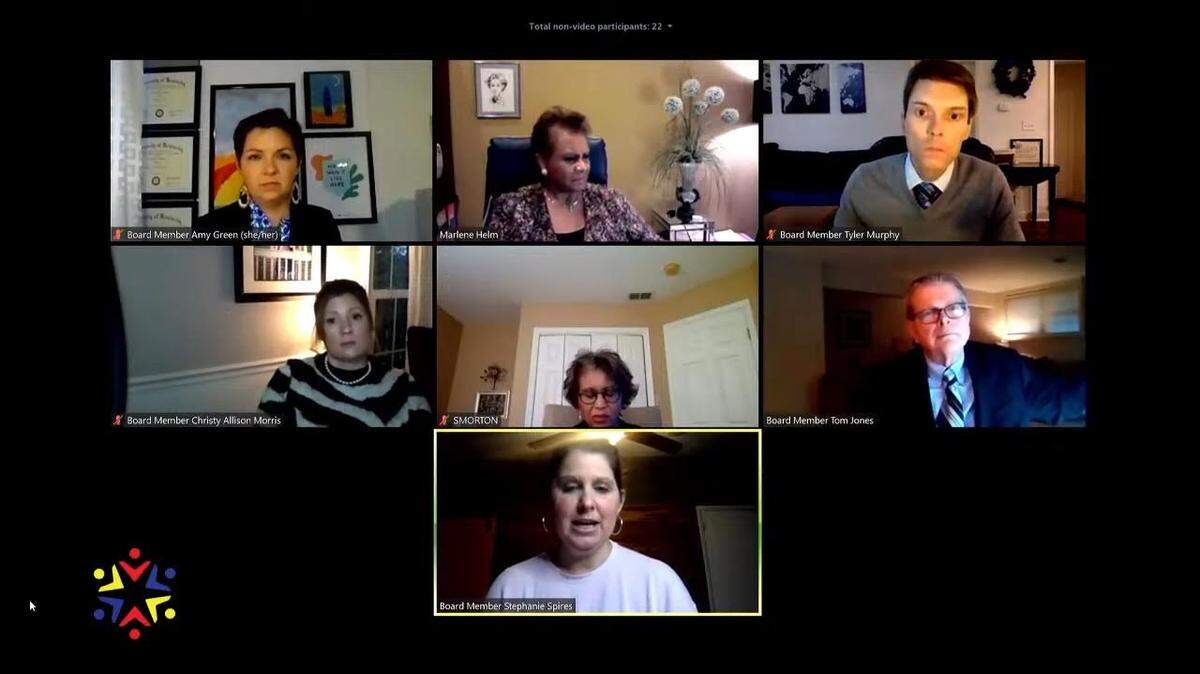
Despite getting $155 million in federal COVID stimulus money, Fayette schools face a future budget deficit if the school board doesn’t raise property taxes, according to District Chief Financial Officer John White.
At a preliminary budget discussion Thursday, some school board members said Fayette taxpayers will likely balk at adopting a property tax rate that will generate a 4 percent increase in revenue.
Between 2000 and 2015, in all but one year, Fayette County Public Schools raised the property tax rate so that it generated a 4 percent increase in revenue. But the school board has not raised the property tax rate for the last three years.
“My constituents are going to ask ‘Why do you need to raise taxes when the district is going to have a windfall of federal dollars.’ While that is not necessarily my position... explain to me... why we should dedicate additional money beyond the $100 plus million dollars,” said board member Tom Jones.
In budget work sessions, the school board has begun discussing whether to implement a higher tax rate, and the budget staff has asked for direction in whether to build the 2021-2022 budget on the additional revenue, estimated at at least $15.9 million for the general fund. School board members have not yet made a commitment to the higher rate.
White said the $100-plus million dollars was one-time money the district will receive in phases specifically for issues surrounding the COVID-19 virus, above and beyond the normal district operating expenses.
White said the stimulus funds would be used to help students who had fallen behind during the pandemic, for summer school, for cleaning, additional staff and other coronavirus needs. The funds will ultimately go away, he said. Acting superintendent Marlene Helm said the COVID stimulus money is considered emergency funds and the district has to be careful not to use them to run the school district.
If the board does not implement a property tax rate resulting in a four percent increase in revenue, “we will have foregone several million dollars,” said White. “That basically is assuring a budget deficit in the future years.”
Jones said he hasn’t decided whether he will vote to raise the property tax rate, but “there’s likely to be some hard push back in the community to our raising property taxes” given the COVID stimulus money.
White said district staff won’t be asking the school board to approve a tentative budget until the end of May -- May 30 is the state required deadline . The school board will approve a working budget in the fall.
Tax rates are adopted by the school board in August or September. District officials don’t yet have final numbers on exactly how an increase would impact the district budget, only estimations.
The budget staff provided an example that said the estimated annual one-time impact of the 4 percent revenue increase on a property owner with a home valued at $150,000 would be an increase of $49.50 to $64.95.
The general fund budget of local and state revenue sources for 2021-2022 is projected at $583.2 million. A safety tax was levied and approved by the Fayette school board in 2018-2019 that has a budgeted amount of $13.2 million that will be discussed at the regular May school board meeting.
The total tentative projected budget is $738.6 million.
The budget staff has showed the board $23. 2 million in proposed expenses for 2021-2022, including the $2.2 million new Carter G. Woodson elementary academy for males, the addition of third grade at the Rise STEM Academy for females at $750,000 and a $2.9 million social studies curriculum.
Board member Stephanie Spires and board member Amy Green said the school board needs to see how the local economy recovers from the pandemic and moves forward in the next quarter before making a decision. Spires said she has concerns about a future budget deficit, “but I also know that our families and our community are hurting right now...they are struggling financially.”
In September 2020, given the economic challenges the coronavirus pandemic brought to families in Lexington, the late Superintendent Manny Caulk said he did not feel it was the right time to ask for a higher tax rate.
As a result of his recommendation, the school board decided for 2020-2021 to levy a total rate of 81.0 cents for real estate and 76.0 cents for personal property per $100 assessed valuation and a total motor vehicles property rate of 59.2 cents per $100 assessed valuation.
That was unchanged from the year before.
This story was originally published April 26, 2021 at 7:40 AM.