
KY schools need to do more to confront racism, thousands of students report in new survey
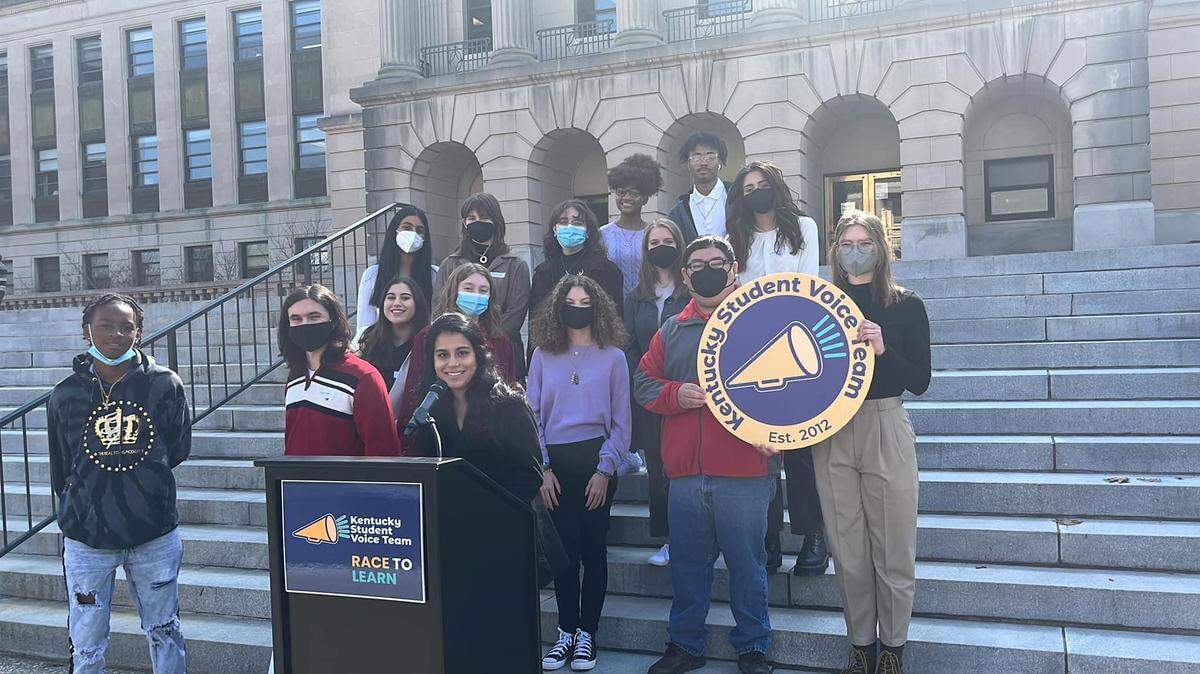
A December survey of 10,725 Kentucky middle and high school students by their peers found that 46% thought their schools should do more to confront racism.
The Kentucky Student Voice Team’s “Race to Learn” study released Thursday was “launched in the midst of heated local and national conversations about whether and how to discuss issues related to race and ethnicity in school,“ Pragya Upreti, a senior from Lafayette High School in Lexington, said.
Despite what is taught or not taught in the classroom, Kentucky students are talking about race and ethnicity, the survey found.
Thirty-nine percent of students reported that they regularly have conversations with each other about race and ethnicity outside of the classroom.
Abraham Garcia-Romero, a senior from Ohio County High School, said with just a few weeks left in Kentucky’s legislative session, the student researchers felt it was urgent to share what they heard from other students.
Garcia-Romero said the General Assembly’s House Bills 14 and 18 are examples of a number of “harmful” pieces of legislation that would limit what teachers are allowed to discuss with students in school.
Those bills have not moved forward in the General Assembly, but there are also critics of Senate Bill 138 which would require two dozen specific documents to be taught in middle and high school history classes and to set limits on how teachers are permitted to talk about racism, equality and economic opportunity in classrooms.
That bill has been approved by the Senate and sent to the House.
“While some policymakers may believe that having open discussion about the history and legacy of racism creates problems, thousands of Kentucky students who responded to our survey, including both white students and students of color, believe that doing so actually addresses them,” Garcia-Romero said.
10,725 Kentucky middle and high school students from 114 counties took the survey on race, ethnicity and school climate.
More survey findings
The Kentucky Student Voice Team’s findings, which students released at a news conference outside Kentucky’s Capitol Annex, include:
▪ 31% of Kentucky students of color responding to the survey reported that they often hear students make insensitive comments about the race or ethnicity of other students in school.
▪ Some students perceive racial or ethnic bias in the way rules are enforced in school. 18% of all students and 23% of students of color surveyed report that rules are “rarely” or “never” fairly enforced for students of different racial and ethnic backgrounds.
▪ 39% of Kentucky students of color surveyed report that since Kindergarten, they have never had a teacher of a similar racial or ethnic background. There was a correlation between students who have never had a teacher of a similar racial or ethnic background and those who expressed a lack of belonging in their school.
One white ninth grader in a rural county told researchers that white students can be openly racist and receive no punishment whatsoever, the report said. One white tenth grader in an urban area said their school has done a decent job of discussing race and attempting to build an equitable environment for students of color, but there was more work to be done.
A Black student from an urban area said Black history is barely talked about in their classes, and another Black student from an urban area, a sixth grader, said they had not had a teacher with a racial or ethnic background similar to their own.
The report offered recommendations for school administrators, including that they select culturally competent staff and recruit and be intentional about supporting more ethnically and racially-diverse teachers.
Administrators should encourage students from underrepresented racial and ethnic groups to voice their concerns about racism without the fear of repercussions, facilitate discussions about difficult issues around race and ethnicity and take reports about school discipline discrepancies across race and ethnicity seriously, the report said.