
Can human hair be used to repair bridges? Research team at UK working to find out
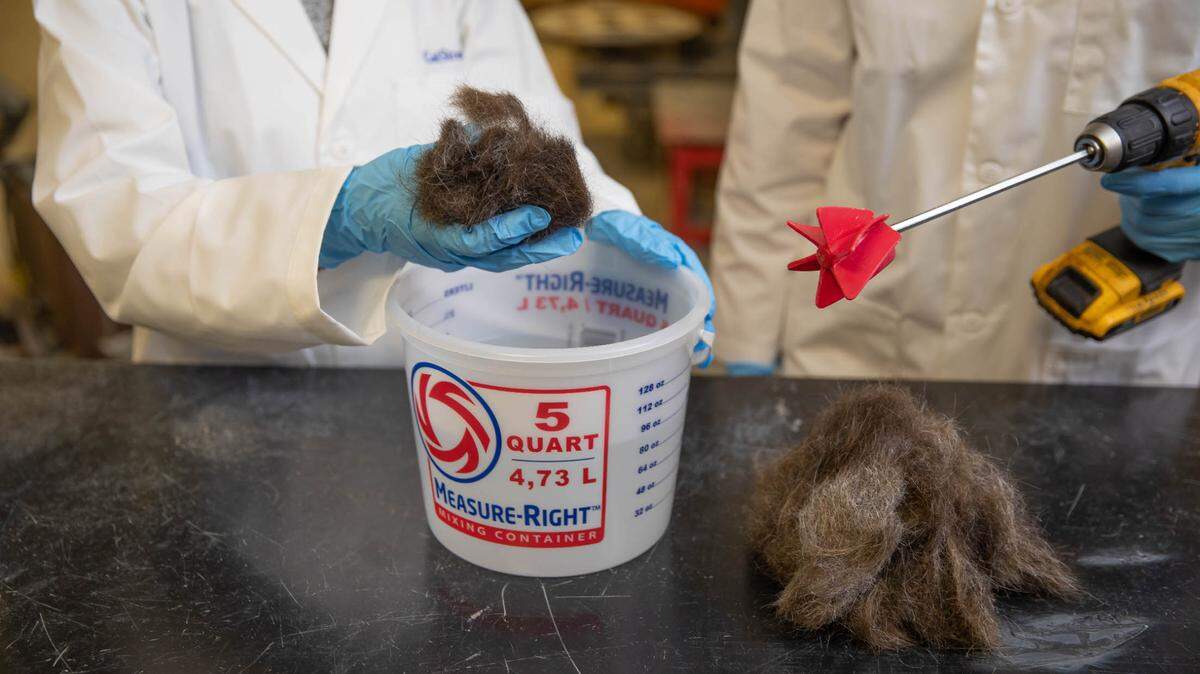
A team of researchers in the University of Kentucky College of Engineering are looking to an unusual source to create new building materials: human hair.
The team is working on developing a sustainable construction material that can be used to repair bridges and buildings around Kentucky and beyond. While still in its first phase, the material uses human hair mixed with a natural resin to create forms that can be used in repairs, said UK engineering professor Issam Harik. Because the materials used are natural, they are more sustainable than traditional building materials.
Harik acknowledged that human hair is not the first thing people think of when looking at construction materials. But materials like silk and wool have long been used to make clothing.
“It’s nothing new,” Harik said. “Wool has been used throughout human history, and we are not the first ones to use hair in some application,” noting an engineering study that used hair as a fiber for making concrete.
Much of the work has been done by UK and Fayette County Public Schools students, who have been working on finding the best and strongest mixture of hair and resin, Harik said.
“From the start, it was a student-led project,” Harik said. “They did all the trials and adjustments to the process to get it to where we can use that hair with a natural resin.”
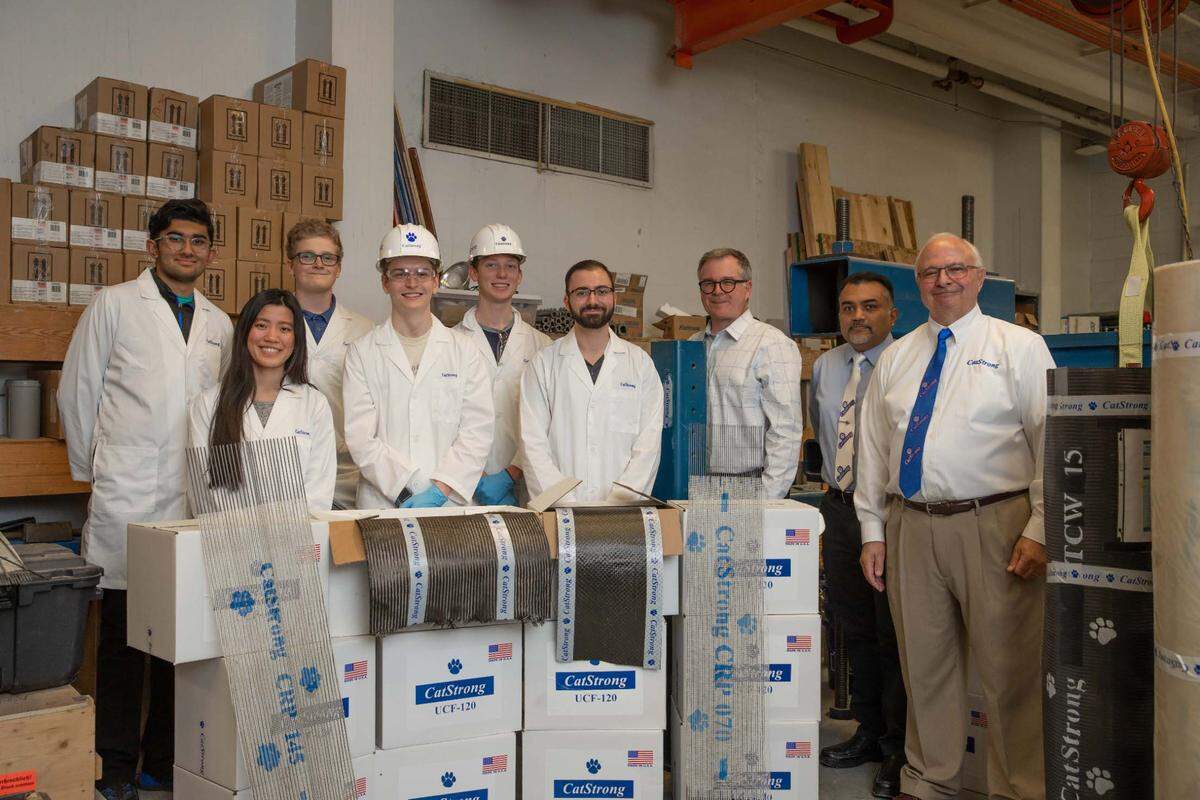
Harik has been researching fiber reinforced polymers since the 1990s with a UK group called CatStrong, working on creating construction materials from things like hemp. His focus has been on looking at how those polymers can be used to repair bridges and buildings in Kentucky. Abheetha Peiris, a researcher at the Kentucky Transportation Center, also leads the research into hair as a building material.
At the start of the project, a student sourced about 30 gallons of hair clippings from a salon, which is still being used in the research, Harik said. First, the hair is cleaned, and then mixed with a binder and pressed into thin sheets to create concrete construction forms, Peiris said.
Hair has been found to be a strong building material, and can withstand pressure of about 30,000 pounds per square inch, Harik said. In comparison, steel is about 60,000 pounds per square inch, and wood can withstand around 20,000 pounds per square inch.
“From a strength point of view, we have a strong material,” Harik said. “When we’re doing construction, you don’t need strength in every component. In construction, we use concrete, we use steel, we use aluminum, we use wood ... (Hair) is not the solution to everything, but it can become part of the construction process.”
In addition to being strong, human hair is also a sustainable option for construction. Traditional construction materials, like wood and steel, are recyclable. Materials like concrete, while sometimes recycled, usually end up in a landfill, Harik said.
“The new generation does not accept that when we build a bridge, in 100 years we will take it and dump it into the ground,” Harik said. “They want to see that if you build a bridge now, when we take it out in 100 years, we want to make sure that whatever we take out can be reused.”
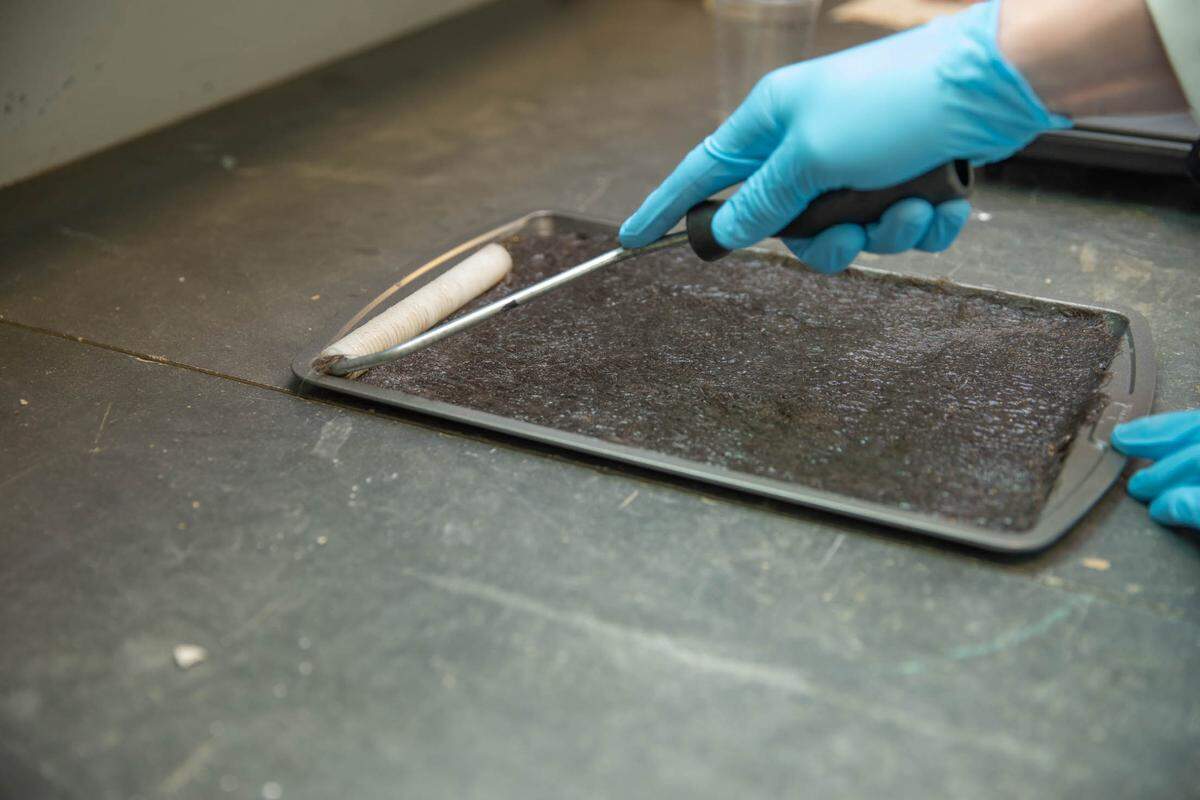
Harik said he hopes the material created with hair will be able to be used beyond bridges and construction. One potential use could be for the automotive industry, which already uses natural fibers for materials.
“There are many applications where we don’t really need the strength, we just need the form itself,” Harik said. “Not only can it be used in bridges, which is our specialty, but it can be used in housing, in automotive and aerospace, just like with the other materials we use.”
Next semester, students will begin making threads and fabrics out of fibers, and making shapes with the human hair and resin, Peiris said. Although the timeline until the material could actually be used in construction is lengthy (at least a year and a half), Peiris and Harik are optimistic about the early results they’re seeing.
“Next year will tell us a lot, not only on strength — we know it is strong — but it will tell us what is the strength we can get out of it, and the type of fabrics we can use,” Harik said.