
UK revokes tenure from former head of equine testing laboratory
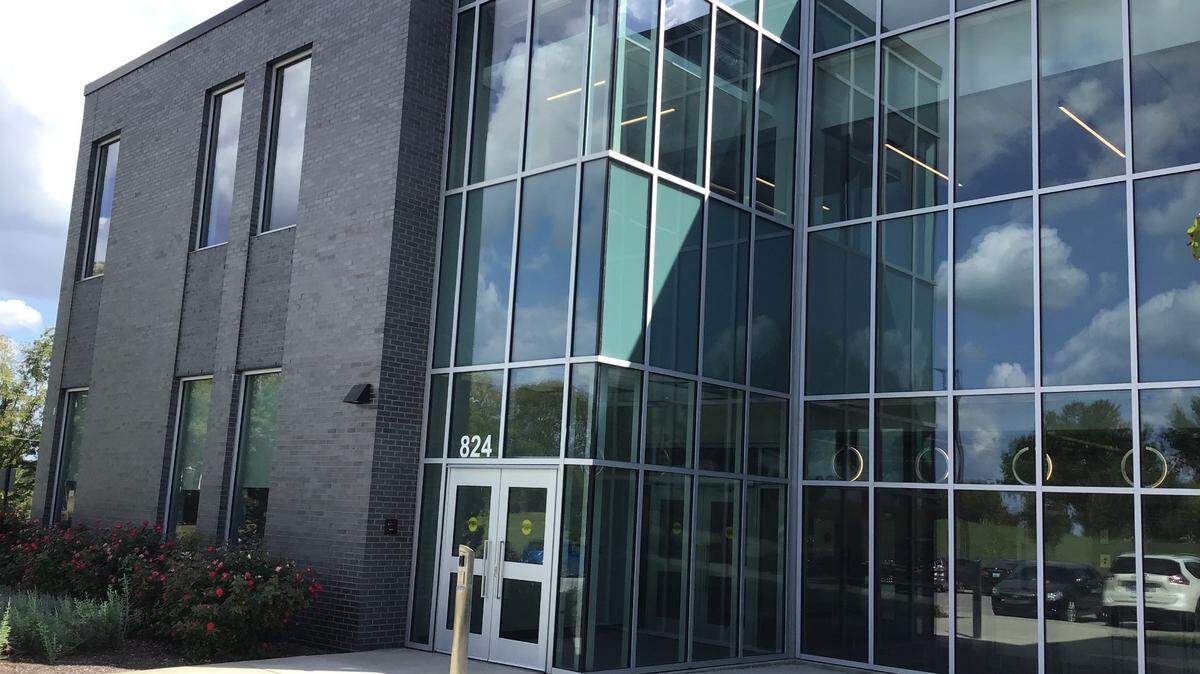
The University of Kentucky has revoked tenure from the former director of the equine testing lab who was fired last year for falsifying test results.
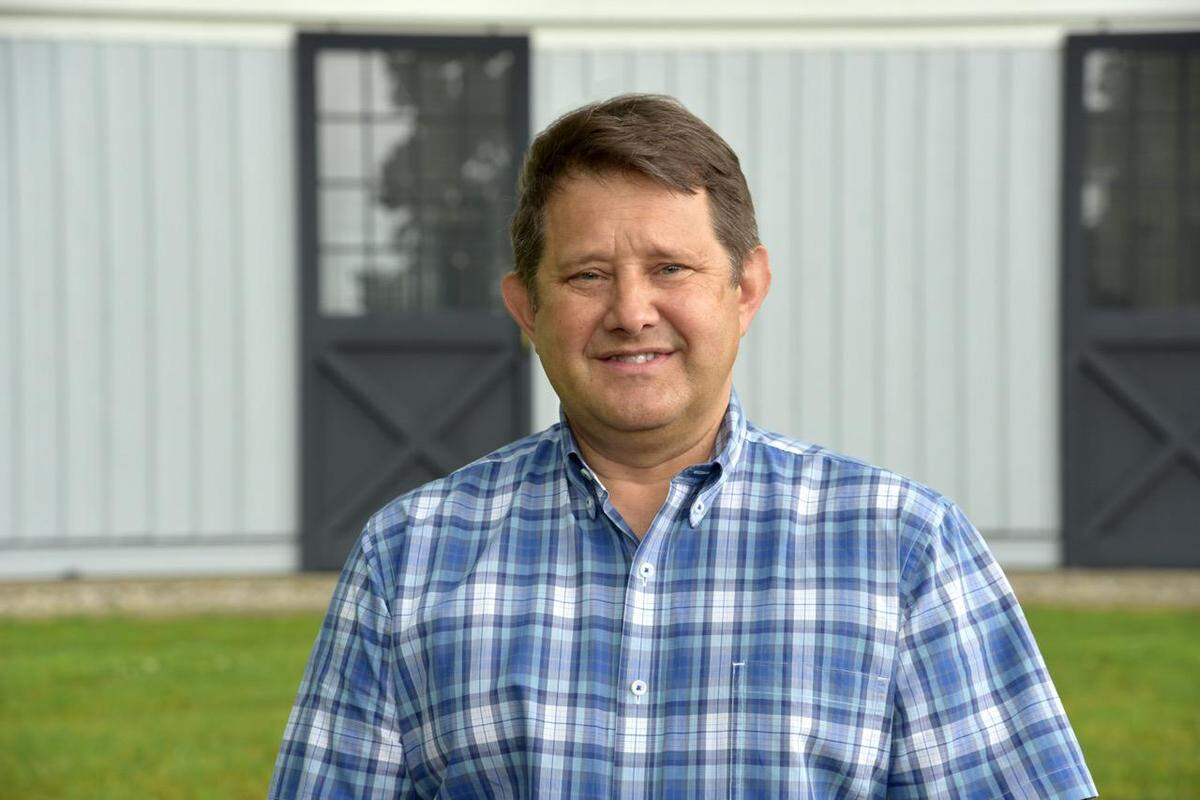
At a special meeting of the board of trustees on Thursday, the board voted to remove Scott Stanley’s tenure status — a rare move in higher education — and fired him from his role as a professor in the Martin-Gatton College of Agriculture, Food and Environment.
Stanley was also the director of the Equine Analytical Chemistry Lab, before being removed from that role in March 2024 after an investigation.
Receiving tenure is a lengthy, often yearslong, process for university faculty, designed to help protect faculty’s academic freedom. Tenured employees can only be terminated for cause or under specific circumstances, including misconduct and ethical violations, according to the American Association of University Professors.
At a special called board of trustees meeting on Thursday, Stanley’s lawyer Cristina Keith and UK’s assistant general counsel Whitney Stepp-Gay answered questions from the board about the investigation into Stanley, his role at UK and his removal from the lab.
UK said in addition to falsifying and misrepresenting test results, Stanley also demonstrated a lack of internal controls in the lab and had conflicts of interest and improper hiring practices.
All board members voted in favor of removing Stanley’s tenure and role at UK, with faculty trustee Karen Petrone abstaining from the vote.
Keith told the Kentucky Lantern she was “disappointed” in the results of Thursday’s hearing.
In a statement made through Keith on Friday, Stanley denied the allegations made against him and called the process “deeply flawed and fundamentally unfair.”
“I have devoted my career to science, integrity, and transparency,” Stanley said in the statement. “Tenure exists to protect due process, yet that principle has been disregarded. I am considering all legal remedies to ensure fairness is upheld.”
Stanley waived his right to a hearing in front of the board, according to a statement from UK.
“We must uphold the highest ethical standards and comply fully with university and industry regulations,” Board of Trustees Chair Britt Brockman said in a statement. “Any violations of these policies are taken seriously and addressed to maintain the integrity of this work — the work of thousands of people across this institution.”
Frank Shoop, a longtime board member, emphasized the importance of the testing laboratory, which tests blood samples of race horses for drugs and doping agents.
“The credibility of the industry and thoroughbred racing in this state, and other states, relies on the testing facility,” Shoop said.
UK announced last September it had removed Stanley from his position in the lab, and was moving for his removal from his role at the university, after an investigation showed he’d falsified test results for a banned blood-doping agent called Erythropoietin, and at least four other results from his lab were called into question, according to an audit released by UK last year.
While Stanley was removed from the lab in 2024, earlier this year the university said the process of terminating him as a tenured faculty member was still ongoing.
Revoking tenure rarely happens in higher education.
The UK board previously revoked tenure from a professor was in 1984, when the Kentucky Community and Technical College System was still part of the university, and a Jefferson Community College associate professor was in prison for sexual abuse of minor children, according to university archives.
UK, feds investigated Stanley and laboratory
Stanley has denied the allegations against him, calling them “baseless” in a statement made through his lawyer last year.
Last year, Lisa Lazarus, CEO of the Horseracing Integrity and Safety Authority, said federal law enforcement officials were investigating Stanley.
Under HISA, the private anti-doping regulatory agency created in 2020 by Congress, racing has moved toward uniform standards in drug testing across the country. UK’s lab was one of six in the U.S. accredited by HISA to drug test samples for horses. UK tested samples for HISA for eight months, from May 22, 2023, to February 2024.
In all, HISA sent the university between 8,000 and 9,000 samples from Kentucky and Florida.
But in March 2024 — the same month Stanley was removed from his administrative role at the university — the national racing authority dropped UK’s testing lab from its accredited list, meaning drug tests could no longer be performed there for state regulators.
Stanley was head of the lab, which also performed drug tests for the U.S. Equestrian Federation, beginning with the lab’s formation in 2019. And in 2022, the lab began performing racing drug testing for the state of Kentucky.
The audit from UK found that in at least one case, Stanley told HISA that his lab had found no Erythropoietin in a sample received on Nov. 9, 2023, but the lab had not tested for the substance. His UK lab wasn’t even equipped to do that kind of work, according to the audit. It is unclear what state or horse was involved.
According to UK, in four cases, all of which were used in racing investigations, the samples “lacked results documentation,” meaning no results were recorded in the university’s system, even though in two of the cases Stanley emailed results to racing officials.
The audit could not substantiate any additional falsifications but found that the lab’s internal systems were inadequately controlled and that “there were numerous opportunities in the (lab’s) standard workflow that could potentially allow for sample tampering or records to be changed,” including “unfettered access” by Stanley to samples and to records.
Earlier this year, UK announced it had sold the Equine Analytical Chemistry Lab to Eagle Diagnostics, and renamed it Equine Integrity & Anti-doping Science Labs. Travis Mays, who worked in a similar lab at Texas A&M University, was appointed the new director.
Reporter Janet Patton contributed to this story.
This story was originally published September 11, 2025 at 1:37 PM.