
1+ year into Trump administration, uncertainty remains for KY schools as cuts loom
Kentucky schools have been gripped by uncertainty over the past year as the U.S. Department of Education, under President Donald Trump, has sought to slash funding to public schools across the country.
In Kentucky, the Trump administration rescinded grants to 40 schools across 20 districts in December. The group that administered those grants — the Prichard Committee for Academic Excellence — said the cuts accounted for $47 million in “full-service grants,” which cover a wide range of services for students and families, including health care, tutoring programs, meals and immigration assistance.
And last year, Trump signed an executive order seeking to abolish the U.S. Department of Education altogether, which local officials warned would devastate public schools in Kentucky.
On Wednesday, the Prichard Community said its appeal to maintain the grants had been denied, and they pleaded with the public for support.
“Now more than ever, Kentucky needs community at the table,” CEO and President Brigitte Blom said in a news release. “Academic success does not happen in isolation. Mental health care, reliable transportation, family engagement and other wraparound services are essential to reducing chronic absenteeism and improving education outcomes statewide. Many of these supports and resources already exist in Kentucky communities; they just need to be connected with schools in ongoing, meaningful ways.”
More than a year into the second Trump administration and months after the grants cuts were announced, many Kentucky school districts remain in limbo. The funding had already been awarded, budgeted and, in many cases, applied.
The funding has ended, but at some schools, enough money remains that staff can work through the end of the school year.
Murray Bessette, the acting head of the U.S. Department of Education’s Office of Planning, Evaluation, and Policy Development, told the publication Education Week the funds either no longer aligned with the president’s policy agenda or violated civil rights law.
But Blom pointed to evidence including widespread testing score increases and improved attendance as proof the money was working in districts where it was applied.
“National research shows that every dollar invested in integrated student supports generates $7 to $15 in social and economic return,” Blom said. “Stopping this work now would cost more than it saves.”
How Kentucky schools used the grants
For students in Rowan County, “the impact (of the cuts) will be significant,” said Kellyn G. Poage, community schools director for Rowan County Public Schools. “Many relied on services such as social-emotional learning supports, college and career preparedness, and family engagement programming. “
Some of those programs will become less accessible or eliminated, Poage said, affected students’ attendance, engagement, and overall well-being.
The grants were intended to run for give years, but they’re being canceled after just two.
“The cancellation of this grant dealt a huge blow, not only to the two schools receiving grant funding but also to our district as a whole,” said Brian Benjamin, who was community schools coordinator for Owensboro Public Schools until the grants were pulled, eliminating his position.
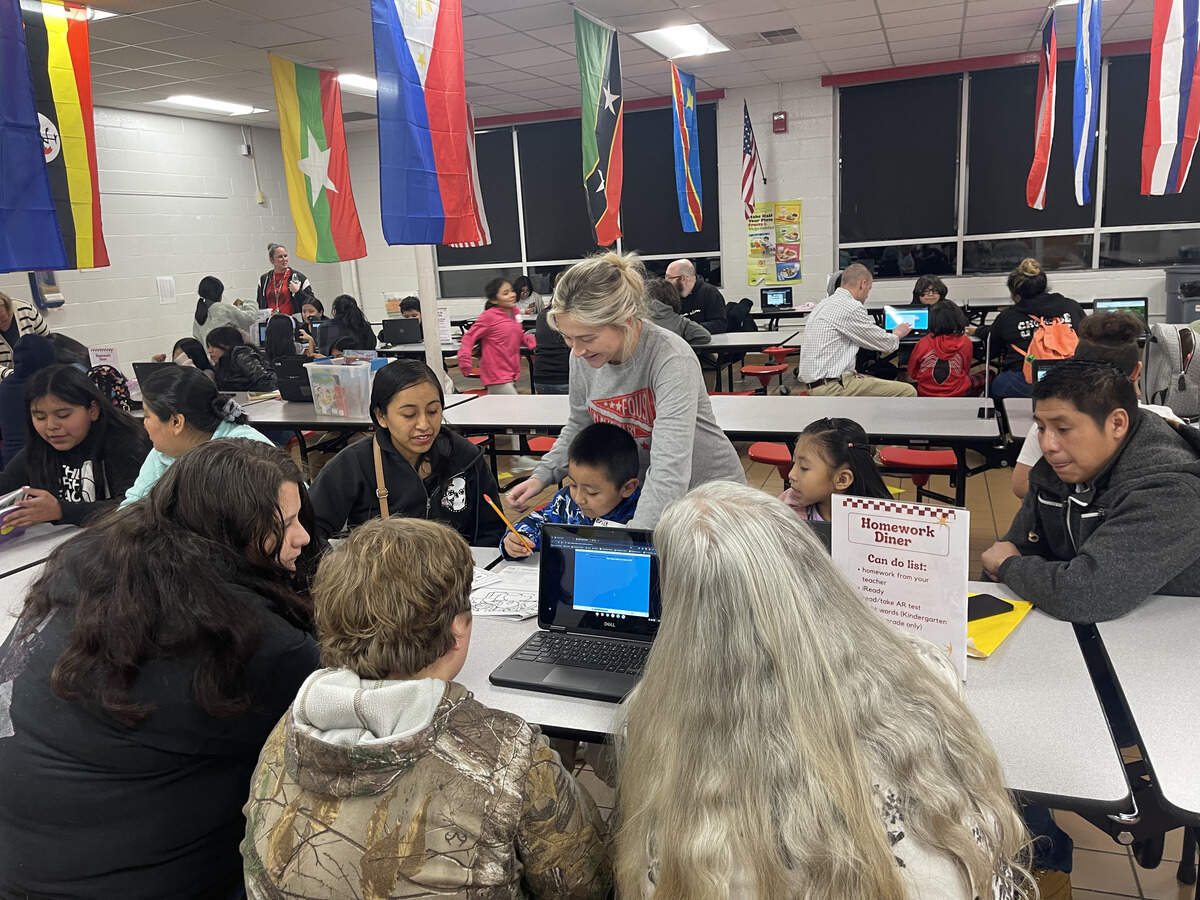
Benjamin was transferred to another position, but he said he was “devastated to not be working in that space anymore, as I was able to see what a true difference having someone dedicated to community engagement can make.
“Just two years into what was projected to be a five-year grant, we had created authentic partnerships centered around parent and community engagement, improvement of core academic skills, post-secondary exposure and readiness, unique enrichment experiences outside of the school day, and so much more,” Benjamin said.
The same was true in Shelby County, where Adam Hicks, assistant superintendent of curriculum, instruction and assessment in Shelby County Public Schools described the grant funding as “fundamentally changing how our schools connect with and support our communities.”
The most visible effect will be on direct services to students and families. At Simpsonville Elementary in Shelby County, for example, grant funding was used to establish a community garden called Bobcat Farms, which gave students hands-on learning experience and civic engagement.
Angie Oakley, the family resource coordinator at Simpsonville Elementary, said the community garden program is too important not to continue, but the funding source is uncertain. “We don’t know what it will look like with the funding ending early, but we are in the process of forming a committee to help us navigate the future of Bobcat Farms. We are pushing forward and hoping that we can continue the work that we have started with the support of community partners,” she said.
In Clark County, the district previously had more than 500 students participating in after-school programming under the grant, which provided supplies and stipends for academic coaches at two schools, said Christy Bush, director of the Clark County Community Center. Each session concluded with a popular activity for families and students. Students were offered a light dinner or snack. Many clubs had waiting lists for participation.
Data showed a notable improvement in attendance and a decrease in behavioral issues on club days. Parents reported in surveys that club days were so well-received that there was no struggle to get kids up for school on those specific days. School staff also observed a positive increase in building relationships with students in the different type of setting.
“While we are navigating funding challenges for the future, our resolve remains unwavering. We are aggressively pursuing grants, community donations, and alternative funding to ensure our clubs and this new community hub both thrive,” Bush said. “We are doing everything in our power to protect these opportunities and keep this momentum going for our children and the entire community.”
‘Funds represent more than projects’
Ravaged by floods in 2022, Letcher County Schools spent the past year on a roller coaster as the Trump administration withheld and then released federal funds that had been promised after the disaster.
Among those funds was $3 million to renovate the former Whitesburg High School football field for middle school sports. It was initially denied before being approved by the Federal Management Agency.
During the delay, the district spent $3 million of its own money on a new concession stand, field house, and bleachers on higher ground.
The district is now working to get reimbursed, said Superintendent Denise Yonts.
The U.S. Department of Education also rescinded and then eventually released $3 million the district had intended to use to buy 20 new school buses lost in the disaster, according to the Mountain Eagle, which chronicled the confusion over whether the funds would be disbursed.
Yonts told the Herald-Leader that disaster recovery is complex, “and we understand that these processes involve multiple levels of review and accountability.”
“We are grateful that, through continued communication and documentation, several key funding decisions were ultimately resolved in a way that supports our students and community. We appreciate the efforts of state leaders, federal agencies, and our local partners who worked with us to navigate the appeals and reimbursement procedures,” Yonts said. “Our focus has always remained on rebuilding stronger for the children of Letcher County. These funds represent more than projects — they represent safe facilities, reliable transportation, and opportunities for our students to thrive. “
This story was originally published February 12, 2026 at 5:00 AM.