
What does credit rating downgrade mean for FCPS, Lexington taxpayers? Expert explains
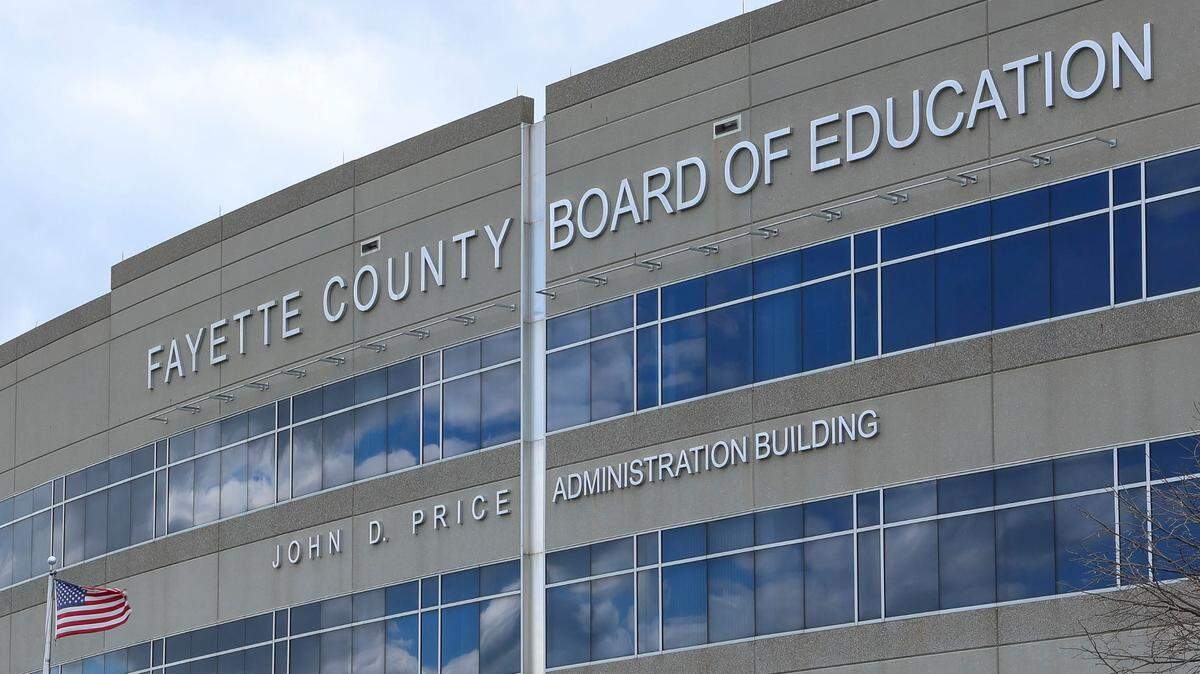
Fayette County Public Schools still has a relatively healthy financial portfolio despite credit ratings downgrades from Moody’s Ratings in recent weeks, and the district could continue to make capital improvements and other investments without impacting Lexington taxpayers, according to experts from Moody’s and an FCPS consultant.
Financial services company Moody’s Ratings downgraded FCPS’ issuer and general obligation unlimited tax ratings two notches in early March, from Aa3 to A2, dropping the district from the fourth-highest rating to the sixth-highest.
Moody’s is one of many companies that provides independent credit ratings to help investors gauge the risk of default or the likelihood a borrower, the district in this case, will fail to make required repayments.
Like personal credit ratings or scores, a higher rating reduces the cost of borrowing for FCPS, while a lower one increases it.
Moody’s said at the time that it lowered FCPS’ ratings — showing less confidence in the district’s ability to repay debt and secure additional bonds — because the district has weak governance and budget management.
The ratings downgrade, according to the report, “reflects the district’s narrow financial position due to structurally imbalanced operations with available fund balance reaching just 4.8% of revenue in fiscal 2025.”
The district’s future lenders could ask for higher interest rates to offset the higher risk following the downgrade, said Moody’s Ratings Assistant Vice President Enrique Cavazos. Cavazos is the organization’s lead analyst for FCPS.
“The issuer rating on the district is sort of just a general evaluation of their ability to pay debt and any sort of similar obligation,” Cavazos said. “So, when we downgrade a rating like that, it’s essentially a signal to investors and lenders that credit quality has weakened.”
Thin safey margin, lots of debt for FCPS
Cavazos said in 2023, the district had an available fund balance of $83 million, which was about 12% of its revenue. The following year the fund balance was 6% of revenue, or about $43 million. In 2025, the fund balance was $26 million, or about 4% of revenue.
According to the report, the district has approximately $938 million in debt outstanding.
The low percentage means the district is operating with very thin financial safety margins and has little buffer to pay for unexpected expenses, handle even the slightest of drops in revenue, or respond to market volatility.
Moody’s scorecards show a fund balance between 15% and 30% of revenue is needed for a strong rating.
Year-to-date fiscal 2026 financial results are trending positively year-over-year for the district, the Moody’s report said, and the rating outlook — which indicates the potential for a rating change and is an opinion on the likely direction of it — has gone from negative to stable, meaning it is unlikely to move.
Why FCPS is still in relatively good financial position
The district’s enhanced credit quality ratings remain unchanged and are still firmly “investment grade,” said FCPS spokesperson Miranda Scully. That rating is separate from those that were downgraded, and it gauges the creditworthiness of a third party, like the state, to intervene in the district’s ability to pay.
Investment grade tells bond issuers that there is a low risk the district will default on the borrowed money.
The unchanged enhanced rating is due to Kentucky’s intercept provision for school debt, which adds a layer of security for bondholders. If a school district falls behind on payments, the state Department of Education may intercept funds the board is due, like its SEEK funding, and pay an issuer or trustee to avoid default.
Moody’s Ratings is the only credit agency that has downgraded the school district as it stares down a budget shortfall and reduced contingency fund.
The double notch downgrade is what’s uncommon, said Lauren Dahan the Moody’s lead analyst for Kentucky’s local governments. It’s more common to move ratings one notch at a time, but significant and fast changes in finances is what drove the downgrade.
“The notable aspect here was there was a two-notch downgrade which, again, is not unheard of. I mean, sometimes we even have downgrades of more notches than that if there’s something really unexpected,” Cavazos said. “But in this case, the financials deteriorated significantly, and so we had to adjust the rating to reflect that.”
Ratings rationale, FCPS financial history
FCPS’ slim financial reserve is mitigated by the district’s growing and diverse economy, the Moody’s report shows. The report said FCPS has a stable enrollment trend, “modest” leverage and fixed costs and no additional plans to borrow.
The district was previously downgraded in 2024 by one notch, bringing it in line with the median rating for school districts across the country, Cavazos said. At the time, Moody’s issued a negative outlook based on a large budget gap it believed would be difficult for the district to close.
“The negative outlook was kind of reflecting that there was a high probability that they wouldn’t be able to (close a gap) and so we felt that there was a high probability of a potential future downgrade,” Cavazos said. “So, this recent downgrade is resolving that outlook.”
Moody’s evaluates roughly 3,500 school districts across the country and last year downgraded 115 of them, while 112 saw upgrades, Cavazos said.
In evaluating credit, Moody’s relies on audited financial statements, forward-looking documents provided by school districts as well as demographic and economic data. It also looks at enrollment trends that inform appropriations from the state.
“Our methodology has a scorecard that ultimately outputs a rating,” Cavazos said. “... It kind of helps us in our analysis. … In that scorecard, we weigh the economy, the financial performance and leverage equally at around 30% each. And then we have an additional 10% that is our institutional framework score.”
FCPS budget trouble
Last year, the school district confirmed it was facing a potential $16 million budget shortfall with a reduced contingency fund. Superintendent Demetrus Liggins has since said the district’s budget is better-managed.
But the financial issues have prompted multiple investigations.
One inquiry by an outside law firm found Liggins failed to follow multiple district policies as well as board governance in handling budget oversight.
Another investigation by a separate law firm found employees under the superintendent’s direction should have had more and better communication about budget issues the district was facing.
No one was found to have deliberately done anything wrong, according to those investigations.
Liggins admitted to needing to provide better oversight for budgeting, and says he has taken more direct oversight of financial matters.
District calls on financial consultant
The district’s financial consultant, Michael George, told the school board during a March 11 budget workshop the change in credit rating is, “about a 10 basis point move in terms of your cost of capital.”
Moody’s analysts who spoke with the Herald-Leader said the organization only issues credit ratings and could not comment as to how specifically the downgrade would impact the district’s future finances.
But George offered some insight.
“Let’s say you were to borrow 20 years from today, that rate may be 4.1%, whereas before the rating change, it would’ve been 4% even,” said George, who is a managing director at Compass Municipal Advisors. “... From a cost of capital perspective, that 10 basis points equates to about $125,000 in interest cost on every $10 million borrowed over 20 years.”
FCPS has a fixed rate on its debt, so the downgrade should not impact those payments, only future ones.
“As it sits today, your debt service obligations are about $55 million per year,” George said, referring to the cash required to cover repayment of interest and the unpaid balance of what was borrowed.
George said if the district closes out the fiscal year with a structurally sound budget followed by two years of surpluses, the rating could be upgraded back to its prior position, or a higher one.
The Moody’s report agreed. A trend of structurally balanced operations and sustained maintenance of reserves around 10% of the district’s revenue could lead to an upgrade in ratings.
This story was originally published March 23, 2026 at 5:00 AM.
.JPG)