
Beshear puts ‘some pressure’ on UK leadership. Can he actually make changes?
AI-generated summary reviewed by our newsroom.
- Laws and regulations give Gov. Beshear leverage over UK leadership.
- Beshear publicly criticized UK hiring and layoff decisions, including Aramark dining cuts.
- Past court fight ended with legislature validating a governor's board changes.
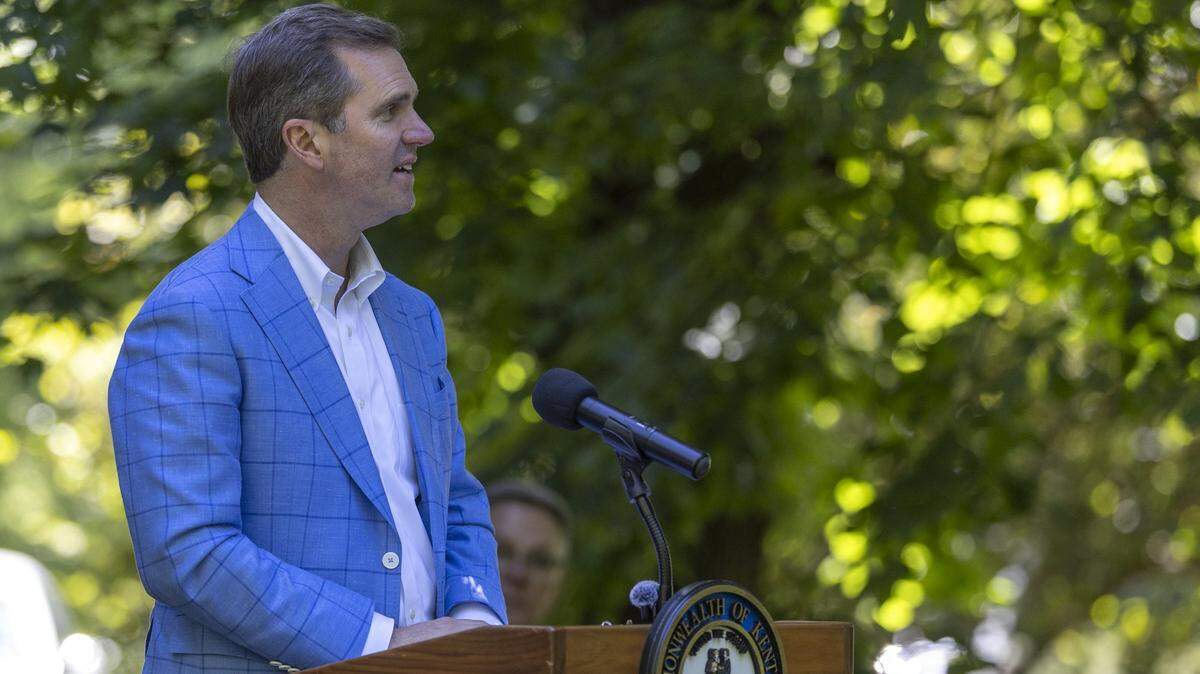
Loosely defined laws and regulations give Kentucky Gov. Andy Beshear significant leverage over who leads the state’s flagship university, a power he suggested he might invoke after recent disagreements with the University of Kentucky.
Beshear recently called for the UK’s Board of Trustees, President Eli Capilouto and his administration to be transparent about hiring decisions and layoffs. The governor also asked faculty and staff to be considered in decisions that impact them, including over 900 dining workers who will be laid off on June 30 by a UK partner, Aramark.
He also has slammed the hiring of Gregory Van Tatenhove, a U.S. district judge, as the next dean of UK’s law school, and Athletic Director Mitch Barnhart’s retirement and appointment to executive in residence of a new UK Sport and Workforce Initiative, which Barnhart eventually turned down after the public raised concern about him being paid nearly $1 million a year for the role.
After back and forth with the university in public comments, Beshear said he would review UK’s board of trustees. He took issue with UK’s change in policy to allow certain roles, including Van Tatenhove’s and Barnhart’s, to be approved by the president alone. UK says that change took effect in 2024.
“I’m going to take a real close look at the board of trustees to make sure we’re getting real strong oversight, and they should absolutely walk back what’s claimed to be the 2024 action that moved these decisions to the president,” Beshear said on April 30 at a press conference.
Beshear also compared the shriveling of governance at the University of Louisville in 2016 to what could happen at UK. Former Kentucky Gov. Matt Bevin replaced the University of Louisville’s Board of Trustees, which pressured its president at the time, James Ramsey, to resign that year.
“And then what happens is what would have been a stellar legacy ends in a very difficult way,” Beshear said at the April 30 press conference.
Davy Jones, a former University Senate member who voluntarily tracks policies related to UK, suggested Beshear could be foreshadowing some kind of change within the board of trustees, who have the final say over UK’s financial, educational and other policies.
“We’ve got a governor here who’s starting to apply some pressure,” said Jones, a toxicology and cancer biology professor emeritus, or retired professor.

What the state law, university regulations say
Sixteen of UK’s 20 trustees are appointed by the governor, and the governor has the authority to remove and replace any or all appointed trustees, according to state law and UK’s governing regulations.
The governor must have a reason to remove a trustee, but those reasons are vaguely worded.
This person can be removed “for any cause the Governor deems sufficient… including but not limited to malfeasance, misfeasance, incompetence, or gross neglect of duty,” Kentucky law says.
Beshear also can remove all 16 appointed trustees at once for more specific reasons, including an inability to “hold regular meetings, to elect a chairperson annually, to establish a quorum, to adopt an annual budget, to set tuition rates, to conduct an annual evaluation of the president of the university, or to carry out its primary function to periodically evaluate the institution’s progress in implementing its mission, goals, and objectives to conform to the strategic agenda.”
Beshear would be required to notify the Kentucky Council on Postsecondary Education, or the state’s higher education policy-making agency, and the trustee being removed “in writing.”
Within seven days of the governor’s notice, the trustee could resign or argue against their removal. The CPE would investigate the case within 30 days of the notice, but Beshear would not have to agree with the council’s advice.
To finally remove a trustee, Beshear would have to sign an executive order and replace them with a new appointee. He would choose the new appointee from a pool of three nominees chosen by the Governor’s Postsecondary Education Nominating Committee.
State law says the governor should make appointments to equally reflect the demographics of Kentucky.
“The Governor shall make the appointments so as to reflect, inasmuch as possible, equal representation of the two (2) sexes and no less than proportional representation of the two (2) leading political parties of the Commonwealth… and to assure that appointments reflect the minority racial composition of the Commonwealth,” state law says.
A prior case of governor, UK administration discord
The governor cannot hire or fire a university president. But Beshear has significant influence over his appointees, who make those presidential employment decisions.
Jones recalled when Louie Nunn, a former conservative Republican Kentucky governor, pressured John W. Oswald, a progressive UK president, to resign in the 1960s.
“Some of us are thinking, Beshear can pull on Capilouto what that governor in the ‘60s did on Oswald, ‘I’m gonna stack the board against you now,’” Jones said. “(Oswald) knows it’s gonna happen. So he submits his resignation to the board.”
But the governor would not get to make these decisions unchecked. Kentucky Attorney General Russell Coleman can take legal action against the governor, usually in the form of a civil lawsuit, if he deems removals unconstitutional.
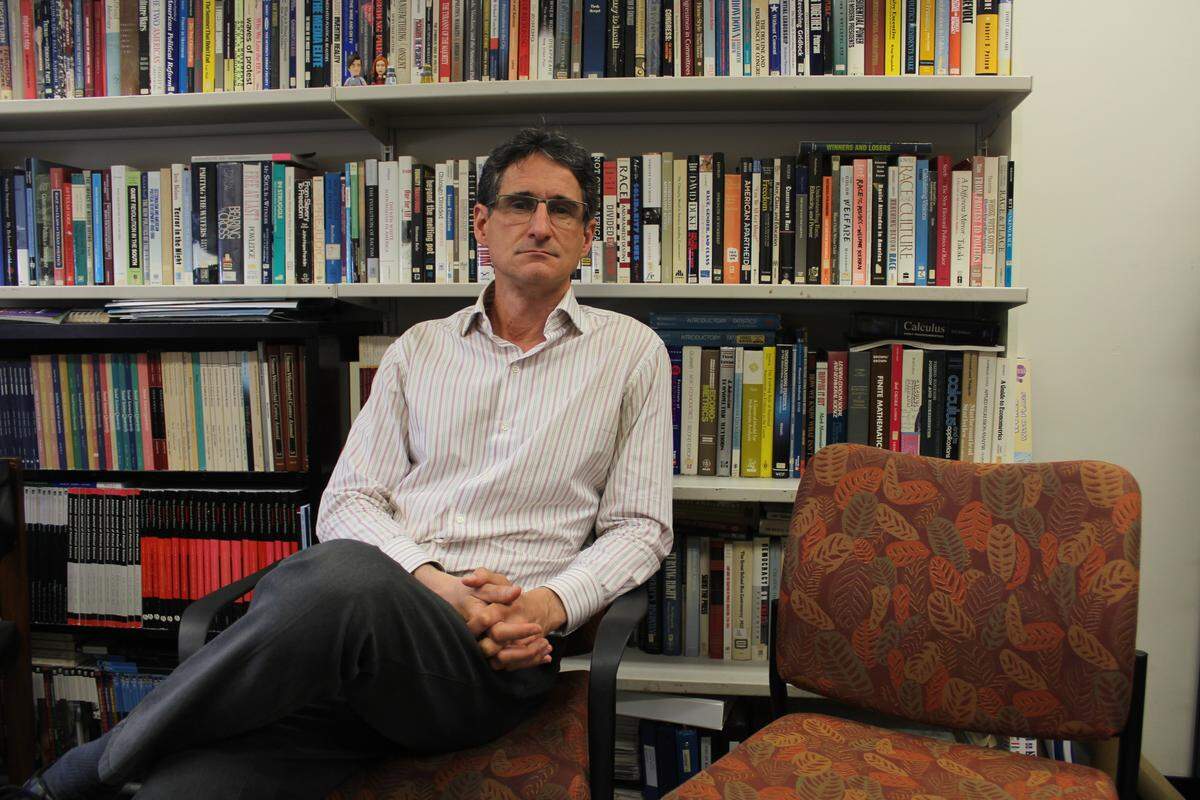
The governor can also put “soft pressure” on the board to promote change or encourage people to resign without removing anyone himself, said D. Stephen Voss, an elections and politics professor on UK’s Faculty Senate, which replaced the University Senate and offers advice to UK’s administration.
“There’s always the use of soft power to the extent a governor has the ability to use soft power against these folks, but often people get put on these boards because they’re wealthy or politically connected,” Voss said.
When an appointed trustee’s term ends, the governor must replace that person anyway, which is expected to be a more seamless transition than unseating someone.
“With these staggered terms of trustees, every year a few roll off and have to get replaced,” Jones said. “A governor across several years can wind up moving the board to their position.”
Did UofL issues set a precedent?
Former Kentucky Gov. Matt Bevin canned the entire University of Louisville Board of Trustees with an executive order in 2016. He called the board “operationally dysfunctional,” the Louisville Courier Journal reported.
Beshear, who was attorney general at the time, challenged Bevin’s decision. Franklin Circuit Judge Phillip Shepherd agreed that Bevin acted illegally as a “judge, jury and executioner.”
Bevin appealed Shepherd’s order, and the Kentucky Supreme Court ultimately allowed him to keep the changes because the General Assembly already rewrote a law to validate his reasons for gutting the board.
“That controversy, that clash, settles what the governor can and can’t do,” Voss said.
This story was originally published May 18, 2026 at 5:00 AM.