
Kentucky schools rank nationally for reading, math growth. See the districts named
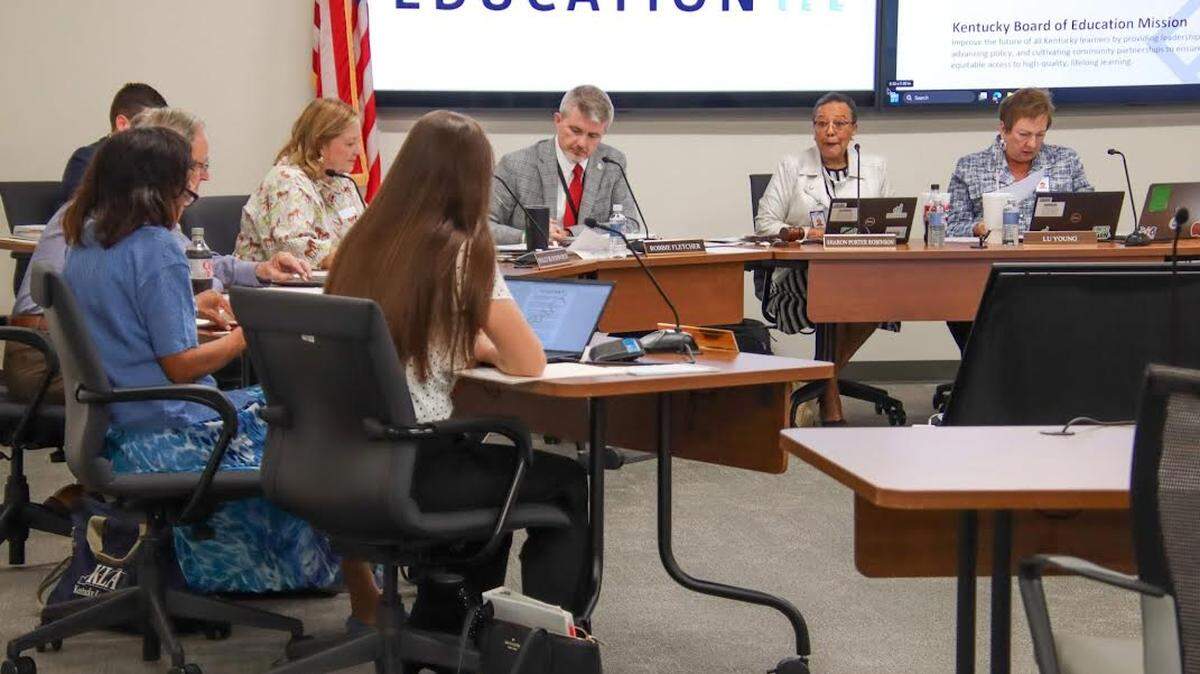
A national report ranks Kentucky among the nation’s best in terms of academic recovery in reading and mathematics, the Kentucky Department of Education said Thursday.
KDE cites the 2026 Education Scorecard, a collaboration between the Center for Education Policy Research at Harvard University, The Educational Opportunity Project at Stanford University and faculty at Dartmouth College.
Kentucky ranked eighth out of 38 states in academic growth in mathematics and fifth out of 35 states in reading between 2022 and 2025.
The latest report on students’ academic recovery combines state test results for roughly 35 million grade 3–8 students nationwide with national assessment data to describe changes in local communities, KDE said.
“The Kentucky Department of Education has been making great strides in literacy and numeracy education the last several years with several new, innovative methods of improving instruction in these areas, and we are seeing even more evidence that these investments are working,” Commissioner of Education Robbie Fletcher said in a news release.
Several Kentucky school districts were included among 108 districts across the country called “Districts on the Rise,” for excelling in both reading and math: Anderson County, Perry County, Marion County, Ohio County, Corbin Independent and Pike County.
Districts that were mentioned for growth in mathematics performance were Paducah Independent, Harlan County, Grayson County, Franklin County, Johnson County and Boyd County. Districts that were honored for growth in reading were Clay County and Daviess County.
“Kentucky’s progress in literacy and numeracy reflects a sustained, statewide commitment to high-quality instruction – driven by aligned instructional resources, evidence-based professional learning, and strong partnerships with districts and educators,” said KDE Chief Academic Officer Micki Marinelli.
The Education Scorecard said states experienced gains in literacy due to specific early-literacy reforms and initiatives at the state level tied to the science of reading, including Kentucky.
Kentucky’s efforts with early literacy include the Kentucky Reading Academies and the Language Essentials for Teachers of Reading and Spelling training for teachers and administrators
Kentucky has also excelled with initiatives to improve numeracy education, including the Kentucky Center for Mathematics K-5 Numeracy Counts Teacher academies, and Partnership Institute for Math and Science Education Reform Administrator Numeracy Counts academies.
The 2026 Education Scorecard also mentioned challenges surrounding education in recent years, including an uneven recovery from the COVID-19 pandemic, recent chronic absenteeism rates and how the rise of social media has affected learning in the classroom.
Marion County Schools was offered as a case study in the report, described as a compelling model of what focused, evidence-based reform can achieve in a rural district.
Coaches operate in six-to-nine-week cycles, working directly with teachers to support implementation of standards-aligned instruction and use of diagnostic data to drive instruction.
The district also invested in LETRS literacy training for teachers and administrators alike, with 44 staff completing the program since 2022, ensuring that school leadership can support and evaluate foundational reading instruction at every grade level.
Marion County has intentionally scaled back technology use – implementing monthly screen-free days at the middle school level – to foster direct student engagement and standards-aligned instruction.
“In Marion County, our commitment to evidence-based instruction isn’t just about adopting a new curriculum; it’s about ensuring every leader and educator has the specialized training to implement it with precision,” Chris Brady, Marion County superintendent, said in a state news release.
“We’re committed to reclaiming the classroom for authentic student-to-teacher engagement. By intentionally scaling back technology usage, we are refocusing our energy on evidence-based practices and standards-aligned instruction that keeps students at the center of the learning process,” he said.