
UK’s faculty worry they’re more vulnerable to firing under proposed policy changes
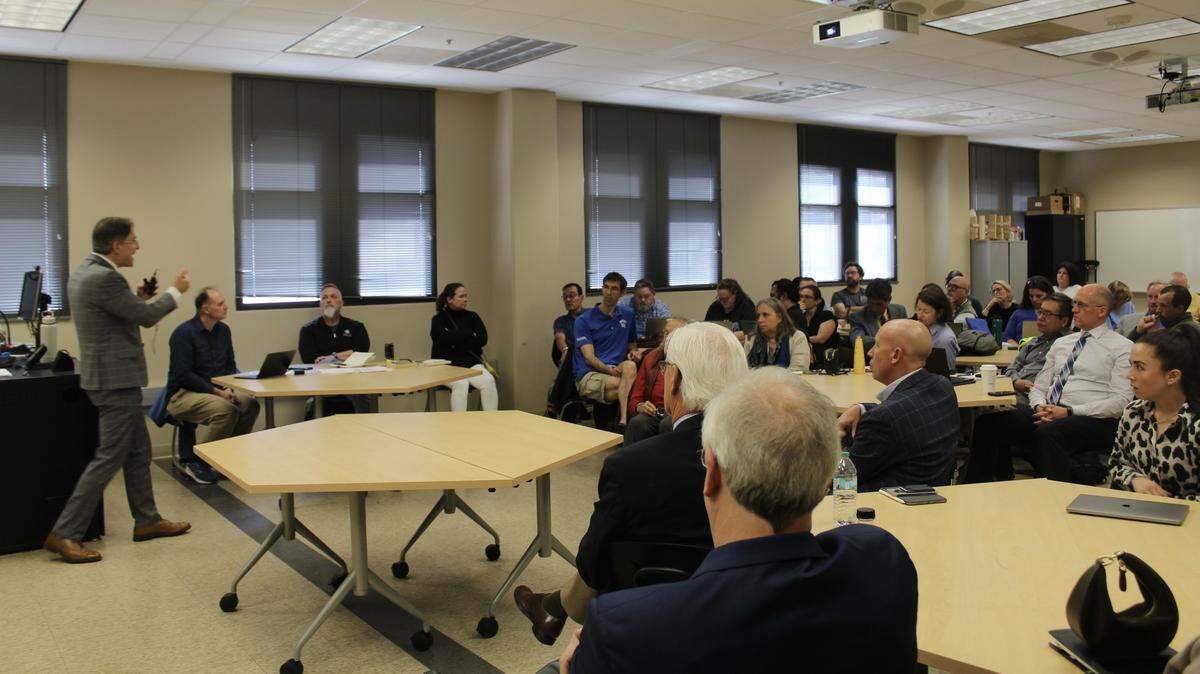
The University of Kentucky’s tenured faculty are in limbo about how their performance will be evaluated starting in one month.
Kentucky’s General Assembly passed House Bill 424 in March 2025, which required universities to create new guidelines on how to evaluate faculty performance.
Under the law, a faculty member’s “failure to meet college or university performance and productivity requirements” is “cause” for even tenured faculty to be fired. Each university gets to set those requirements.
UK already had a faculty review process which met most requirements under the law, but UK Provost Robert DiPaola developed stricter and less individualized evaluation criteria, even after rebukes from faculty. The provost’s office did not comment for this story.
“The Provost’s Office did not create the performance metrics on its own,” said Lindsay Travis, a UK spokesperson. “The metrics were developed collaboratively with college deans and faculty leadership.”
The new policy is UK FRAME, or Feedback-Responsive Allocation, Metrics and Evaluation. It’s UK’s policy describing how it’ll implement HB 424.
Jay Blanton, a university spokesperson, said the changes make each faculty member’s evaluation standards more analogous.
“UK FRAME is an opportunity for our faculty evaluation process to align with the variety of work done across our talented group of faculty, to be consistent and fair,” Blanton said. “The focus is not to change so much, but to build on what we are doing already and help with alignment and fairness.”
Among other major institutions in Kentucky, UK made the most significant changes to its faculty evaluation process, according to statements from university officials obtained by the Herald-Leader.
To get tenure, a faculty member must meet several requirements in their field during a probationary period. To maintain tenure at UK, a faculty member is typically responsible for producing certain amounts of research, instruction, service or healthcare, and usually some kind of administrative obligation, according to the university’s administrative regulations.
“We have a percent of our time for each of those areas... and so that’s the kind of thing that happens in these post tenure reviews,” said Robert “Bob” Grossman, a UK chemistry professor who served on the University Senate before it got dissolved in June 2024. The University Senate had policymaking abilities, but the existing Faculty Senate can only offer advice to administration.
Tenure encourages academic freedom and provides long-term job security, but both are at risk under the law, according to Jennifer Cramer, the treasurer and former president of the American Association of University Professors, and a linguistics professor at UK.
“We’ve always been evaluated, we’ve always had post-tenure review, but the concern is that this sort of centralized and metric-driven review structure is gonna be used to redefine faculty performance in ways that are more vulnerable to political pressure,” Cramer said.

“The benefit, the purpose of tenure is to protect people who are doing unpopular research, or unpopular teaching,” said Grossman.
Examples of contentious areas of study protected with tenure include “climate change, social inequities and women’s health,” for instance, Grossman said.
These areas of study have been at the forefront of attacks by President Donald Trump’s administration. Trump has slashed federal funding for climate change research; eliminated federal funding for diversity, equity, inclusion and accessibility programs, research and education; and gutted access to reproductive care, according to multiple media reports.
HB 424 indirectly follows suit, and lets universities further limit what research is considered acceptable by giving more reasons to terminate faculty, according to Cramer.
“It creates a climate in which faculty may reasonably fear that disagreement with institutional leadership, controversial scholarship or public engagement could carry professional risk,” Cramer said.
The provost’s office requested advice from the Faculty Senate after the law was passed regarding how they think faculty merit should be evaluated.
But senate members say most of their recommendations weren’t seen in the provost’s implementation of the law.
“Long-standing faculty can be fired now due to how they’re evaluated under the new system,” Crawford said. “It’s a major issue for faculty.”
UK’s faculty dismissal policies still ensure that “UK faculty — tenured or not — cannot be fired without a formal, due process,” Travis said.
Since the Faculty Senate isn’t permitted to create policies, the provost’s office created its own version of what those performance metrics should entail, and will present it to the UK Board of Trustees at their next meeting on June 30, according to Chris Crawford, the outgoing Faculty Senate chair.
“We have a group of leaders working on UK FRAME and look forward to sharing more details at the upcoming Board of Trustees meeting in June,” Blanton said.
But the new evaluation process must take effect the next day, according to the law, which leaves little time for changes to the provost’s version of the process.
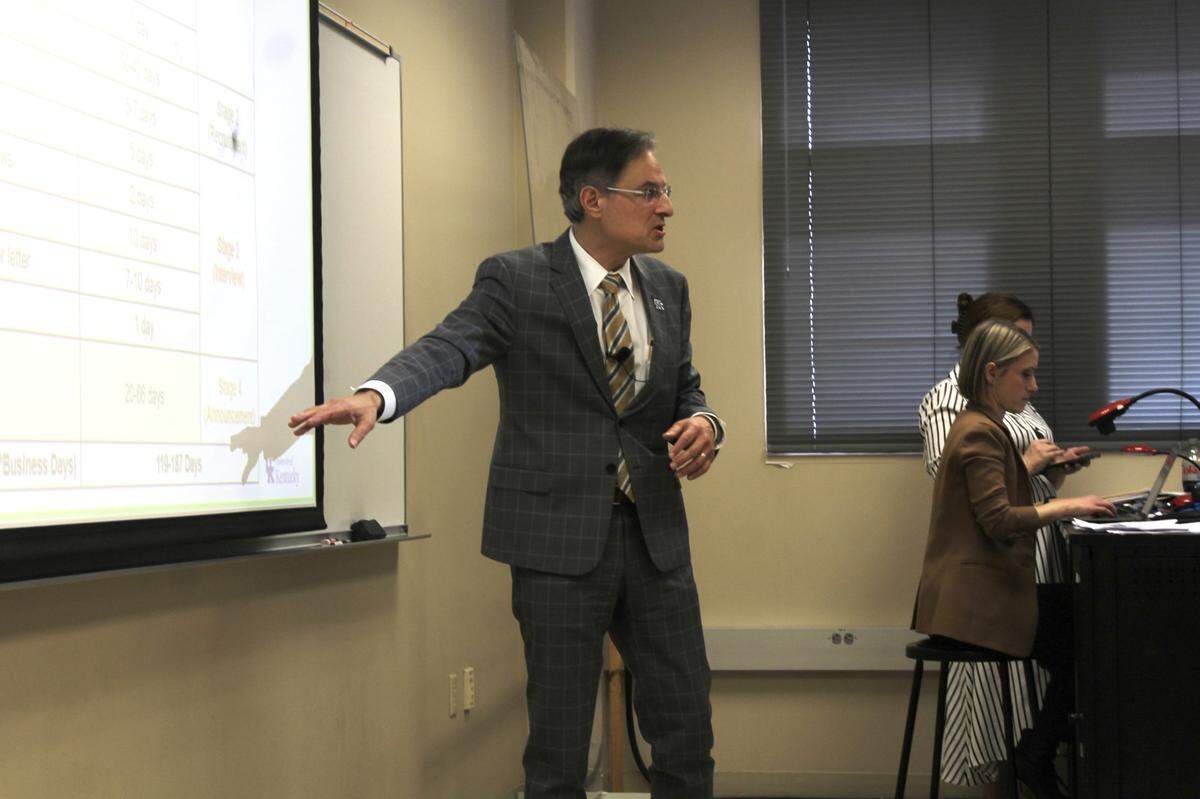
Christine Harper, associate provost for academic operations, asked the Faculty Senate during its latest meeting on May 4 for feedback on running a pilot study to see how UK FRAME will work out, but the Faculty Senate isn’t expected to meet again until after the rule takes effect.
“There will be informal discussion, but there will be no official business, and the senators are not paid for their work during the summer,” Crawford told the Herald-Leader on May 4.
Annual evaluations
UK faculty are currently evaluated every one to two years, depending on the college, which already goes beyond what HB 424 requires.
“The University’s colleges already have merit-review procedures in place that assess the job performance of faculty members, including tenured faculty, more than once every four years,” a report from the Faculty Senate to the provost said on Nov. 3, 2025.
HB 424 requires a few new statutes including that faculty members be evaluated at least every four years.
The provost’s new plan would require all faculty to be evaluated annually, according to a Dec. 2, 2025, report from the office that provided feedback on the evaluation plan.
‘Faculty members … rebuffed the idea’ of centralized metrics
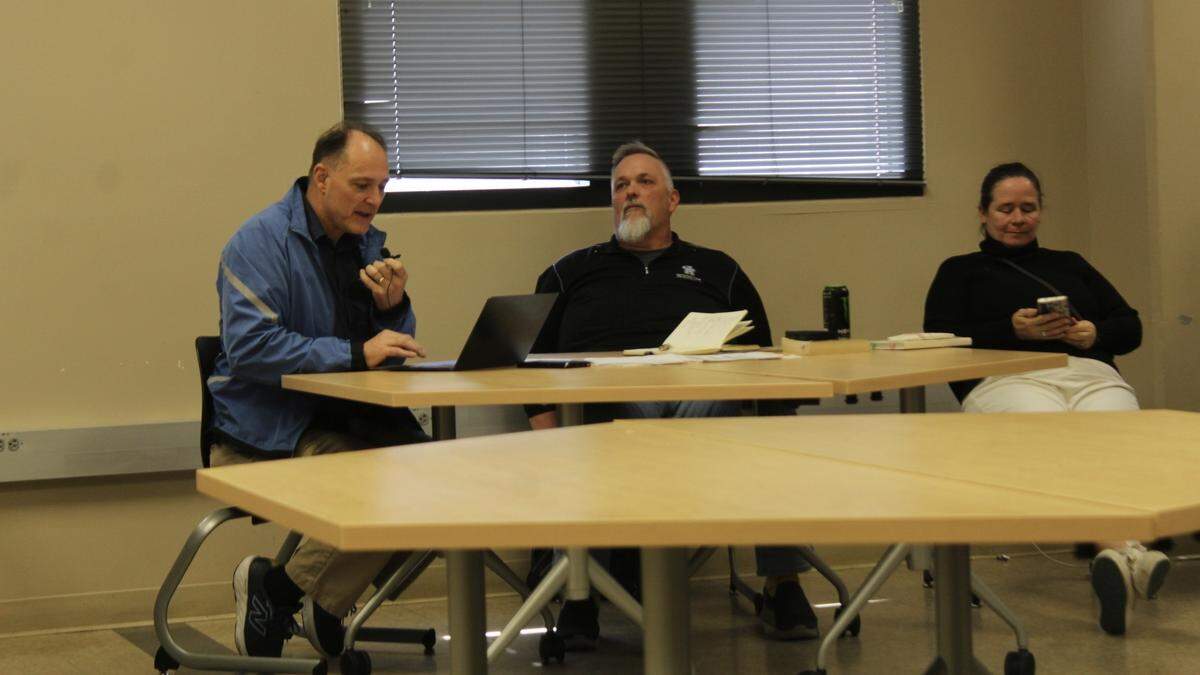
The Faculty Senate’s faculty affairs committee gathered “extensive feedback” campus-wide, which found that most UK faculty opposed this centralized approach because job expectations vary by discipline, according to a report the senate sent to the provost.
“Virtually all faculty members consulted rebuffed the idea of top-down productivity metrics that could be applied to faculty across all units on campus,” the report from the senate to the provost said on Nov. 3, 2025.
Part of the provost’s plan sought to address those concerns of top-down metrics, saying, “metrics and thresholds will be tailored to each college, acknowledging structural and disciplinary differences.”
But it also said a college’s overall performance will be considered in an individual faculty member’s annual evaluation.
“Although individuals are scored on their own merit by individual faculty metrics, college level metrics will help with benchmarking and transparency,” the provost’s report said.
This does not mean the number of credit hours produced by students, and how many students graduate from a college will factor into an individual faculty member’s review, according to Lindsay Travis, a spokesperson for UK.
“The process of UK FRAME is to work with the departments to assure that the metrics for each faculty from their department make sense for them and are fair to their discipline,” Travis said. “This will help address concerns raised by faculty that, in the past, it has not been clear to them what metrics they need to achieve as these align with promotion as well.
“This is the best opportunity for faculty to be recognized for the great work they do with metrics that are more specific to them and less ambiguous.”
Still, faculty are concerned about how these metrics could be used to enact discipline.
“Performance metrics … could easily become a back door to censorship by claiming that time spent on tasks other than classroom teaching is a waste of time,” Grossman said.
How does the new evaluation work?
Under the new process, deans will evaluate faculty members on a three-point scale. A three rating means “exceeds expectations,” two means “meets expectations” and one means “does not meet expectations,” the provost’s report said.
Deans will report those results to the provost’s office, who has the authority to approve it.
The provost’s office said the changes were made “to meet Kentucky’s priorities.”
“Measuring what we do and how we do it, as a means of accountability and alignment with the state’s needs and priorities, is one way we can demonstrate our intent and our commitment,” the provost’s report said.
Other universities see little change
Other major Kentucky public universities also already had review processes in place prior to HB 424, according to AAUP leaders.
They made little to no changes, unlike UK, that abide by the law.
The University of Louisville faculty senate “voted to change the post-tenure review cycle from every five to every four years, with no other changes because UofL was already compliant with all other stipulations of HB 424,” Michael Cunningham, a UofL professor, faculty senator and AAUP chapter president said in an email to the Herald-Leader Thursday.
Eastern Kentucky University will see minimal changes to its process as well, according to Lisa Kay, a statistics professor at EKU.
“The main changes that we made were moving to a four-year cycle and adding a rubric,” Kay said in an email to Cramer that was provided to the Herald-Leader.
Morehead State University’s administration was receptive of its senate’s advice and mostly “built the new policy on what we already do,” Annie Adams, an MSU English professor and former faculty senate chair, said in an email to Cramer, also provided to the Herald-Leader.
The MSU Senate believes faculty mobilized early enough to make a difference, Adams told the Herald-Leader.
Editor’s note: This story has been updated with additional information from UK about how FRAME will be implemented.
This story was originally published June 5, 2026 at 9:55 AM.