
KSU alum warns of ‘campus gentrification' at Kentucky HBCU amid lawsuits
Those suing Kentucky State University worry the shrinking of the state’s only public historically Black university will eventually funnel students into predominantly white institutions.
Rev. Jacques Wigginton, the case manager of a state lawsuit challenging the constitutionality of Senate Bill 185 — which enforces how KSU should save money — said the bill and university President Koffi Akakpo have caused “campus gentrification.”
“You made it to where no one stays here, got rid of everybody, then you’re going to take the money and fix it up once they’re gone and give it to the students that you want,” Wigginton, a KSU alum from the 1980s and former Lexington councilman, told the Herald-Leader Wednesday.
He compared it to the collapse of the coal industry and gradual displacement of people in Eastern Kentucky.
“So for 100 plus years, you had to deal with these kinds of facilities and all of that, and then as soon as you get rid of all those students, you’re gonna come and fix everything up?” he said.
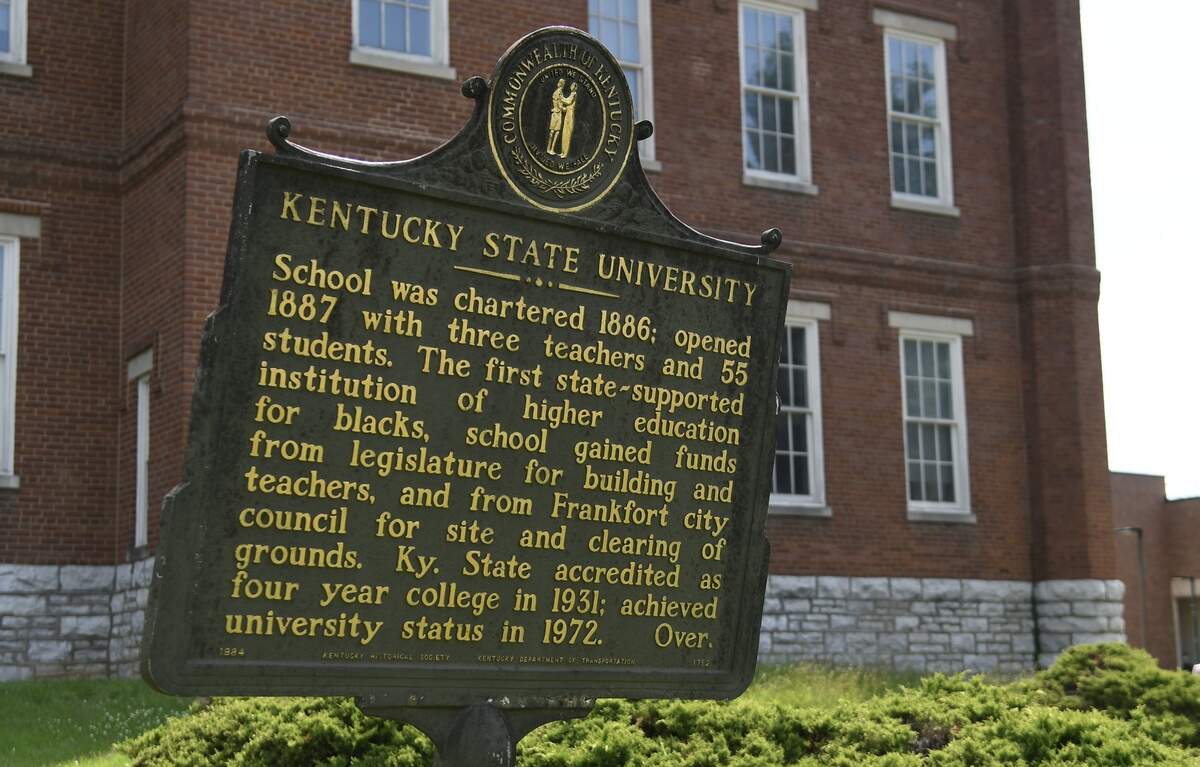
Lawsuits against KSU
James Morris, the attorney representing students and alumni in two lawsuits, including a federal civil rights case, against KSU, said he foresees the university consolidating into Kentucky Community Technical College Systems, which is made up of 16 predominantly white schools.
One of the first major changes Akakpo brought to the university was a partnership with Kentucky Community Technical College Systems in Oct. 2023, three months after he became president. It allowed students from KCTSC to transfer to KSU.
Under SB 185, the university is required to incorporate into its programs polytechnic studies, which focuses on science, technology, engineering and math. This caused program cuts; stricter student admission and tuition payment policies; and a drop in the number of students and faculty.
“What we have alleged in this complaint is SB 185 is a death by 1,000 cuts to this university,” Morris said in Franklin County Circuit Court Wednesday.
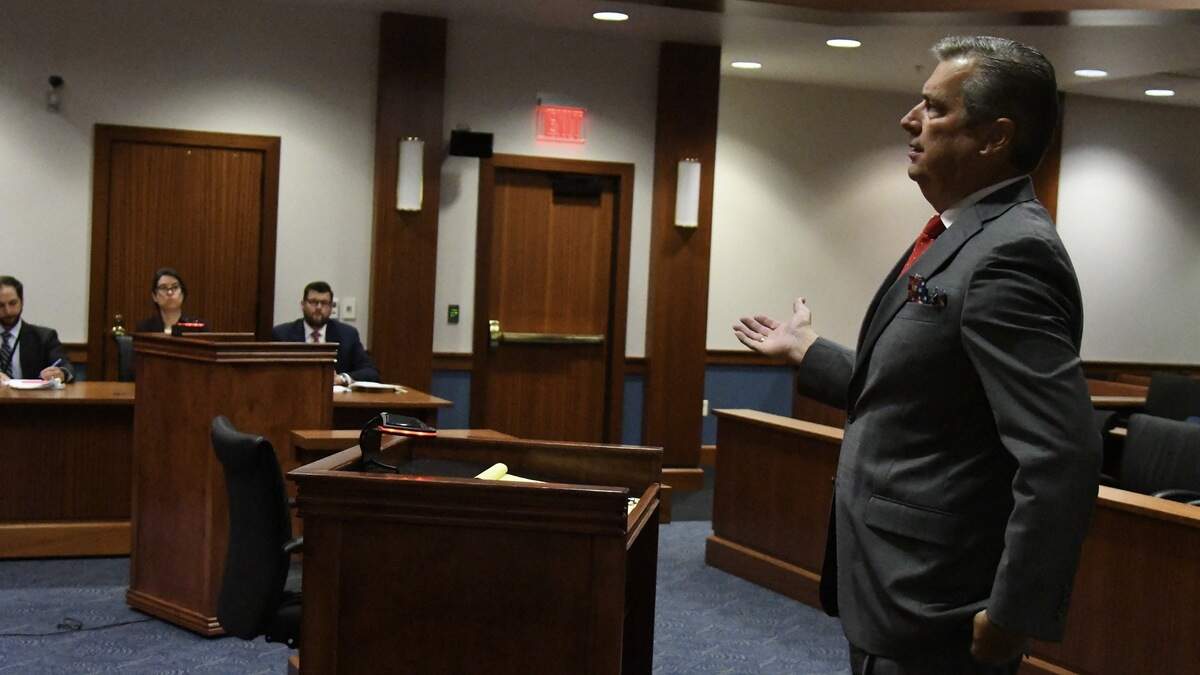
He and a few defendants including Kentucky Gov. Andy Beshear’s general counsel met with Judge Thomas Dawson Wingate to argue over whether Beshear and others should be dismissed from the state lawsuit, and whether to allow a temporary restraining order that would pause changes underway due to SB 185.
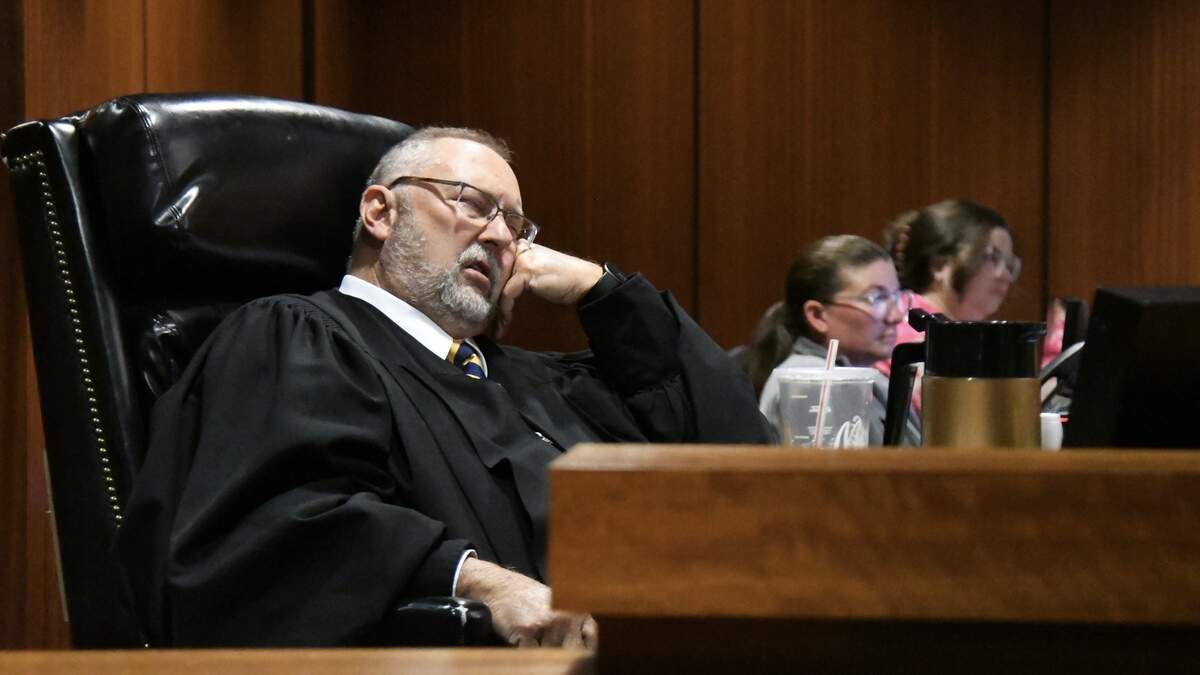
Wingate didn’t make a decision on either issue by Thursday, but said he might dismiss all defendants except those he called the “real parties” — KSU and the Kentucky Council on Postsecondary Education. A motion hearing to discuss whether they should be dismissed is set for July 15, according to online court records.
“They’re going quick,” Wingate said of the university’s changes since SB 185 took effect April 13.
The changes brought by SB 185 are already impacting the university, but Wingate still struggled to understand what harm it’s done to the plaintiffs, who are students.
Wingate, a KSU alum, saw no issue with students moving to other universities.
“I’m still struggling to see how the students are, and you may disagree with it, potentially being harmed if they’ve got the teach out provision and they could go to some other university if they wanted to,” Wingate told Morris. “I’m struggling to figure out how they’re harmed. I really am.”
“Well, your honor, they shouldn’t have to select another university,” Morris responded. “Also, this is the only HBCU in the entire state.”
KSU is the state’s only public HBCU. Simmons College in Louisville is a private HBCU.
Kentucky State University is shrinking
Kentucky State saw reductions in students and faculty years before the bill forced it to reevaluate its financial priorities.
The university has closed 10 academic programs, and the number of faculty has dropped from 112 to at least 77 since 2023, according to KSU Provost Michael D. Dailey. The Herald-Leader requested but did not receive records of how many faculty members left due to resignations, terminations, retirement or other reasons.
The university saved $1,271,529 because of those separations, Dailey and Chief Financial Officer Heather Bigard told the Council on Postsecondary Education at a meeting on June 8.
It also shut down staff areas that market and advertise the university.
“We’ve turned off marketing, but we have an internal model for marketing that won’t cost us any money just to keep the presence and the model going,” Dailey said.
The university estimated enrollment will drop by 20% from Spring 2026 to Spring 2027.
“Those assumptions are based on enrollment data, student persistence patterns, applications, financial factors, and broader pressures across higher education, including the enrollment cliff, increased competition, affordability concerns, changing student expectations, and declines in some graduate and international student populations,” Akakpo said in a news release on June 12.
More challenges for students of color
New policy changes also make it harder for marginalized students to be admitted into the school, and pay for tuition.
The university used to offer “wraparound services” to admit students who were just below academic requirements, but now it mandates strict minimum GPA and ACT scores, Dailey said.
“Historically for three decades, even when I was at the Department of Education, an 18 on an ACT among African Americans, Hispanic and low income families, or our heads, has always hovered around 17, 16, that is a historical reference nationwide,” Dailey said.
The ACT scores for most Kentucky State students has ranged from 14 to 17, according to the U.S. Department of Education’s College Scorecard.
GPA scores for these communities on average also came in just below the university’s soft 2.5 minimum, according to Dailey.
“Going forward… until we revamp, restructure our bridge program, we set it off at 2.5,” he said. “The problem… is that we’ve had students come in at 2.0 to 2.5, or 2.49… now we’ve lost some students because of that.”
Student achievement gaps between white students and students of color have narrowed in recent years, according to the Stanford Center for Education Policy Analysis. But underserved students still face “systemic inequities, including unequal access to experienced teachers, advanced coursework, and academic support services,” the United Way said in a 2025 report.
Students who owe money being dropped
SB 185 also said students with a balance to Kentucky State of more than $1,000 for more than 60 days must be dropped from classes and cannot enroll until it’s paid.
“There’s always been a policy to collect (payments) of course, but it hasn’t been enforced very effectively,” Bigard said. “So we have added on significantly to that policy in terms of how those funds will be collected, what constitutes a payment plan, what options are available, and then what the consequences are when a student doesn’t pay, which includes removal from courses.”
Sixty-eight percent of low-income KSU students receive a federal Pell grant, or federal financial aid, according to the U.S. Department of Education’s College Scorecard. The graduation rate for these students is about 4% less than students without it, the scorecard said.
“You basically are shutting people out of the upper mobility of being in the middle class, which is what Abraham Lincoln created that whole public higher education system for,” Wigginton said. “In 1862 and 1890 Abe Lincoln put that the common person couldn’t get a higher education, and he had to teach himself.”
He referenced the former president’s passage of the First Morrill Act in 1862, and the Second Morrill Act in 1890, which developed racially integrated land grant universities and HBCUs, and created educational opportunities for the working class like Lincoln.
Is accreditation at risk?
A new cost-cutting measure includes that the university will only hire adjunct faculty to teach its online courses. Even if a class has a few students, the university said it expects to make enough revenue from online courses by having adjunct faculty, who are typically paid less.
The Southern Association of Colleges and Schools Commission on Colleges, the accrediting body for KSU, requires, “The institution employs a sufficient number of full-time faculty members to support the mission and goals of the institution.”
“Our faculty load is critically close to the SACSCOC requirement of maintaining at least 51% of full-time faculty versus adjuncts, so we are extremely lean,” Dailey said.
Less students are expected to be on campus too because many in-person liberal arts programs will transition to online, according to Dailey.
“We are moving programs for more viability as much as we can online to get more students engaged,” he said.
Editor’s note: This story has been updated to clarify that a private historically Black college is located in Louisville. Kentucky State University is the state’s only public HBCU.
This story was originally published June 22, 2026 at 2:14 PM.