Why the United Methodist Church cut Asbury Seminary from approved schools for clergy
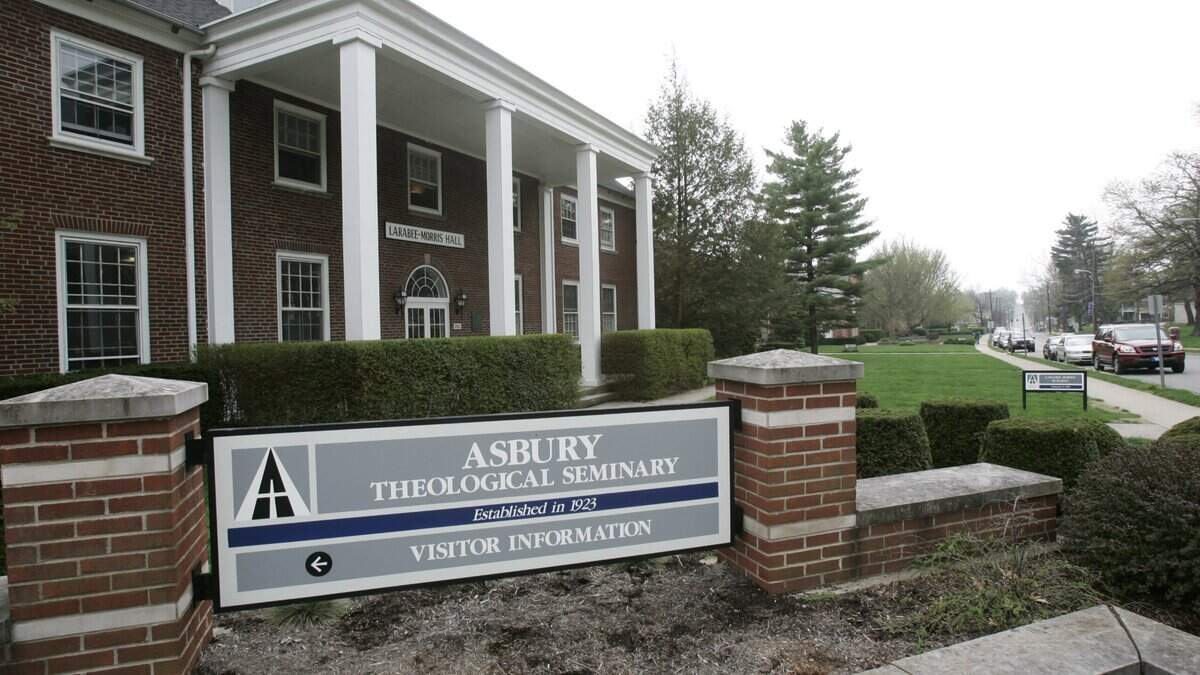
Asbury Theological Seminary is no longer approved by the United Methodist Church for training its clergy.
The UMC’s University Senate, which determines which theological schools are approved for educating people who want to be ordained in the United Methodist Church, decided in June to drop Asbury Theological Seminary from its list.
Differing views surrounding LGBTQ+ issues led to the delisting, the seminary’s president said.
Every four years, the UMC’s University Senate conducts a review of the “non-United Methodist theological schools” that are approved for training prospective clergy.
After its most recent review, “the University Senate’s Commission on Theological Education determined that Asbury’s published ethos statement is not compatible with the Social Principles of The United Methodist Church,” said Roland Fernandes, the denomination’s general secretary for higher education and ministry.
“In addition, Asbury does not have a full-time United Methodist faculty member who consistently teaches required United Methodist history, doctrine, and polity.”
At the same time it dropped Asbury, the body also removed Northeastern University in Rochester, New York, from its list.
“The Senate’s requirements, particularly those related to the UMC’s 2024 Social Principles concerning ‘Human Sexuality’ and ‘Marriage,’ are not aligned with Asbury Theological Seminary’s institutional ethos and the historic witness of the Christian faith,” Asbury Theological Seminary President David Watson said in a statement in response.
“We affirm marriage as sanctioned by God, which joins one man and one woman in a single, exclusive union for life, as delineated in Scripture, and provides the sole context for sexual intimacy, helping to ensure the blessings of that relationship as God intended.”
In 2024, the UMC voted to remove from its Social Principles a statement saying that “the practice of homosexuality… is incompatible with Christian teaching.”
Watson told Christianity Today that a growing divide between liberal and conservative factions had made the split inevitable.
“While we had hoped for a different outcome, our focus remains steadfast on our unchanging calling,” Watson said in a letter to alumni last week. “Asbury Seminary’s ethos has not changed. Our theological commitments, including our commitment to Scripture, remain exactly what they have been for more than a century.”
“Throughout the University Senate’s review process, Asbury Seminary engaged fully and faithfully. We honored each request in a timely manner and were forthcoming with the documents and information requested,” said Watson, who became president of the seminary last summer. “We were also honest and clear about our doctrinal and ethical standards, including where those standards differ from the amended 2024 Social Principles of The United Methodist Church.”
United Methodist students who are already enrolled at the seminary, including those starting this fall, will be able to continue.
But after this fall, Fernandes wrote, “United Methodist students beginning coursework for the purpose of pursuing ordination in The United Methodist Church must explore Senate-approved theological schools.”
About 9% of Asbury Theological Seminary’s student population is United Methodist.
Watson said the seminary has students from 75 denominations enrolled and is still an approved institution for the Global Methodist Church, Wesleyan Church and Anglican Church in North America, among others.
The seminary remains accredited by the Association of Theological Schools and the Southern Association of Colleges and Schools Commission on Colleges, he said.
Asbury has a long history of connection to the United Methodist Church. It is named for Bishop Francis Asbury, a British missionary who worked with John Wesley and helped found and grow Methodism in the United States.
The seminary describes itself as “a multidenominational graduate school of theology committed to teaching the unchanging truth of historic Wesleyan Christianity,” according to its website.
The seminary, which has a student body of more than 1,700, also has extension sites in Tulsa, Memphis, Orlando and Tampa, according to its website.
Though they have a shared history and have campuses adjacent to one another, the seminary is a separate educational institution from Asbury University.
.JPG "070329Asburyacb044 (1).JPG")