
NASA rocket carrying Ky. satellite crashes off California
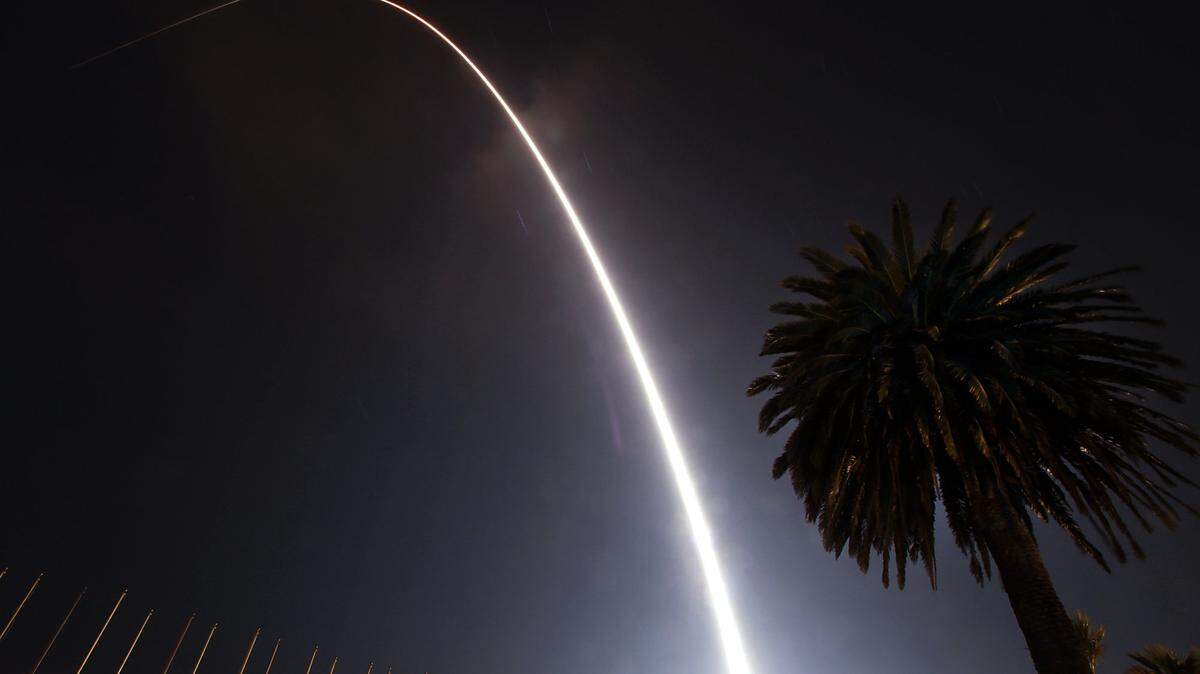
A rocket carrying a a tiny cube-shaped satellite designed by some Kentucky university students and a sophisticated NASA climate-monitoring satellite, crashed into the Pacific Ocean early Friday morning after a failed launch attempt.
The Taurus XL rocket's main payload was the so-called "Glory" satellite, designed to record various measures related to climate change. The miniature satellite, created as a hands-on learning tool for students at various Kentucky colleges and universities, was on board as secondary cargo, along with two other small satellites designed by students from other states.
None of the satellites reached orbit, ending up instead "in the southern Pacific Ocean somewhere," NASA launch director Omar Baez told the Associated Press.
Several Kentucky students involved in the project were at the University of Kentucky watching video feeds of the launch in California when things went wrong shortly after 5 a.m. EST Friday, said James Lumpp, professor of electrical and computer engineering at UK and one of the lead educators in the KySat-1 effort.
"Obviously, it was very disappointing for them," Lumpp said. "Our plan now is to talk with NASA next week, go through our options and see what we can do about getting another flight."
According to Lumpp, the Kentucky students have a backup satellite available that could be prepared for flight relatively quickly.
Friday's launch was to have been the first orbital flight of KySat-1, developed by Kentucky Space, an educational collaboration of UK, the University of Louisville, Morehead State University, Murray State University, Western Kentucky University and the Kentucky Community and Technical College System.
The Kentucky Space effort, announced in 2006, is designed as a learning experience to give students a chance to design tiny "cube" satellites, measuring about 10 centimeters on a side, which can then be launched by NASA rockets. Ground listening stations established at UK and Morehead can allow students to monitor the satellites in orbit. But that will have to wait at least a while.
Friday's failure was the second major setback for NASA's weakened environmental monitoring program. An attempt to launch a Glory satellite in 2009, also using a Taurus rocket, ended with a crash in the ocean near Antarctica.
Officials said Friday's failure apparently occurred because a fairing, or protective shell, atop the three-stage rocket didn't separate. That left the spacecraft without enough velocity to reach orbit, they said.
NASA paid a private company, Orbital Sciences Corporation of Dulles. Va., about $54 million for the Glory launch. But NASA Earth Science Director Mike Freilich told the AP Friday that the space agency could switch to another vehicle if the Taurus rocket proves unreliable.
According to Lumpp, nearly 100 students at participating Kentucky colleges have worked on the satellite program over the past five years. Many have graduated from college and gone on to careers, he said.
"We were really happy to have been selected as a part of the mission," Lumpp said. "For us, it was big just to get on that rocket, get that rocket launched, in terms of educational goals and the students being able to design the satellite.
"Now, the students are already brainstorming about how they're going to get the next one ready to fly. I'm really proud of them."
This story was originally published March 5, 2011 at 12:00 AM with the headline "NASA rocket carrying Ky. satellite crashes off California."