
Fayette superintendent developing plan for holding back pupils
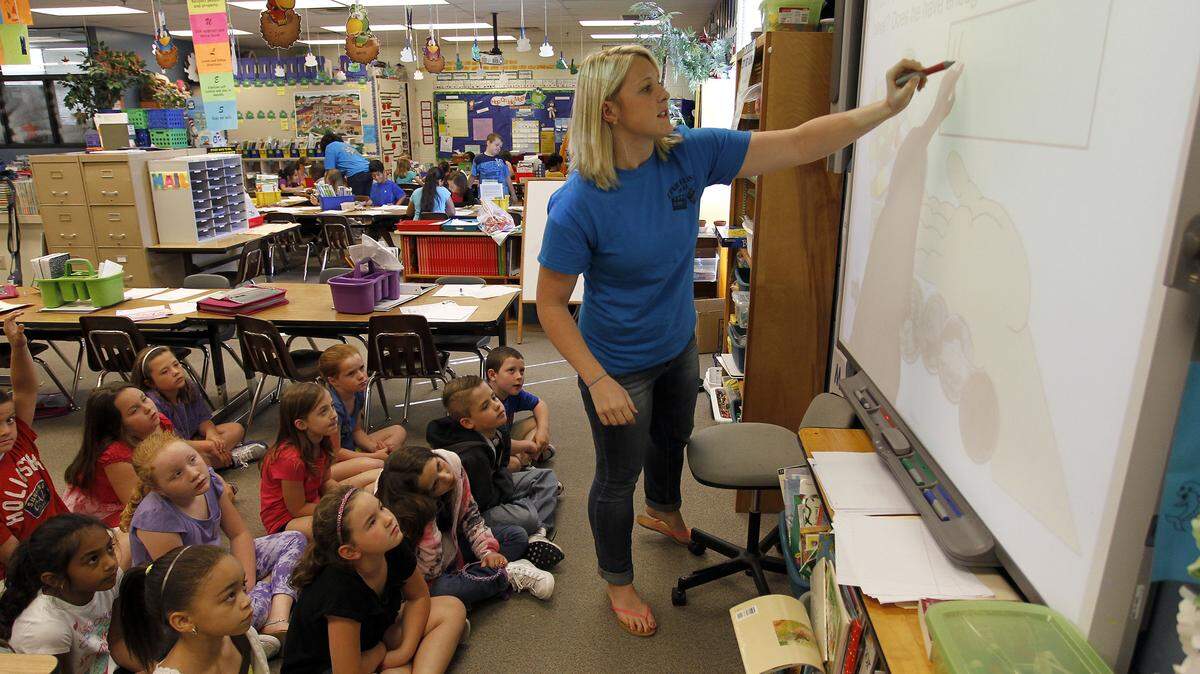
Fayette County students would not be promoted out of primary grades kindergarten through third unless they are performing at grade level in reading and math, under an idea being floated by Superintendent Tom Shelton.
Shelton said details must be worked out and he isn't ready yet to formally propose his plan to the Fayette County Board of Education. But he said that it could ensure that all students are prepared for academic success when they move up to fourth grade, and ultimately help close achievement gaps across the school district.
Board chairman John Price said board members have heard about Shelton's plan only informally so far.
"Personally, I think it's probably an idea we should explore," Price said last week. "Obviously, we could be setting our kids up for failure if they are not as prepared as they should be when they leave primary."
The plan would focus on reading and math, Shelton says, because mastering those subjects is crucial to student success throughout their school years. Promoting students who are struggling in reading and math only sets them up for problems as they move up to higher grades where class work gets tougher, he said.
The Kentucky Department of Education does not have a statewide policy on holding back primary students, essentially leaving it up to local school officials to decide whether and when to retain children.
If Fayette County adopted such a policy, it would follow the lead of several states — Florida, Arizona and Tennessee among them — that have passed laws in recent years mandating that third-grade students must demonstrate proficiency in reading or math before entering fourth grade.
But the proposal is almost certain to be controversial, especially among many Fayette County parents who might think their children are being stigmatized if they are "held back."
"I'm sure there will be some pushback, but I'm determined to get a conversation going on this," Shelton told the Herald-Leader. "I think it's a conversation we should have if we want all our students to be college- and career-ready when they graduate."
Because Shelton's proposal is in the preliminary stages, it's difficult to project how many students could be affected. A total of 129 Fayette County students were not promoted out of third grade for various reasons in the 2010-11 school year, according to district officials.
Shelton emphasized that setting a standard for promoting primary students is not intended to hold students back, but to help identify those who are struggling, and provide early instructional help so that few if any would be retained.
Shelton said that it could be a year before he's ready to submit his proposal to the board, but that he hopes to get residents talking about it now.
"We need to hear from the community, from our teachers and from parents before we can make a decision that all can accept and support," he said. "For this to work, everybody will have to believe in it."
Holding students back a year to let them catch up on their studies was relatively common in the 1950s and early 1960s. But it fell out of favor after some experts argued that retention didn't help much and often left students so discouraged that they eventually quit.
That led to a new policy called "social promotion." Schools started promoting students, even if their academic records were spotty, thinking that holding them back caused even worse problems.
Education analysts, however, now differ over which approach works best.
Stu Silberman, executive director of the Prichard Committee on Academic Excellence, said he has reviewed Florida's primary-grade promotion law and that some of Florida's results "look pretty good."
A key to success, he said, is monitoring children's academic progress continuously as they move through the primary grades, providing immediate help if problems appear.
"You can't wait until the last year of primary and try to deal with it; you've got to start early on," said Silberman, who headed Fayette schools before Shelton took over.
Susan Weston, a Kentucky-based education blogger and analyst, said the new state laws seem to work best when educators combine legal requirements with support programs to help students catch up. But holding students back can pose serious problems, she said.
"It's very hazardous to have kids actually repeating a grade, because they end up feeling disconnected and start wanting to leave school as soon as they can," she said. "The benefits seem to come when you have a clear standard, backed up with a really strong commitment to help kids meet that standard."
Shelton said his proposal would generally follow that outline.
He proposed a similar plan for Daviess County schools when he was superintendent there. It was in the discussion stage when Shelton moved to Fayette County last year.
A crucial part of the proposal that has to be worked out is how Fayette school officials would determine which primary students are below grade level and need help to avoid being held back.
Several approaches could be used, but the determination should be based on multiple considerations, not just one test or assessment, Shelton said.
Implementing the proposal also probably would require educating the community, particularly parents, Price said. He said that there is "a lot of parental pressure today not to hold kids back, even though promoting them might not be in the child's best interest if they're not ready."
Shelton said that many people might be skeptical initially, he hopes that the community ultimately would embrace his proposal.
"If the community steps up and says, 'No, we're OK with the way things are,' then we're effectively saying that it's OK to have an achievement gap," he said.
This story was originally published May 12, 2012 at 9:41 PM with the headline "Fayette superintendent developing plan for holding back pupils."