
Backlog delays dozens of burials by University of Kentucky's Body Bequeathal Program
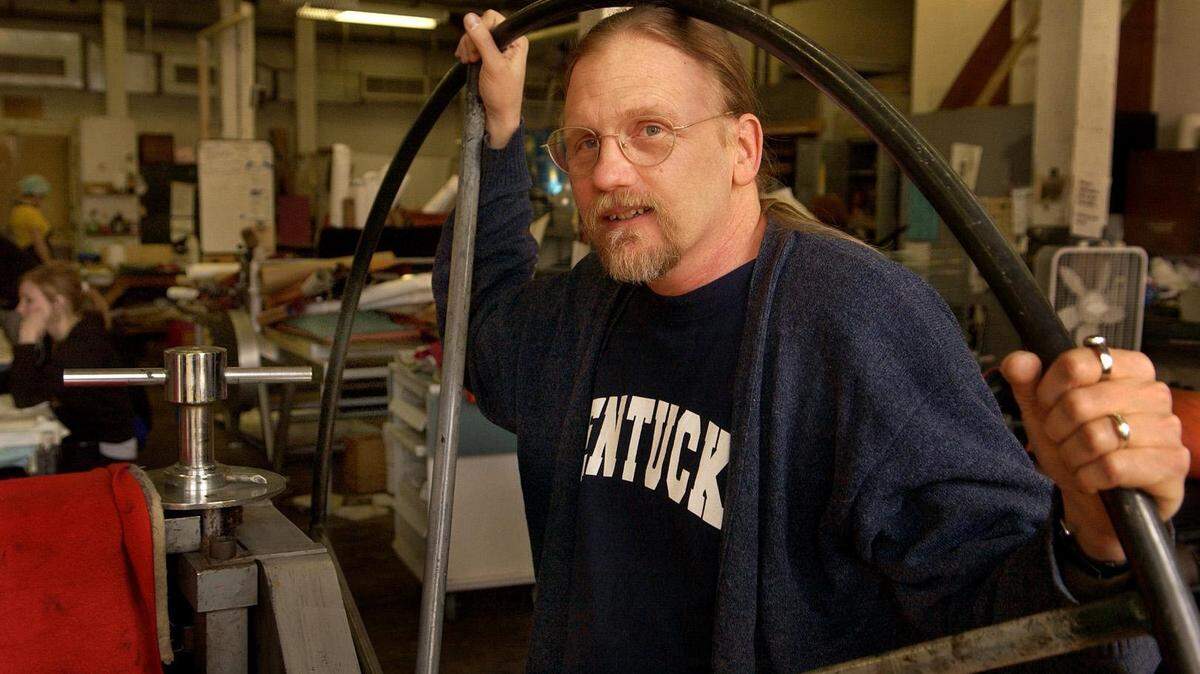
Ross Zirkle, a printmaker and University of Kentucky art professor, was known for his devotion to students. Even when he died from cancer in 2007 at the age of 52, he continued to teach, donating his body to UK's anatomy department to help train future doctors, dentists and nurses.
But Zirkle's family was dismayed recently to learn that his cremated remains had been sitting on a shelf at UK since 2012. He was not buried at the Lexington Cemetery until December, nearly eight years after his death.
"We thought UK would take care of it," his brother, Russ Zirkle, said Wednesday from his home in Minnesota. "We assumed they would do it right after he was cremated, not three years later."
Lexington Coroner Gary Ginn, who runs UK's Body Bequeathal Program, said budget problems caused the burial delays, not just for Zirkle, but for 91 other cremated remains interred last month with him.
"The economy suffered and our budget was cut," Ginn said. "We had to wait until the economy recovered so we could accomplish what we had promised we would do."
However, Don Gash, the chairman of the anatomy and neurobiology program, said the backlog started in 2012 when Ginn was hospitalized with a serious illness and could only return to work part-time for six months.
The budget "was never the issue," Gash said. "He misspoke."
Reached later, Ginn said he was hospitalized for a month with a blood clot and ensuing complications. He said he didn't think about his illness when explaining the backlog Wednesday morning because he is so rarely sick.
"I take care of all aspects of the program and none of that was getting done," he said.
Gash said Ginn, as a licensed mortician, was the only person at UK who could issue death certificates or correspond with families about whether they wanted UK to bury their relatives after their bodies had been used for research — usually for three to five years. In addition to those duties, Ginn cremates the bodies and is in charge of billing other departments that use bodies for instruction.
"The body bequeathal program is a priority for us because it's so important in our training program for physicians, nurses, physicians' assistant and dentists," Gash said. "So while the cost is certainly a factor ... the burial program got pushed back because we had other priorities, such as making sure the documentation was correct."
Letters went out this week to families of the 92 people buried last month. The costs of burying the remains was roughly $9,000, said Miles Penn of the Lexington Cemetery. Between 2,300 and 2,500 remains of people whose bodies were donated to UK since 1960 are buried in Section 36, or the University of Kentucky Section, of the cemetery, with the most recent burial before last month occurring in 2009.
Gash said he wanted to apologize to the Zirkles and any other families affected by the delay.
"It's a wonderful and meaningful gift, and it is very important for education across the health spectrum," he said. "It was unfortunate and we are getting on top of it and we're committed to doing this right."
Russ Zirkle said Wednesday that he was relieved to know that his brother was finally buried.
"I'd hate to see another family go through this because we thought it had been taken care of," he said.
Ginn said he knew Ross Zirkle, who would bring art students to the anatomy department so they could study cadavers.
"He would bring students in and I would give them anatomy presentations," Ginn said. "He was very interested in making sure that students had the opportunity to draw the human body because some of them might become medical illustrators."
Ginn's full-time employment with UK became an issue in last year's race for county coroner.
Ginn, who has held the elected office and the UK job since 2002, was challenged by Larry Owens, who filed a complaint against Ginn with the Lexington-Fayette Urban County Government Ethics Commission.
The commission dismissed the complaint, saying there was not a conflict of interest in holding the two jobs, and Ginn beat Owens by a wide margin.
The coroner's job pays $71,000 a year and the UK job pays $55,000.
This story was originally published January 28, 2015 at 6:27 PM with the headline "Backlog delays dozens of burials by University of Kentucky's Body Bequeathal Program."