‘This was a travesty.’ Mentally ill man ordered to be his own lawyer in KY court.
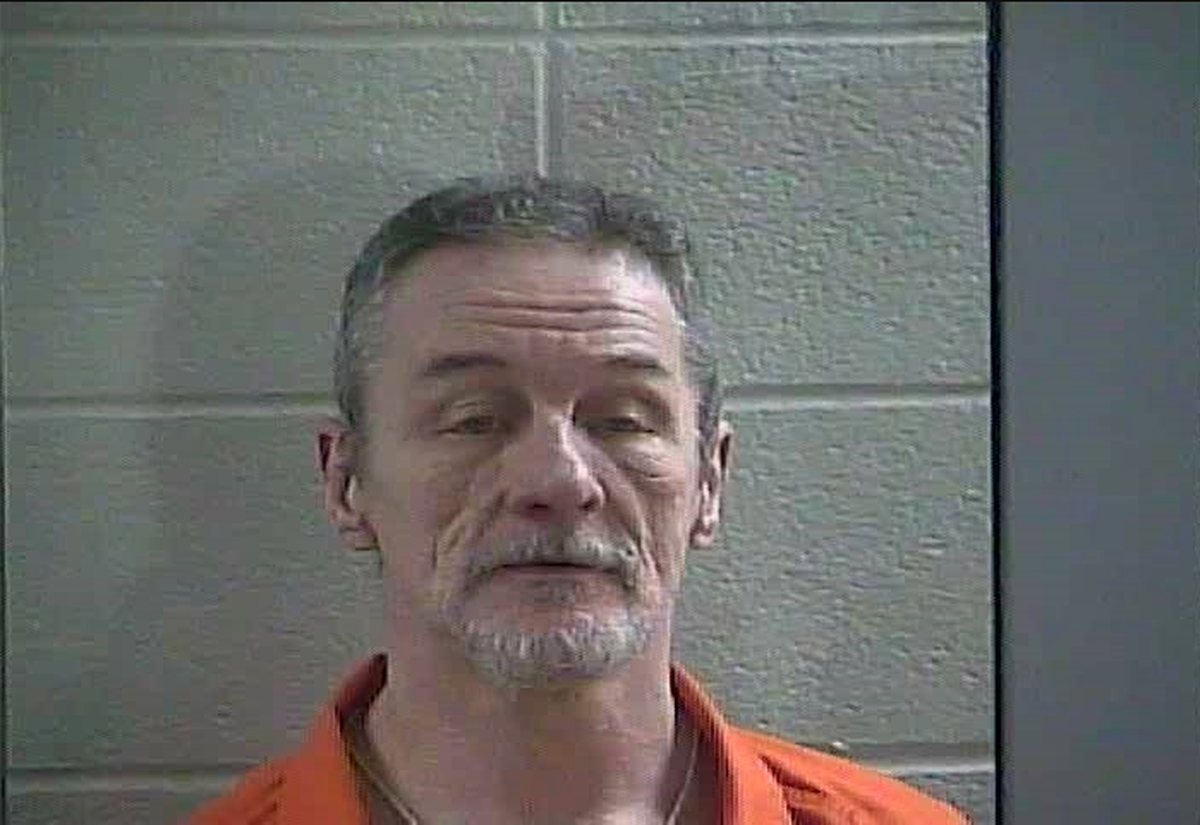
The Bell County jury only needed 20 minutes to convict Robert Edward Garren of being a felon in possession of a firearm.
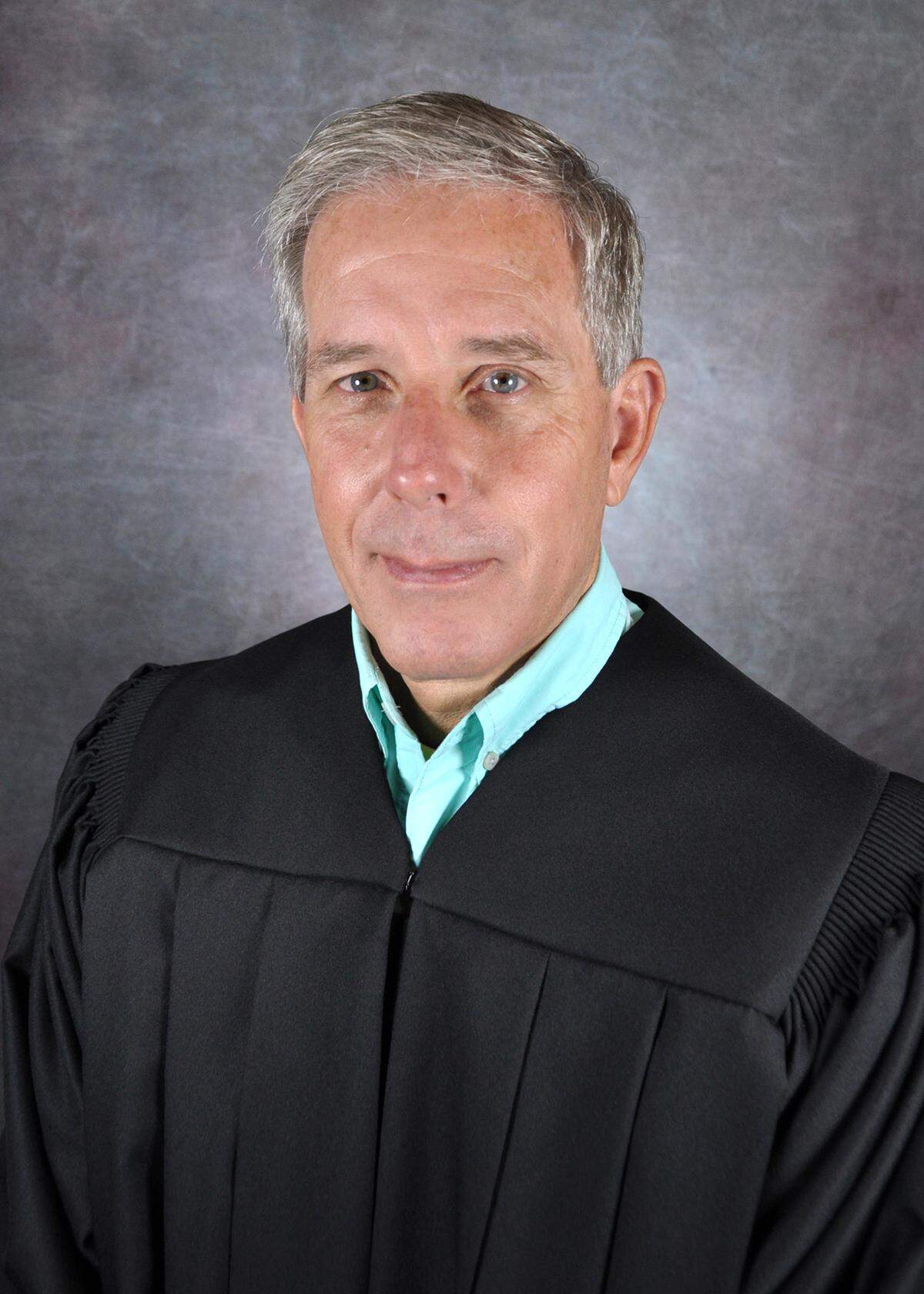
Its verdict followed a farce of a trial on July 31, 2018. Bell Circuit Judge Robert Costanzo had ordered the 51-year-old Garren — poor, mentally ill, unable to read, with an extensive history of alcohol abuse — to act as his own defense lawyer.
Garren complained to the judge that morning that his overworked public defender, who was juggling hundreds of other cases, didn’t adequately prepare. He wanted a delay so he could hire a different lawyer.
The judge interrupted Garren’s request and dismissed the public defender from further duty.
“You’ll be representing yourself,” Costanzo told a surprised Garren, “because we are going to trial today.”
“You’re going to make me represent myself?” Garren asked.
“Yes, sir,” Costanzo replied.
Garren protested that he didn’t know how to act like a lawyer. He was right. He had no witnesses. He goofed and got incriminating evidence about drugs introduced that the jury wasn’t supposed to hear. He rambled, mumbled and argued with the prosecutor until the judge had him removed by a sheriff’s deputy.
In the end, there was no one in the courtroom to represent the defense, not even the defendant. The jury sentenced him to 10 years in prison, the maximum allowed.
Garren, serving his time in the Laurel County Detention Center, could not be reached for comment for this story.
“This was a travesty,” said Allison Connelly, a veteran defense lawyer who teaches criminal law at the University of Kentucky College of Law.
Connelly reviewed the case at the Herald-Leader’s request. Poor people should not be ordered to represent themselves at trial, no matter how much the judge wants to stick to his schedule, she said.
The Kentucky Court of Appeals agreed with Connelly’s assessment. The appeals court reversed Costanzo on Nov. 1 and sent the case back to Bell County for a second trial while chiding the judge for denying Garren his right to counsel. It also recommended that Garren get a competency hearing, given the fact that he takes medications for bipolar disorder, paranoid schizophrenia and depression.
“It was just a travesty all the way around, and it’s embarrassing for all of us in the justice system that this even happened,” Connelly said. “I’m glad someone caught this one on appeal, but I fear this sort of thing happens more often than it should in Kentucky.”
This wasn’t even the first time it happened recently in Costanzo’s courtroom.
In August, the Court of Appeals tossed an earlier Bell Circuit Court conviction, this one for felony drug possession, after an indigent criminal defendant named Joshua Roscoe Marcum ended up representing himself in front of the jury and made a mess of his own case. Like Garren, Marcum had no idea how to practice law. The jury didn’t take long to convict him on every count.
“Because the trial court committed structural error by its failure to ensure a valid waiver of Marcum’s right to counsel, we reverse and remand for a new trial,” the appeals court wrote, shipping that case back to Costanzo for a do-over.
Karen Greene Blondell, the commonwealth’s attorney in Bell County, whose office prosecuted Garren, said the justice system works better when defendants aren’t left to fend for themselves in court.
“In my view, every defendant is entitled to have representation,” Blondell said. “And not just representation, but competent representation.”
Wrong place, wrong time
On Oct. 11, 2017, at about 9:30 p.m., Middlesboro Police Sgt. Barry Cowan stopped a black pickup truck for making a right turn without signaling.
Garren, drinking a beer, sat in the truck’s passenger seat. He agreed to get out and be searched. Inside the truck was a Taurus 9mm handgun and an ammunition clip. In Garren’s pocket was a bag with nine Alprazolam pills, a non-narcotic commonly prescribed for depression or anxiety. In the glove box was another bag with more than two grams of methamphetamine.
The truck’s driver would go on to have her own legal troubles, but a spotlight quickly fell on Garren. He had dozens of misdemeanor convictions for alcoholic intoxication and disorderly conduct, but there was a felony from 2003, a second-offense for drunken driving while on a suspended or revoked license. Felons should not be caught in trucks with guns and drugs.
Bell County’s grand jury indicted Garren two months later for first-offense drug trafficking in the first degree for the meth, first-offense drug trafficking in the third degree for the pills and being a felon in possession of a firearm for the 9mm pistol.
Garren couldn’t afford a lawyer. He didn’t even have the $1,000 necessary to post bond and get out of jail before trial. Single, unemployed, he owned nothing valuable and survived on $17,640 a year in disability and welfare benefits.
So the court appointed a public defender to represent Garren for free. The attorney he drew was Derrick Howard, with two years of legal experience, assigned to the Bell County office of the Kentucky Department of Public Advocacy.
Funded by the state of Kentucky, DPA offices usually are understaffed and overworked. Bell County’s office is no exception. In 2018, its four lawyers handled an average of 508 cases, compared to the national professional standard of 150 felonies per lawyer annually, said Damon Preston, Kentucky’s public advocate.
Those numbers got even worse in 2019, when the Bell County office lost a person for much of the year — Howard transferred to Perry County — and averaged 597 cases for each of its three remaining attorneys, Preston said.
“When you only have three bodies, that kind of a caseload is basically overwhelming,” Preston said.
“You don’t get to spend much time meeting with your client,” he said. “You don’t have as much opportunity as you want to pursue witnesses or evidence. There are competency issues you may not recognize. Or if you do recognize them, you may not have time to schedule an evaluation before trial. All of these things take time, and with our caseloads, you don’t necessarily get the time.”
Overwhelmed lawyers
This frenzied pace can prove catastrophic for poor people relying on DPA to keep them out of prison.
In 2009, a Bell County man named Fred M. Jones Jr. was charged with first-degree drug trafficking for allegedly selling one OxyContin painkiller pill to a confidential police informant for $100. Jones, appearing in Costanzo’s courtroom, was assigned a DPA attorney.
Another lawyer who once represented Jones repeatedly tried to contact his DPA attorney by phone and email to explain that Jones previously had been evaluated by a doctor for mental retardation. Jones had an IQ of 56 — in the range for mild mental retardation — with anxiety disorders, illiteracy and the vocabulary of a 5-year-old child, according to court records. That called his competence into question.
But the DPA attorney never returned any of those calls or emails, according to court records. Jones took a guilty plea and was sentenced to 10 years in prison.
For the six months he represented Garren last year, Howard sometimes needed colleagues to substitute for him at hearings. When he filed a motion to sever the charges — essentially requiring two trials, one on the weapons charge and another on the drug charges — he mistakenly listed the wrong client’s name, Joshua Barnett, throughout the document. (The motion was filed in the right place and granted by the judge, regardless.)
Interviewed recently by phone, Howard said he believes he did a competent job for Garren. But it’s true his heavy workload prevented him from devoting the time he wanted to every trial on his docket, he said.
“Five hundred cases plus a year — that’s a lot,” Howard said.
“I hate that it worked out the way it did for Mr. Garren,” Howard said. “But had he kept me on as his counsel, I was ready to go. I felt that everything that needed to be done was done.”
‘I’m getting railroaded!’
As Garren walked into the courtroom for trial last year, he did not share his lawyer’s confidence.
Although he didn’t get to explain much of his reasoning to the judge that morning, there was evidence he had wanted Howard to pursue. For example, Garren denied the gun and drugs in the truck were his. During his arrest, police ran the truck’s license plate and traced its ownership to a man not present at the traffic stop. And Garren said people saw the truck being driven around Middlesboro while he sat in jail.
If the defense could show the jury that someone else owned and controlled the truck, that might cast doubt on his guilt. But Howard wouldn’t even communicate with him, Garren said to Costanzo, the judge.
“We can’t work together. He has hung up phones on me and everything,” Garren told Costanzo, gesturing to Howard. “He come to me and told me he still hasn’t done none of the stuff I’ve requested for him to do. He’s got not one piece of evidence that I’ve passed to him. I’m getting railroaded!”
Costanzo cut Garren short when he started to ask for a trial postponement so he could hire a new lawyer. That’s not going to happen, the judge said. The jury is waiting out in the hallway, he said.
Costanzo excused the public defender and told Garren he would represent himself.
“I am not a lawyer,” Garren protested in vain.
“Are you indicating to the court that you wish for Mr. Howard to represent you today?” Costanzo asked.
“No, sir,” Garren said. “Absolutely not.”
“Then you’ll be representing yourself, because we are going to trial today,” Costanzo said.
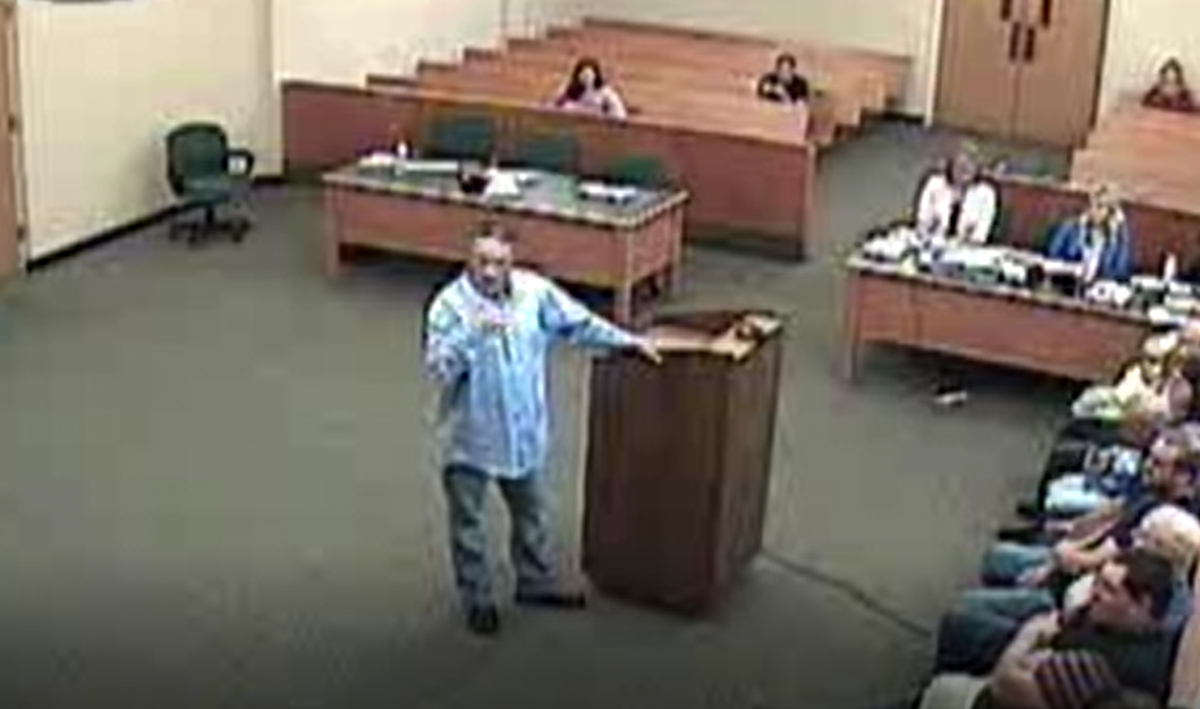
Later, as Garren stumbled through jury selection, he needed a woman pulled from the courtroom audience to read the list of juror names to him. He walked back to the bench to explain to the judge and Assistant Commonwealth’s Attorney Lisa Fugate that he is mentally ill.
“I am on mental medicine,” Garren told them. “So I’m mentally not able to do any of this because of my medication.”
“What medicines are you on?” Costanzo asked.
Thorazine and Seroquel, twice daily, to treat bipolar disorder, paranoid schizophrenia and depression, Garren answered.
“OK, it’ll be so noted for the record,” Costanzo said. Jury selection resumed.
“I have no idea what I’m doing,” Garren announced to the courtroom.
“OK, let’s move on,” Costanzo said.
Giving short shrift
Among the rules that Costanzo violated at Garren’s trial, according to the Kentucky Court of Appeals: Americans are entitled to an attorney when they face felony charges that could send them to prison. If they can’t afford an attorney, they’re supposed to get one for free.
(Unfortunately, said Preston, the state’s public advocate, there is no such guarantee of legal counsel for people facing misdemeanor charges, which are less serious than felonies. “Defendants take guilty pleas in district court without seeing an attorney all the time,” he said. “That’s kind of the assembly line of justice at that level. It’s, ‘OK, you did two days in jail, let’s make it time served and a $50 fine, next!’”)
If an indigent defendant says he wants a new lawyer because his public defender is doing a bad job, the judge should take that grievance seriously enough to thoroughly question both the client and the lawyer and determine if the client has “good cause,” the Court of Appeals said in its decision reversing Garren’s conviction.
Poor people are not entitled to the public defender of their choice. But it’s always possible the working relationship between lawyer and client has broken down so much that, in the interest of fairness, a new lawyer should be appointed, the appeals court said.
However, Costanzo’s only concern seemed to be clearing his docket, it said.
“In his request to the court, Garren alleged that counsel failed to file motions, failed to obtain evidence for trial and hung up the phone,” the appeals court wrote. “Perhaps those allegations, once fleshed out, would not have entitled him to relief. However, those allegations were summarily disregarded. We cannot know what a thorough investigation would have yielded because no inquiry — much less a thorough one — ever occurred.”
“In its endeavor to keep the trial from being postponed, the trial court in this case improperly gave Garren’s request short shrift,” the appeals court wrote.
In a recent interview, Costanzo said he respects the Court of Appeals and will obey its admonition to him in Garren’s case. (Costanzo, a graduate of Lincoln Memorial University in Harrogate, Tenn., and the Northern Kentucky University law school, was appointed to the bench in 2009 by Gov. Steve Beshear. He later was elected by local voters.)
The judge said he had a favorable opinion of Howard’s work as a lawyer, which led him to be skeptical when Garren asked for a replacement at the last minute. By that point, Costanzo said, Garren had been represented by Howard or his colleagues for several months at a number of pre-trial hearings, seemingly without complaint.
With a docket increasingly clogged by drug cases, Costanzo said, he’s currently scheduling trials six months out.
“It is highly unusual, although not unheard of, for them to come in on the day of trial and say, ‘I’m unhappy with my attorney. I want someone else,’” Costanzo said. “Now, it depends on — there’s a lot of different views on why that could happen. Could it be a tactic just to keep from going to trial? Could there really be that some sort of conflict that has risen? We don’t know.”
That’s why judges are supposed to ask questions, to find out if the client has a valid concern about his lawyer and not just assume it’s a stalling tactic, said Connelly, the UK law professor.
“Judges get tired of hearing these complaints, I think, because they are so common,” Connelly said.
“Yes, clients complain about their attorneys, especially public defenders, if they don’t think a case is going their way,” she said. “But it’s up to the judge to keep an open mind and listen, because some of these complaints are legitimate. And sometimes the clients don’t know that something has gone wrong with their case until the morning of trial.”
This story was originally published November 22, 2019 at 9:16 AM.