
Biggest native snake in US — a fearsome 9 feet — is vanishing, Georgia study says
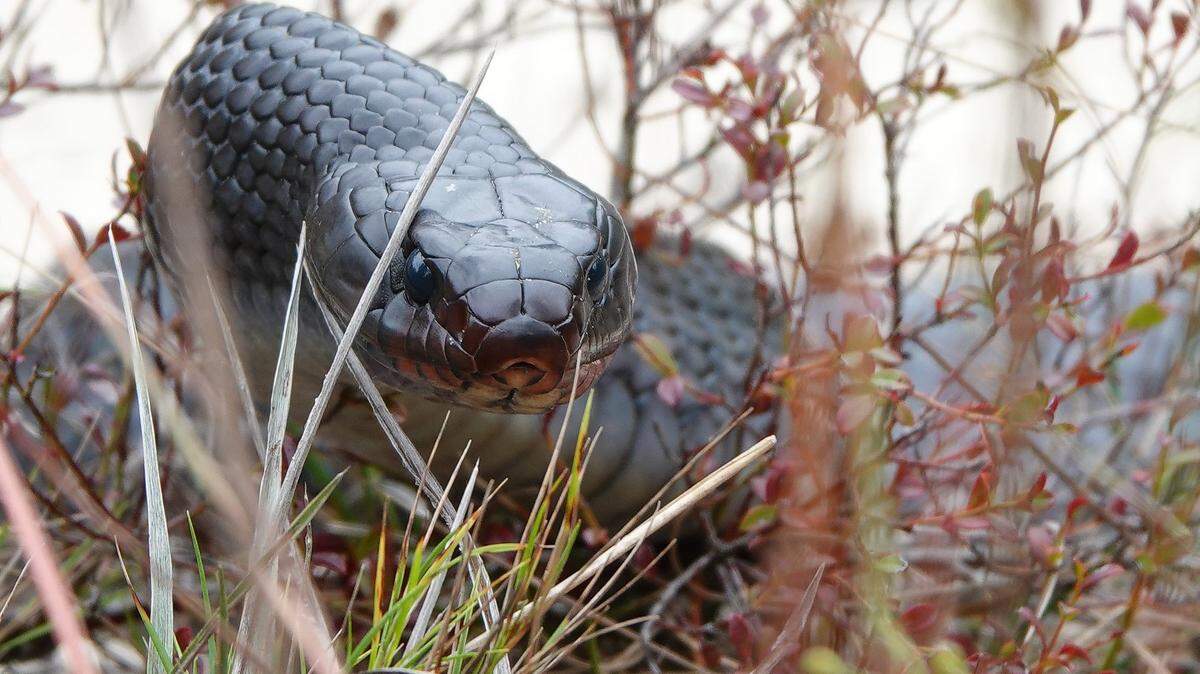
One of the South’s most intimidating creatures — a species of “massive” black snake — is being sought out by Georgia researchers to determine just how close the species is to vanishing from the coastal plain.
The eastern indigo is North America’s biggest indigenous snake, growing to 9 feet, and it is found only in coastal Georgia, Florida, Alabama and Mississippi, experts say.
It’s a region of the country that is being heavily targeted by developers, which is why the Georgia Wildlife Conservation Section is funding efforts to track down and survey surviving populations of indigo snake.
The goal is to save a type of nonvenomous snake that is likely the basis for multiple monster snake legends dating back centuries in the South (before larger pythons and boa constrictors invaded Florida from other continents).
However, it’s not just size that makes the eastern indigo disconcerting. The indigo also has seemingly strange abilities, experts say.
“When threatened, they can flatten their necks vertically to look bigger,” Georgia wildlife officials report. “And observations suggest they are immune to rattlesnake, cottonmouth, and copperhead venom.”
Indigos are so named due to the eerie “blue sheen their scales reflect in the sun,” reports the Georgia Department of Natural Resources.
The species, which rarely bites humans, is federally endangered in Georgia and Florida, due mostly to habitat loss, according to the University of Georgia’s Savannah River Ecology Laboratory.
It’s with that in mind that the Georgia officials funded a 2019 study to search for indigo populations in the sandhills, according to a Facebook post. The nonprofit Orianne Society used the money to send surveyors to 20 sites in search of indigo snakes, state officials wrote.
After months of looking, the researchers found indigo snakes at only 60 percent of the sites — an indication of their decline, Georgia Department of Natural Resources officials reported.
“This long-term monitoring work will continue for the foreseeable future to ensure that indigo snake populations keep persisting on the landscape,” Georgia DNR officials said on Facebook.
Reaction to the study underscored the myths southerners have attached to the indigo snake, with commenters on Facebook sharing photos and stories of the snake’s seemingly supernatural abilities to climb trees and eat rattlesnakes.
“I have seen some that were 25 ft. long in South Douglas County when I was an employee of the state highway department 47 years ago,” posted Thomas Daniell on the state’s Facebook page.
This story was originally published January 3, 2020 at 1:13 PM with the headline "Biggest native snake in US — a fearsome 9 feet — is vanishing, Georgia study says."