
800 hellbenders with large mouths and strong jaws freed into Missouri waters, zoo says
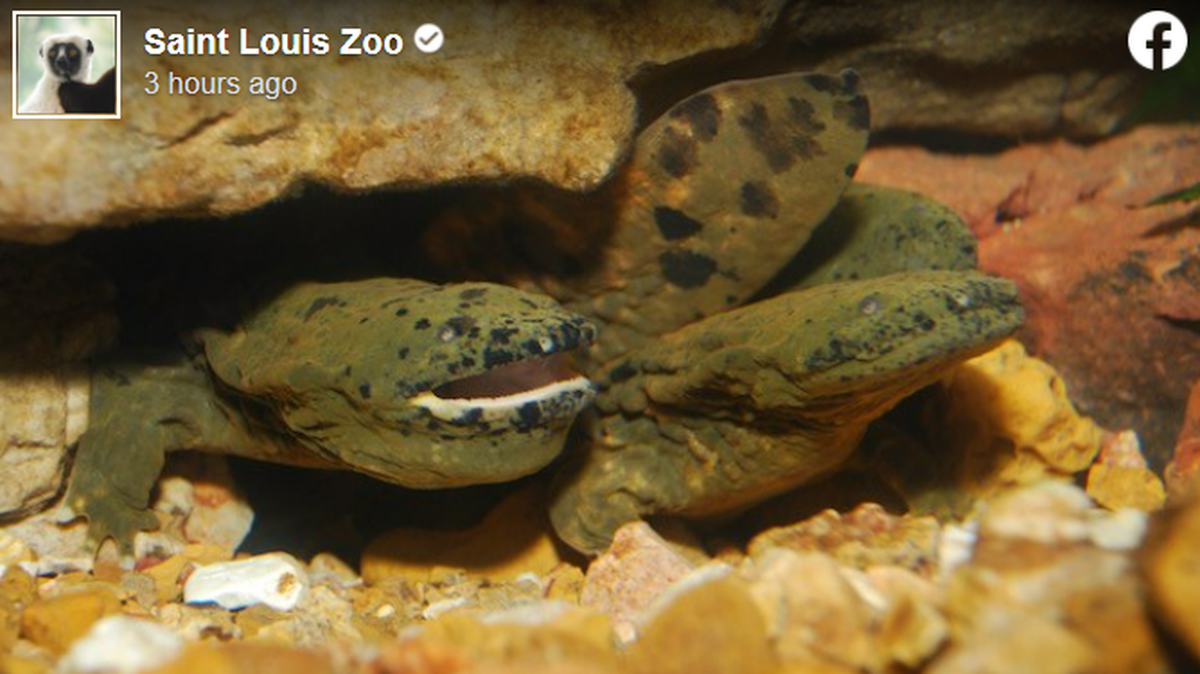
More than 800 giant salamanders with mouths so big and jaws so strong that they can swallow fish whole have been released into Missouri rivers.
The endangered Ozark and eastern hellbenders were raised from eggs at the Saint Louis Zoo before they were freed this summer as part of the zoo’s hellbender conservation program, according to the zoo’s Wednesday blog post.
The selected hellbenders were “thoughtfully chosen” by experts who evaluated their age, health, sex and native river, the zoo said, with a goal of maximizing how many of the hellbenders survive and reproduce.
Hellbenders are the largest salamander species native to North America, the Ron Goellner Center for Hellbender Conservation says, and while they are “perfectly adapted” to living in the streams with a flat head and body, stout legs, rudder-like tail and beady eyes, the Missouri populations have drastically declined by 70% in the last 40 years.
The critters, also known as the snot otter or lasagna lizard, “are threatened by stream impoundments, pollution and siltation (when water becomes dirty from fine mineral particles in the water),” the zoo’s conservation center says.
In a sign of hope, zookeepers arrived at a river bank once home to an abundant group of hellbenders and climbed into a canoe with hellbenders in tow.
They found places with large rocks for protection and breeding dens with crayfish (“the preferred prey” of a hellbender) swimming nearby, the zoo said.
“Swiftly and unceremoniously, they place the hellbender under the water with its head pointing towards a suitable rock,” the blog says. “Upon release, the hellbender swims, by undulating its body through the water, until it comes to rest under the rock, completely hidden from view. The keepers say a final farewell and express their well wishes before repeating the process somewhere else along the cool, flowing river.”
Hellbenders grow to about 2 feet long and like to walk along the bottom of stream beds, according to the zoo.
Crayfish make up about 90% of their diet, the zoo says, though they’re not opposed to eating other creatures that they can swallow whole.
“Hellbenders hunt at night, so they depend on smell and touch to find their prey,” the zoo’s hellbender bio says. “Once a hellbender locates its quarry, it opens up its large mouth and - chomp! - grabs the unlucky animal with its strong jaws.”
Humans who alter and pollute their habitat are the biggest threat, the zoo says, and nobody actually knows why they were named hellbenders.
The endangered salamander is important to maintaining a “healthy natural aquatic environment, and they play an important role in maintaining crayfish populations,” according to the Missouri Department of Conservation.
The state wildlife department says nobody should ever harm or remove hellbenders from the wild.
This story was originally published September 15, 2021 at 2:25 PM with the headline "800 hellbenders with large mouths and strong jaws freed into Missouri waters, zoo says."