
Why was Boston Marathon bomber’s death sentence initially overturned? What to know
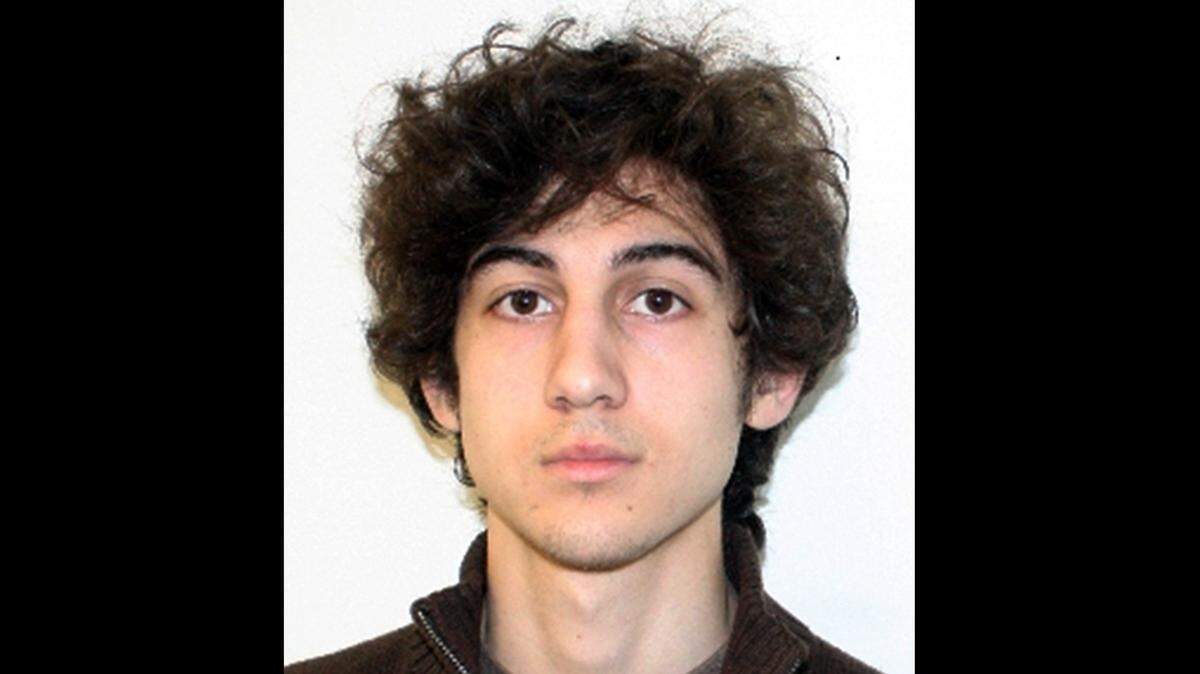
The Supreme Court reinstated the death sentence for Dzhokhar A. Tsarnaev, who was convicted in the 2013 Boston Marathon bombing when he and his brother were accused of planting and setting off pressure cooker bombs during the 117th running of the race.
“Dzhokhar Tsarnaev committed heinous crimes,” Justice Clarence Thomas wrote in the 6-3 ruling on March 4.
Hundreds were injured and three were killed after the bombs went off. Tsarnaev was convicted in 2015 on all 30 counts against him, including the fatal shooting of MIT Police Officer Sean Collier during the manhunt three days after the race, and a judge imposed the death sentence.
However, his death sentence was overturned on July 31, 2020, by a three-judge panel in the First Circuit Court of Appeals, a decision the Biden administration spoke out against at the time, The Associated Press reported.
Here’s why it was first overturned
The panel of judges gave two reasons why Tsarnaev’s death penalty would be vacated.
The panel decided the court that imposed Tsarnaev’s 2015 sentence “abused its discretion during jury selection” by not asking the prospective jurors about their media exposure to the bombing, Supreme Court justices explained in the new ruling on March 4.
Additionally, the appeals court ruled that the judge “excluded evidence concerning” Tsarnaev’s brother’s “possible involvement” in an unsolved triple murder that took place two years before the bombing. Tsarnaev reportedly planned to use this as “evidence” that his brother was the actual “ringleader of the bombing” by linking him to the earlier murders.
In 2013, the two brothers fled after detonating the bombs at the race and three days later, they drove to MIT campus heavily armed and fatally shot police officer Collier, according to the Justice Department. Ultimately, they ended up in a gunfight with local officers in Watertown.
Tsarnaev, in a carjacked vehicle, drove it “at three officers, attempting to kill them, and ran over his brother as he escaped,” the department said. Tamerlan Tsarnaev died from his injuries, so he did not stand trial with his brother.
Tamerlan Tsarnaev was a suspect in 2011 murders that took place in Waltham, Massachusetts, on the anniversary of the Sept. 11, 2001, terrorist attacks, The Associated Press reported.
Tsarnaev’s lawyer planned to include evidence related to that case to argue that he didn’t deserve the death penalty since his brother purportedly had a larger influence in the bombings, CNN reported.
The majority of Supreme Court justices ultimately disagreed with the lower court’s assessment of that issue.
“That evidence, however, did not allow the jury to confirm or assess Tamerlan’s alleged role in the Waltham murders,” the Supreme Court wrote, arguing that the district court in 2015 “reasonably excluded the evidence” as it had “potential to confuse the jury.”
Three Supreme Court judges voted against reinstating the death penalty for Tsarnaev.
“In my view, the Court of Appeals acted lawfully in holding that the District Court should have allowed Dzhokhar to introduce this evidence,” Justice Stephen Breyer wrote in his dissenting opinion.
Meanwhile, Thomas wrote that “the Sixth Amendment nonetheless guaranteed (Tsarnaev) a fair trial before an impartial jury. He received one.”
The Boston Marathon bombing killed Lingzi Lu, 23, Krystle Campbell, 29, and Martin Richard, 8, according to The Associated Press. Tsarnaev is now 28.
This story was originally published March 4, 2022 at 12:57 PM with the headline "Why was Boston Marathon bomber’s death sentence initially overturned? What to know."
.jpg)