Rare, possibly deadly virus found in tick common across Southeast US, study says

The emergence of a rare and potentially deadly virus among a common tick in the Southeast has been confirmed in Georgia, according to a new study.
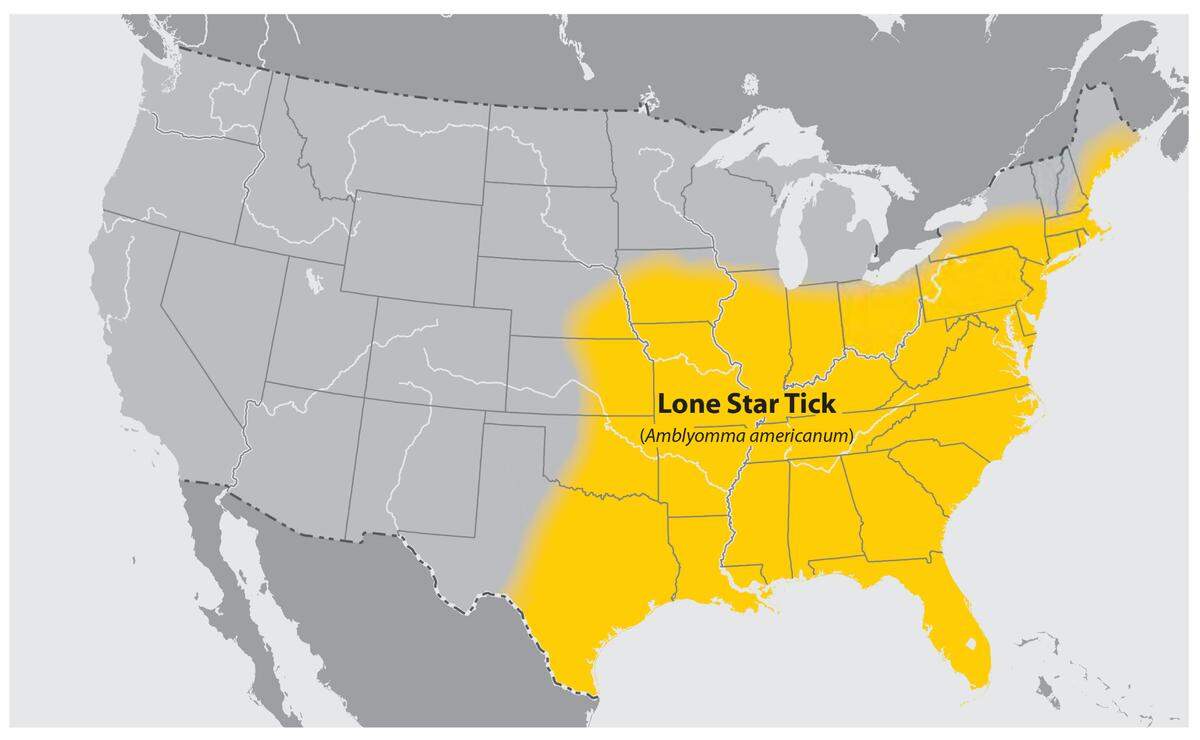
The Heartland virus was traced to lone star ticks, which are most frequently associated with human bites, according to the peer-reviewed study researched by scientists at Emory University in Atlanta.
“We’re trying to get ahead of this virus by learning everything that we can about it before it potentially becomes a bigger problem,” Gonzalo Vazquez-Prokopec, senior author of the study, said in a news release.
The Heartland virus was first found among humans in Missouri in 2009, according to the study pre-published on March 16 in the Centers for Disease and Control and Prevention’s Emerging Infection Diseases Journal.
Since its discovery, over 50 human cases have been reported in the Southeast and Midwest, including Arkansas, Georgia, Illinois, Indiana, Iowa, Kansas, Kentucky, Missouri, North Carolina, Oklahoma, and Tennessee, according to the CDC. The disease has also been transmitted to white-tailed deer in the Southeast.
The human cases of Heartland virus were “predominantly severe or fatal,” the study said.
People infected with the Heartland virus may experience fever, fatigue, nausea, joint pain and interfere with the body’s ability to create blood clots, according to the CDC, which recommends people visit their doctor if they experience symptoms.
There are no vaccines or medications to prevent infection of the illness, according to the CDC, although the new study found that certain wildlife might have a natural antibody to fight off the virus.
With the study, researchers examined 26 sites in a rural area of Georgia during 2018 that had high tick populations during the study and collected 2,960 different types of ticks, including lone star ticks. The team used a method called “flagging,” where researchers would run white flags through the brush to collect ticks.
“Lone star ticks are so small that you may not feel them on you or even notice if you’ve been bitten by one,” Steph Bellman, a co-author of the study, said in a news release.
After two of the 26 sites showed positive results for the virus, the researchers studied those two sites in 2019 and collected 6,470 more ticks, according to the study.
The study found that the lone star ticks had the highest rate of viral infection in the two sites.
While the overall infection rate of the disease is low among ticks, experts fear that the lone star tick’s expanding range across the United States may bolster the virus.
Other tick species genetically similar to the lone star tick, such as the Asian longhorned tick, could alter the evolution of the virus, too, the study said.
“Ticks are both fascinating and terrifying,” Bellman said in the news release. “We don’t have effective ways to control them and they are a vector for many nasty diseases. They represent a large threat to human health that a lot of people may not realize.”
There are “major knowledge gaps” in the understanding of the Heartland virus in ticks, according to the study. Although the infection rate and reported cases of the virus in humans is low, researchers believe that the lack of understanding of the virus may lead to under-reporting of cases.
“We want to bring awareness rather than panic,” said Gonzalo M. Vazquez-Prokopec, a co-author of the study, told NBC. “People tend to go out more in the spring and they might get exposed to ticks, which are increasing rapidly, particularly in the South, this time of year.”
More resources about ticks, and how to avoid them, can be found on the CDC’s website.
This story was originally published March 18, 2022 at 3:59 PM with the headline "Rare, possibly deadly virus found in tick common across Southeast US, study says."