
‘Rock’ found 10,000 feet deep in Pacific proves to be ancient shark tooth, study says

A large broken tooth found 10,000 feet deep is being hailed as a historic discovery.
It’s the only known case of a megalodon shark fossil being plucked from its original resting place in the deep Pacific.
That means the upper jaw tooth may have been sitting not far from where it originally fell from the jaws of a monster shark millions of years ago, according to Daniel Wagner, chief scientist with the Ocean Exploration Trust.
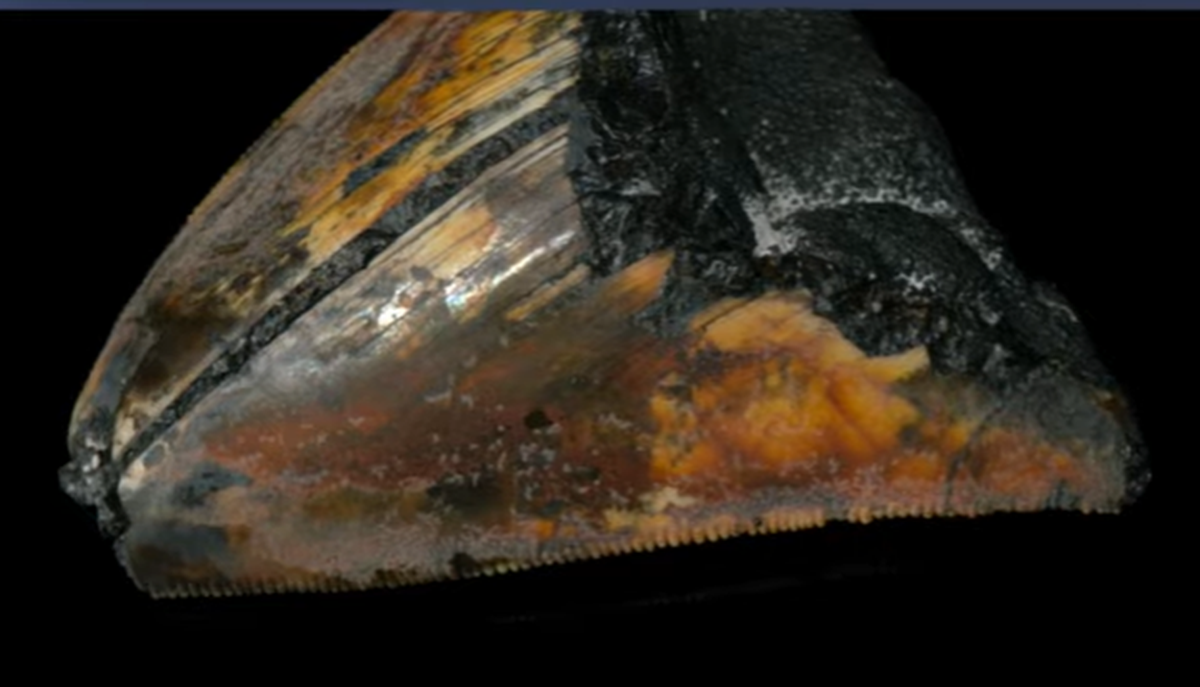
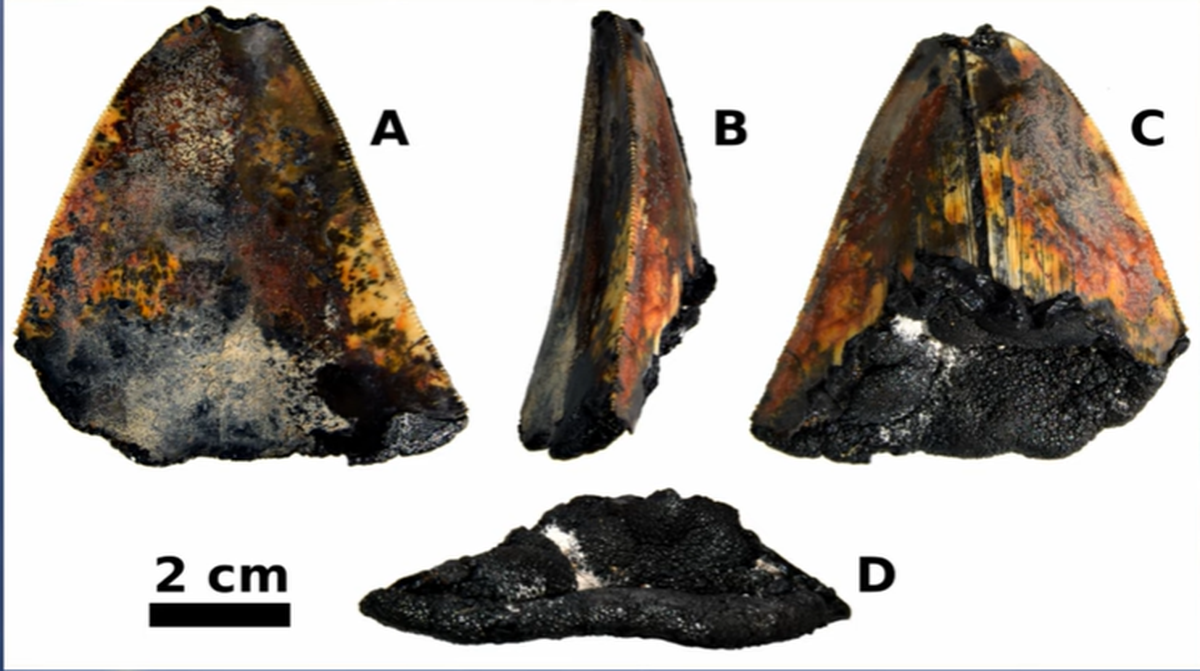
Even more surprising, the ancient tooth still has its finely serrated edges, like the teeth on a saw.
“The very well-preserved serration of the cutting edges on the tooth suggests that the tooth did not undergo large transportation or drifting,” he told McClatchy News.
“Otherwise you would expect abrasions on the tooth, which would obscure the serration.”
The discovery was made in summer 2022 as the Ocean Exploration Trust was recording video of a “never-before-seen” seamount south of Johnston Atoll in the Central Pacific. The site is about 1,000 miles southwest of Hawaii.
How it was found
A remotely operated vehicle was used to collect samples at the site and it was only after they were brought to the University of Rhode Island’s Marine Geological Samples Laboratory that scientists realized a tooth was hidden under a ferromanganese coating, scientists say.
The bottom of the tooth is broken off, but it still measures nearly 3 inches long and about 3.5 inches wide, according to a study published Dec. 14 in the journal Historical Biology.
Based on the size, the megalodon was “a sub-adult specimen” of about 25 feet, researchers say.
Full-grown megalodons reached “nearly the length two school buses” (around 65 feet) with teeth that were up to 7 inches long, experts say.
The apex predators lived in oceans around the world and fed on whatever crossed their paths, shedding teeth and growing more as needed.
Its original resting place
Among the many mysteries is whether the tooth fell out, or was snapped off during an attack. It also could have been embedded in another sea creature that managed to escape an attack.
Drifting megalodon teeth were at the mercy of the current, but typically fell to the seafloor like sediment, a process known as deposition, scientists say.
The age of the tooth is a mystery, with study co-author Jürgen Pollerspöck noting it could be anywhere from 3.6 million years old to 15 million years old.
That broad age range means the ground beneath it likely traveled hundreds of miles due to plate tectonics, study co-author Rob Pockalny of the University of Rhode Island told McClatchy News.
If it’s 3.6 million years old, the tooth may have originally fallen about 62 miles to the southeast. If it’s 15 million years old, the ground may have originally been about 500 miles to the southeast, he said.
Video of the sample collection shows the tooth hid in plain sight on a ridge, standing upright with its “cutting edge” protruding from the sediment, the report says.
It’s theorized a strong current along the ridge kept the tooth from being covered by sediment.
“Normally when such teeth are found in the deep sea, which is rare enough, they are brought up on board a ship using ... a kind of invasive sampling method,” study co-author Nicolas Straube said in a video posted on YouTube.
“Here we have documented the deposition of that tooth on the seafloor. This is a special thing because now we have the information on what this tooth may have experienced ... and some environmental factors which may have led to the deposition on the seafloor.”
This story was originally published January 5, 2024 at 7:34 AM with the headline "‘Rock’ found 10,000 feet deep in Pacific proves to be ancient shark tooth, study says."