
Panther cornered by dogs is largest found in Florida, state says. What was it eating?
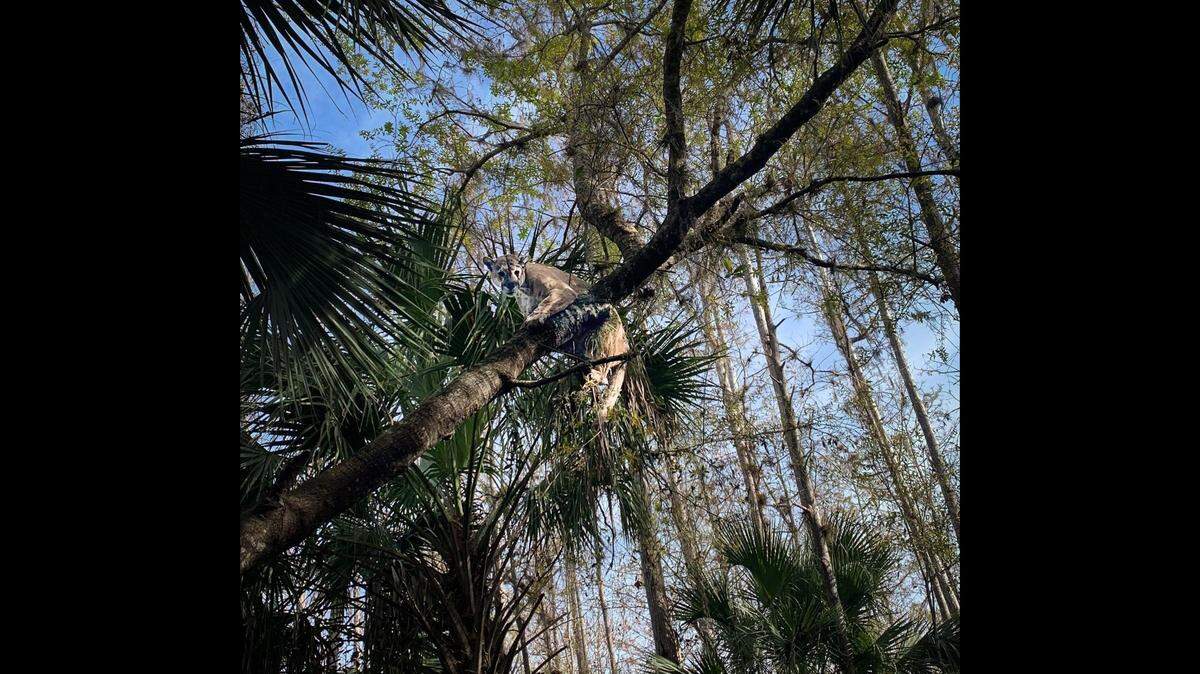
An unusually big panther seen for years on trail cameras proved to be even more impressive when dogs cornered it in a tree, according to Florida state researchers.
It was captured Jan. 29 at Babcock Ranch Preserve in southwest Florida and weighed 166 pounds, making it the heaviest recorded in the state.
To put that in perspective, 160 pounds is ... or was ... considered the maximum for Florida panthers.
It’s a discovery that begs the question: What was it eating?
The answer: An invasive species introduced by the Spanish in the mid-1500s.
“This panther’s size is likely more related to a high proportion of hogs in his diet. This particular area has a high concentration of hogs,” according to panther biologist Mark Lotz, with the state’s Division of Habitat and Species Conservation.
“Deer and hogs are the panthers’ main prey items, but where hogs are prevalent they will preferentially take them because they are easier to catch. We have noted panthers being on the larger end of the scale in other areas where hogs make up the bulk of their diet.”
Is the panther still growing?
Closer inspection of the panther revealed it was male, about 10 years old, and had healed fractures on a couple of its toes, giving it a slight limp. Genetic samples collected will be processed later in the year, officials said.
The cat has likely reached its maximum size, Lotz says.
It’s estimated Florida has approximately 120-230 adult panthers left in the wild, and the nearly 68,000-acre Babcock Ranch Preserve is among the sites where they can feast with ease.
The state does not have specifics for how many panthers live at the preserve, but it is considered an important part of ongoing research.
“Babcock Ranch is where we documented the first (panther) reproduction ‘north of the river,’ meaning the Caloosahatchee (River), in 2017,” Lotz said. “Since then, several other females have been documented north of the historical breeding range dating back to when research began.”
The ranch is plagued with destructive wild hogs, so panthers do the state a favor by feasting on the invasive pests. Feral hogs reach up to 6 feet in length in Florida and can exceed 150 pounds, the state says. They are dangerously aggressive when cornered, causing “serious injury with their tusks,” experts say.
Catch and release
The Florida Fish and Wildlife Conservation Commission catches “a representative sample” of panthers every year for research and puts monitoring collars on them.
That’s how the 166-pound cat was found. The process involves dogs led by a highly skilled houndsman and biologists go to great lengths not to harm the predators.
“We use specially trained hounds to chase panthers up a tree. The dogs trail the scent until they catch up to the panther. Once they are close, they begin chasing the panther. Panthers quickly retreat to the safety of a tree, typically within just a few minutes,” Lotz said.
“The dogs hold the panther in the tree by continually barking. Once we arrive and administer an anesthetic dart, the panther falls asleep within 10-15 minutes. Once stabilized on the ground, it takes about an hour for us to conduct a full workup. When finished, we administer a reversing agent that counteracts the drugs.”
The panthers typically wake up and walk away within minutes.
Size is not considered an important part of the panther data collected in Florida, Lotz said.
Panthers exceeding 200 pounds have been found in other states, where they go by names such as mountain lion, cougar, puma and catamount.
Mishaps involving cars remain the greatest threat to Florida panthers, despite a “very proactive” effort to construct wildlife road crossings, Lotz says.
.jpg "15603493444_7d1d4a6904_c (1).jpg")
“Panthers have always gotten hit by cars for as long as we’ve studied them. As the panther population increased, we saw an increase in vehicle strikes,” Lotz said.
“The most likely explanation for this is that there were simply more panthers on the landscape to get hit. Also, as the population increased, panthers reoccupied areas where they’d been absent for many years, so we saw panthers getting hit in areas outside of their core range of the 1980’s and 1990’s. The human population continues to grow in South Florida.”
This story was originally published February 19, 2025 at 8:27 AM with the headline "Panther cornered by dogs is largest found in Florida, state says. What was it eating?."