Scientists driving through Yellowstone stumble upon new hydrothermal vent. See it
A new hydrothermal feature that popped up inside Yellowstone National Park last summer has scientists wondering if it will make another appearance this summer.
Scientists first noticed it while driving through the park nearly two weeks after one of the hydrothermal features exploded along a boardwalk, scientists said in the Yellowstone Caldera Chronicles, a weekly column written by scientists at the Yellowstone Volcano Observatory.
“The summer of 2024 was a busy time, with July’s hydrothermal explosion at Biscuit Basin and the first hydrothermal explosion ever recorded by geophysical monitoring data in Norris Geyser Basin,” scientists said in the March 17 blog post. “In addition to these higher energy events, a new hydrothermal feature popped up right in front of our eyes — literally!”
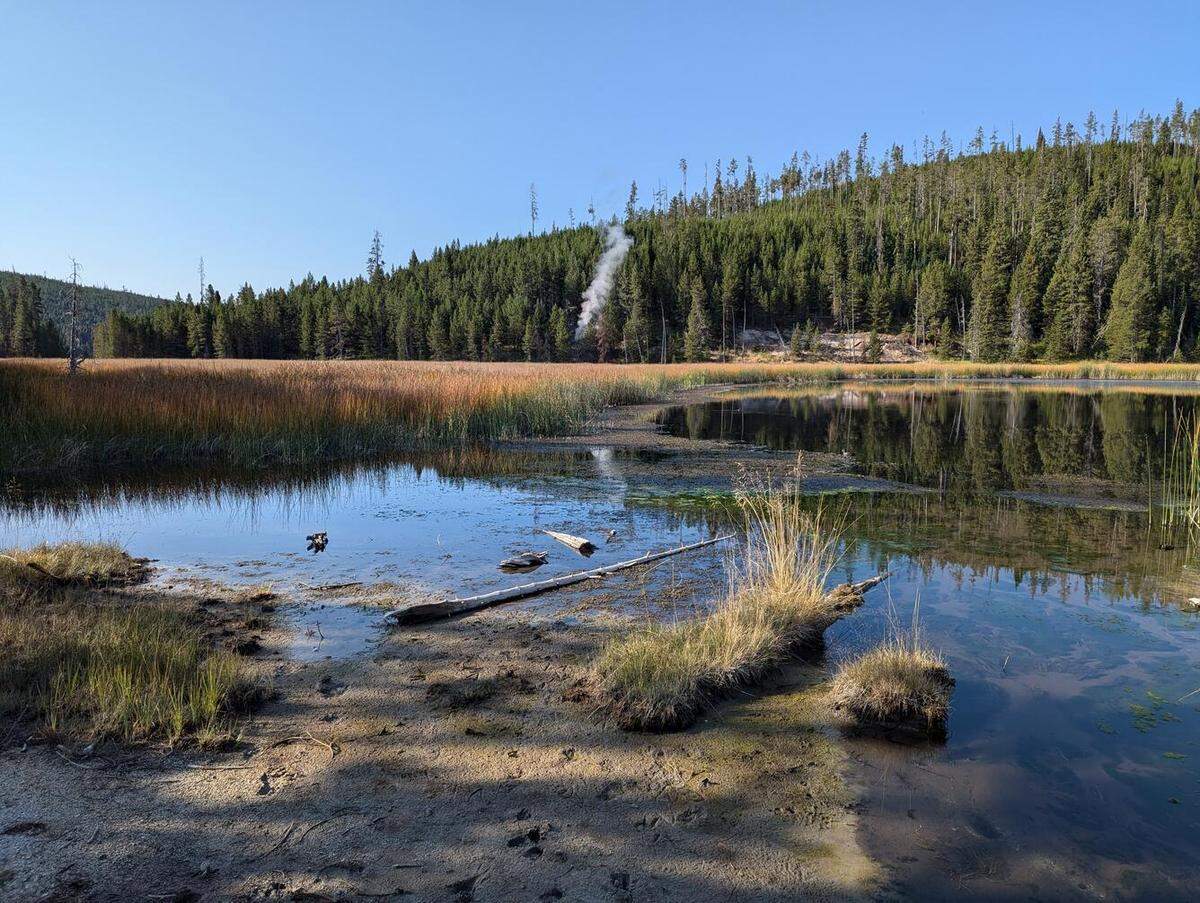
A photo shows a thick plume of steam billowing up from the edge of a treeline in the park. An “eagle-eyed” park scientist noticed it while driving south from Mammoth Hot Springs toward Norris Geyser Basin on Aug. 5 and notified the park geology team to confirm it was a new feature, scientists said.
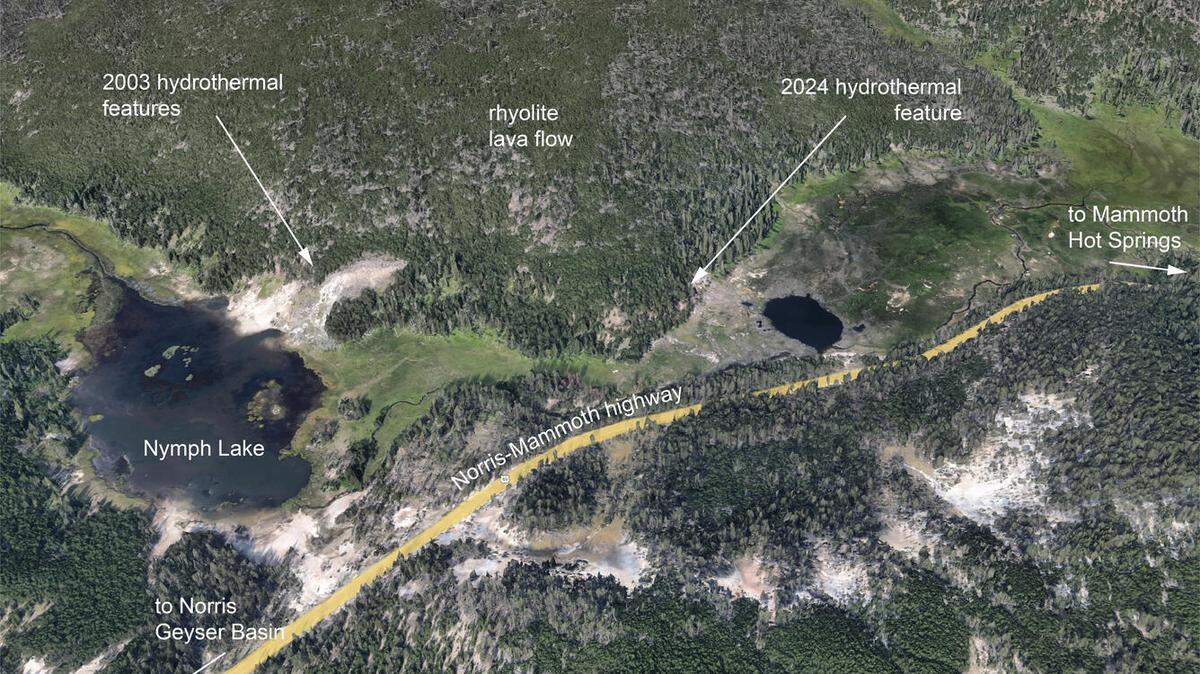
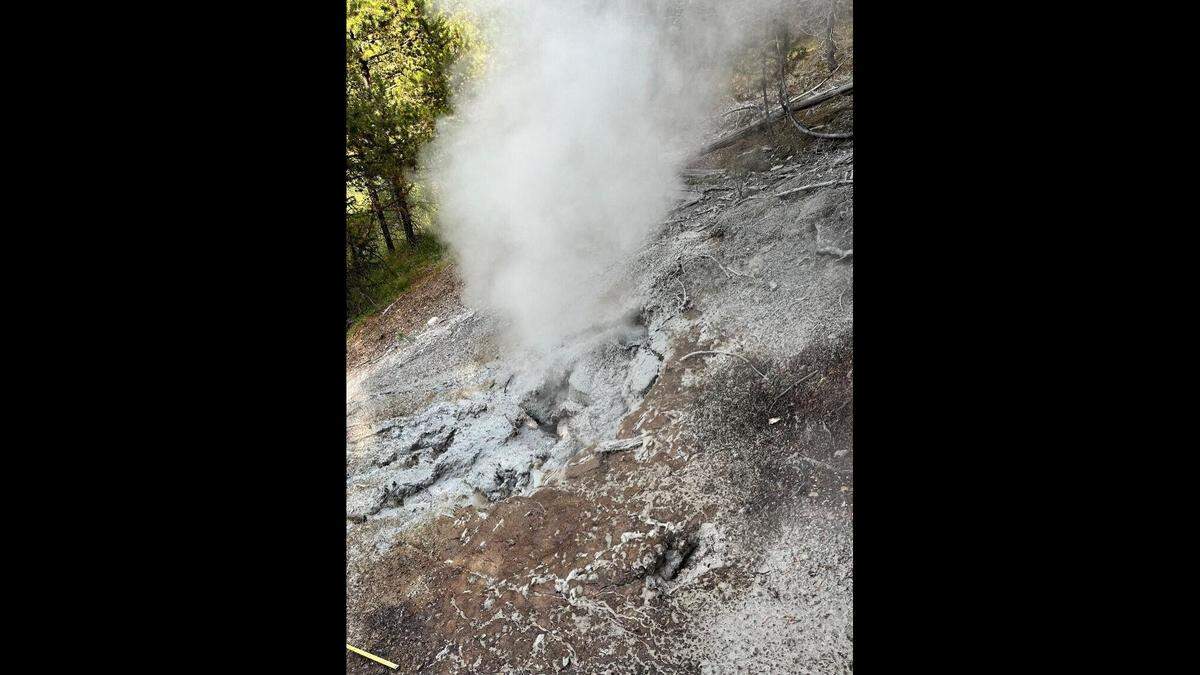
“This new hydrothermal feature is within a region called the Roadside Springs thermal area, which is a collection of spatially distinct areas of altered rock and hydrothermal features,” scientists said. “This new feature is at the foot of a rhyolite lava flow about 3 meters above the marsh below, and it lies within a swath of warm, hydrothermally altered ground that is approximately 60 meters (about 200 feet) long.”
Park geologists “trudged through the marshy ground” to get a closer look at the 171-degree Fahrenheit feature and noticed a “very thin veneer of grey silicious clay barely covered the surrounding surface, indicating its very young nature.”
While the hydrothermal activity seems new, it’s also possible it’s a continuation of nearby activity that first kicked off over two decades ago, scientists said.
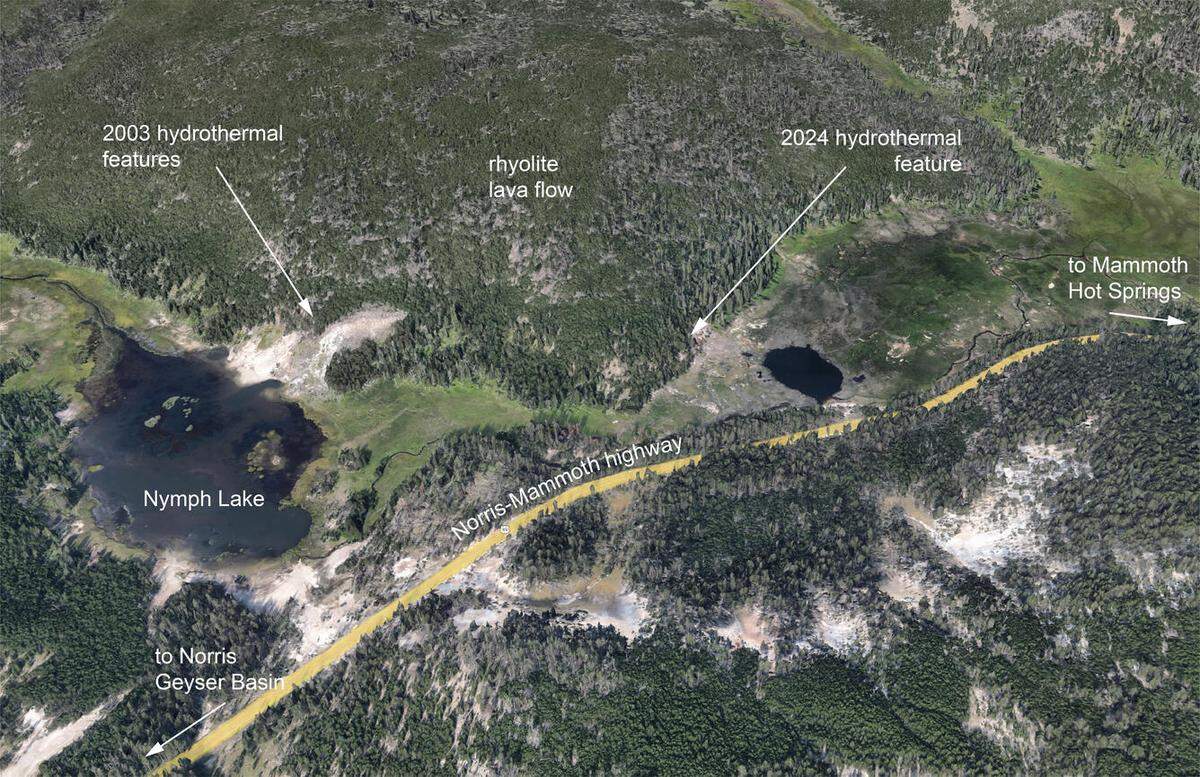
A “similar type of hydrothermal activity” was first spotted in 2003 on the “other side of the same rhyolite lava flow” from the new feature, near Nymph Lake, scientists said.
“Are the new feature and the activity that started in 2003 hydrologically connected? Probably,” scientists said. “One could run a line along the axis of the older active area and it would intersect the new feature. This line also follows the trend of faults that run from Norris Geyser Basin northward to Mammoth Hot Springs and beyond.”
An image shows where the two features are situated in the fault line area.
The new feature remained strong into the fall of 2024, then waned in winter and the steam plume slowly vanished. Scientists are waiting to see if it will return over the summer.
“Geologists have mapped more than 100 major hydrothermal areas in Yellowstone National Park, and there are many more than 10,000 hydrothermal features within its boundaries,” scientists said. “The activity from these features waxes and wanes with time — you might even say that some of them pick up steam! Sorry…we couldn’t resist.”
That’s exactly what happened when one of the park’s hydrothermal features exploded last summer. And before that in January 2024, a long-dormant geyser erupted for the first time in decades, McClatchy News previously reported.
“It’s fun (but) not particularly unusual,” Mike Poland, the scientists in charge of the Yellowstone Volcano Observatory, said at the time. “Yellowstone geysers do this all the time.”
This story was originally published March 25, 2025 at 5:20 PM with the headline "Scientists driving through Yellowstone stumble upon new hydrothermal vent. See it."