
Lexington proposing substantial sewer rate increases to pay for EPA mandates
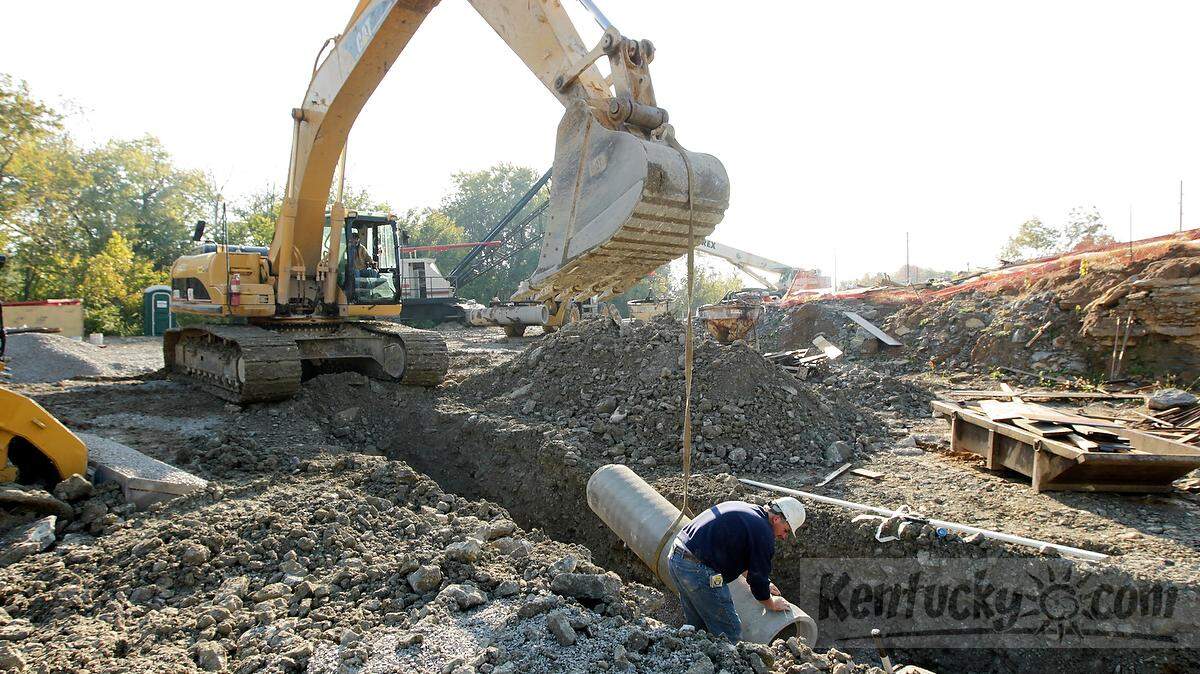
Taking showers and flushing toilets might be more expensive in coming years.
Lexington's Urban County Council is considering a 12 percent increase in sewer rates this year and another 12 percent hike next year to help pay for more than $590 million in stormwater and sewer upgrades that are part of an agreement with the U.S. Environmental Protection Agency to fix Lexington's aging system.
The council probably will begin discussions on the potential rate increase during Tuesday's work session. City officials say they hope the council will take a final vote March 17.
Council members say it might be impossible to avoid the rate increase because of the EPA consent decree.
"Most people on council understand that we are under a court order," said Vice Mayor Steve Kay. "One way or another, we have to pay to get this work done. The alternative is to be subject to fines that would be more than the cost of repair."
Under the proposal, the sewer bill for a Lexington household using an average of 4,000 gallons a month would jump from the current rate of $21.75 to $24.36 on July 1. If the second rate increase is approved, the average bill would increase to $27.29 on July 1, 2016.
Council voted in 2008 to raise sewer fees by 48 percent. The rate then increased 35 percent the following year. Bills have risen only slightly since July 2011, when annual rate increases were tied to the consumer price index.
Another rate increase was predicted for 2012, but it didn't happen because the city has been able to use low-interest state loans to fund construction costs.
Charlie Martin, director of the city's Division of Water Quality, said the city has spent $130 million since 2007 on projects to correct long-standing problems that led to overflows of the storm and sanitary sewer systems.
But the city will spend even more during the next two years to comply with the agreement with the federal government.
During that time, the remedial-measures construction plan calls for more than $196.7 million in capital projects. Some big-ticket items include six wet-weather storage tanks to hold water during major rainstorms. Because sanitary sewers can become overburdened during such storms, the tanks will hold excess water until it can be released safely into the water system.
Bill O'Mara, the city's finance commissioner, said the city has used a combination of grants and Kentucky Infrastructure Authority low-interest loans to fund most of the projects. But Kentucky Infrastructure Authority loans can be used only for certain types of projects.
The city will need bonds totaling $38 million during the next two years to help pay for the sewer work. The increase in sewer rates will enable debt payments on those bonds, O'Mara said.
"We have to show the bond market that we have the money to make these payments," he said.
It's possible the city will have to raise sewer rates 12 percent in 2018. But Martin and O'Mara said they were asking only for a 12 percent increase for each of the next two years.
"We are going to come back and recalibrate and see what we need," Martin said. The city has saved $3.1 million on completed projects required under the EPA consent decree. Martin said other projects need to be completed before he could determine whether the savings trend would continue.
According to numbers provided by the city and the Bluegrass Area Development District, if the council approves the two increases, sewer rates would be in line with other cities in a 17-county area. Frankfort, Richmond, Winchester, Irvine and Stanford would have higher rates based on average usage of 4,000 gallons a month, but Lexington's rate would be higher than such cities as Danville, Berea and Georgetown.
Council member Richard Moloney said he understood that the city probably would have to raise the rates or face fines from the EPA for failure to comply. But Moloney said he wished the city had implemented a smaller increase in 2012 so the increases wouldn't be as steep in coming years.
"I just want us to be consistent," Moloney said. "We may not have had to raise the fee so much if we had done it in 2012."
O'Mara said the city was not ready to raise sewer fees in 2012 because the stormwater and sewer projects were not shovel-ready. "Those bonds have to be spent on projects in a certain amount of time," he said. The city also had enough money to pay for stormwater and sewer projects up to this point, O'Mara said.
Kay said that although most council members understand the need for the sewer rate increase, that doesn't mean all of them will vote for it.
"I wouldn't be surprised if some members of council vote against it," he said. Kay said that much of the discussion probably would focus on "managing the project itself and managing the financing of it."
This story was originally published February 22, 2015 at 3:18 PM.