Doctors hide thumb bone in man’s arm after work injury, then use it to build new one
When patients experience extreme trauma, sometimes doctors have to find creative ways to help get their lives back to normal.
This is what a medical team in Iran did for a 25-year-old worker after a serious machine accident left him “mangled,” doctors said.
The case was published Jan. 25 in the peer-reviewed Journal of Medical Case Reports. (Warning: case report contains graphic images.)
Doctors say a man arrived at the hospital after an “occupational related injury” in which “factory machinery caused extensive burn and crush injury” to the man’s left hand, including his left thumb, according to the report.
He was immediately taken into surgery, and as doctors pulled back the torn flesh, they found his thumb to be all but destroyed. But, one piece was salvageable.
In the operating room, “we found that the first metacarpal bone is viable, but there was no soft tissue supporting it, leaving the metacarpal bone exposed,” doctors said. The first metacarpal is the bone that connects the wrist to the thumb, making the outer edge of the palm.
The bone was in good condition but was surrounded by unsalvageable tissue and at a high risk of becoming infected or necrotic, a term for dying, doctors said.
“Since the thumb is responsible for 40% of the functions of the hand, saving and reconstructing a mangled thumb is essential for the patient’s future,” according to the report.
So, doctors tried something more imaginative.
“We banked the first metacarpal bone in the distal forearm for later reconstruction,” doctors said.
X-rays show the thumb bone embedded on the top of the forearm, appearing in scans as an extra small bone just below the wrist.
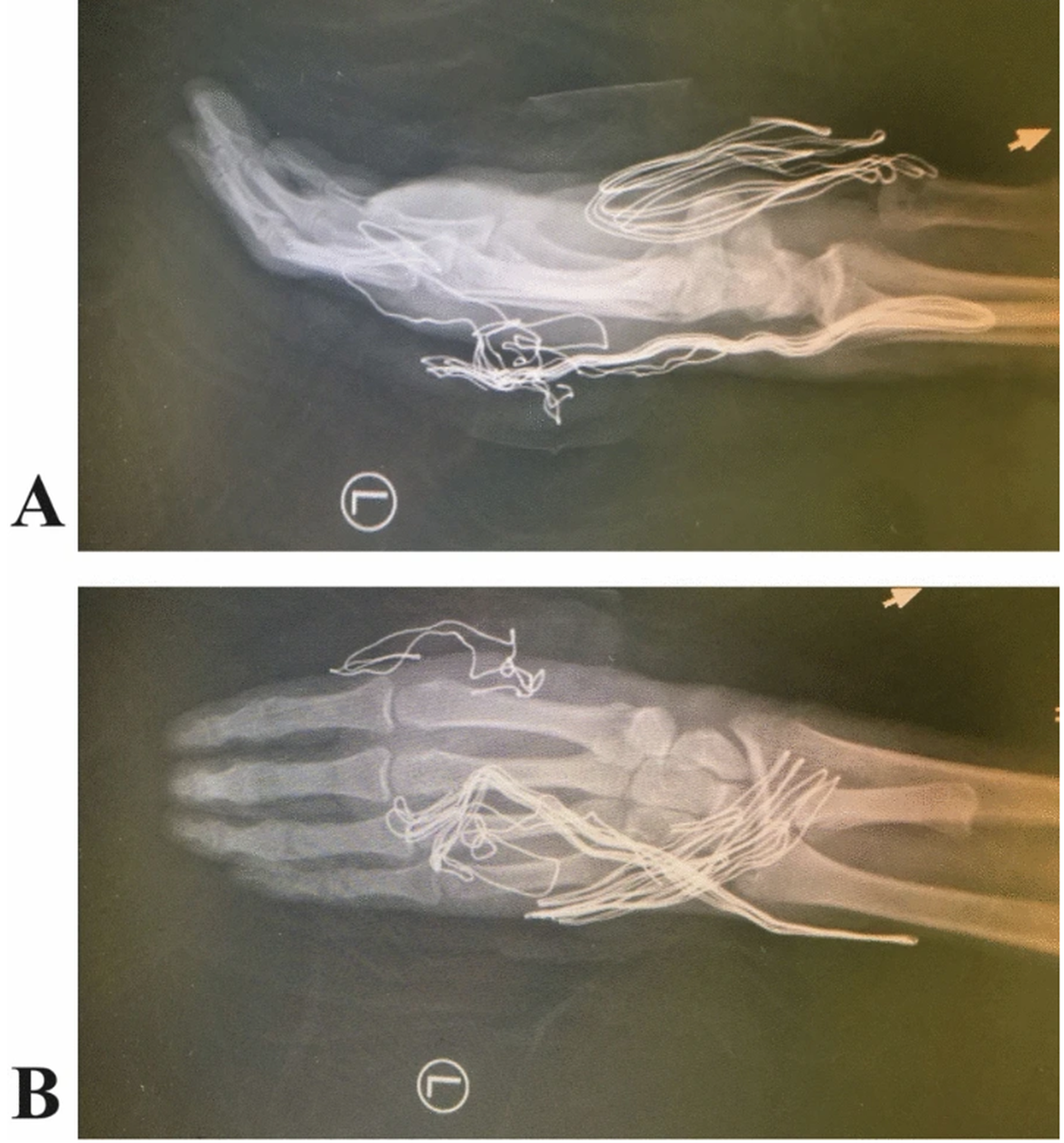
Once the bone was safely back inside the man, doctors worked to stem off any infections, according to the report. For one month, the medical team gave antibiotics, irrigated the wound, changed the man’s bandages and tried to maintain the range of motion for his remaining fingers.
The infection finally was “controlled,” doctors said, and the first signs of healing appeared as granulation tissue in the wound.
The 25-year-old went back into the operating room, and doctors cut open his arm to check on the thumb bone hiding inside, according to the report. To their relief, the bone was still alive.
All of the soft tissue of the thumb had been torn away, doctors said, so there was no way to reconstruct the man’s thumb in a way that would give him back normal movement, but they could use skin harvested from his thigh to wrap around the preserved bone and create a thumb-like appendage.
Doctors connected the thumb bone to the wrist, hoping there would be a “bony union” between the two during the healing process, according to the report.
The man was discharged a few days after surgery to start rehabilitation, and nine months later not only did the bones connect as doctors hoped, the man saw an incredible recovery.
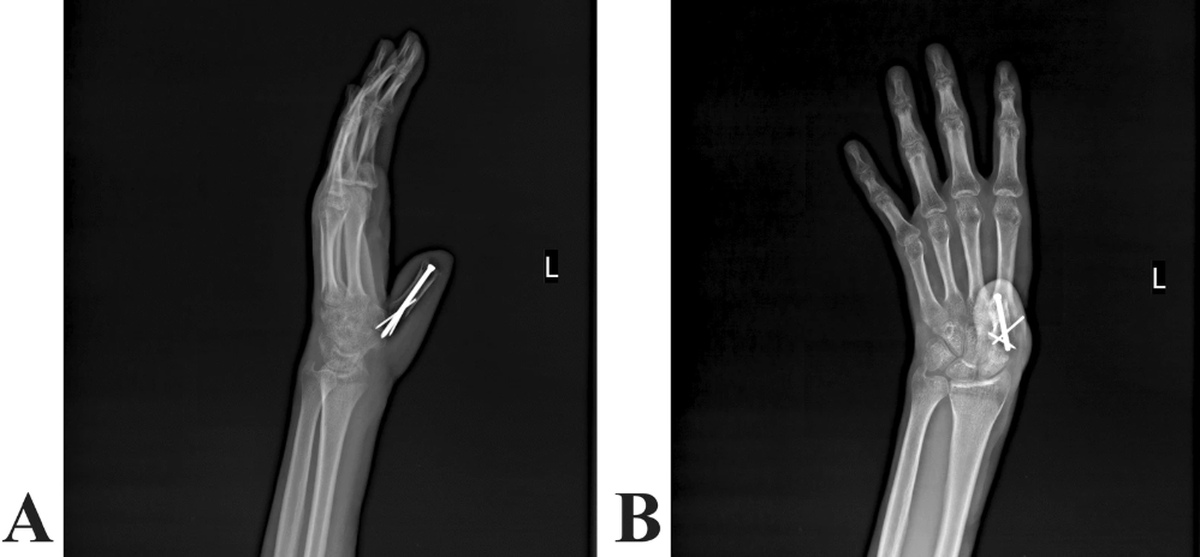
“After extensive physical therapy sessions, complex functions were restored to a reasonable level,” doctors said. “He can now pick up objects, such as a pen, with his reconstructed thumb and write on paper. The patient used his reconstructed thumb daily and expressed satisfaction with the results of the operations.”
Stashing a bone for later, called ectopic banking, is a technique that was first described and used for a serious injury in 1986, according to the case report. Not only does it allow the amputated piece, whether bone or tissue, to stay alive, it also allows time for doctors to plan a reconstruction, instead of trying to make those decisions in the operating room.
The medical team includes Meisam Jafari Kafiabadi, Adel Ebrahimpour, Seyyed Hamidreza Ayatizadeh, Reza Fereidooni, Amirhossein Kamalinia, Mehrdad Sadighi, Farsad Biglari and Seyed Arman Moein.
This story was originally published January 29, 2025 at 11:52 AM with the headline "Doctors hide thumb bone in man’s arm after work injury, then use it to build new one."