‘Rare’ new species found in 16-million-year-old amber. ‘Like finding a diamond’

In the neotropics, a group of rare ants blends in with its surroundings.
The ants are called Basiceros, or dirt ants, and are rarely encountered in the wild. Their bodies are covered with specialized hairs that stick to soil and litter, creating a camouflaged exterior.
Now, a new species has been discovered — but it’s 16 million years old.
A piece of amber from the early Miocene was discovered in the northern mines of the Santiago Providence of the Dominican Republic and then deposited in a natural history museum, according to a study published April 17 in the peer-reviewed journal Proceedings of the Royal Society B.
Inside was a perfectly preserved ant, and one that didn’t look like species previously identified.
“Dirt ants are rare finds in the wild. Finding one today is exciting given how well they stay hidden, but captured in amber, it’s like finding a diamond,” study author Gianpiero Fiorentino said in an April 15 news release from the New Jersey Institute of Technology.
The ant was identified as a worker, relatively small compared to known relatives, and was likely dark brown in color before preservation, according to the study.
It was named Basiceros enana, derived from the Spanish word for dwarf, researchers said.
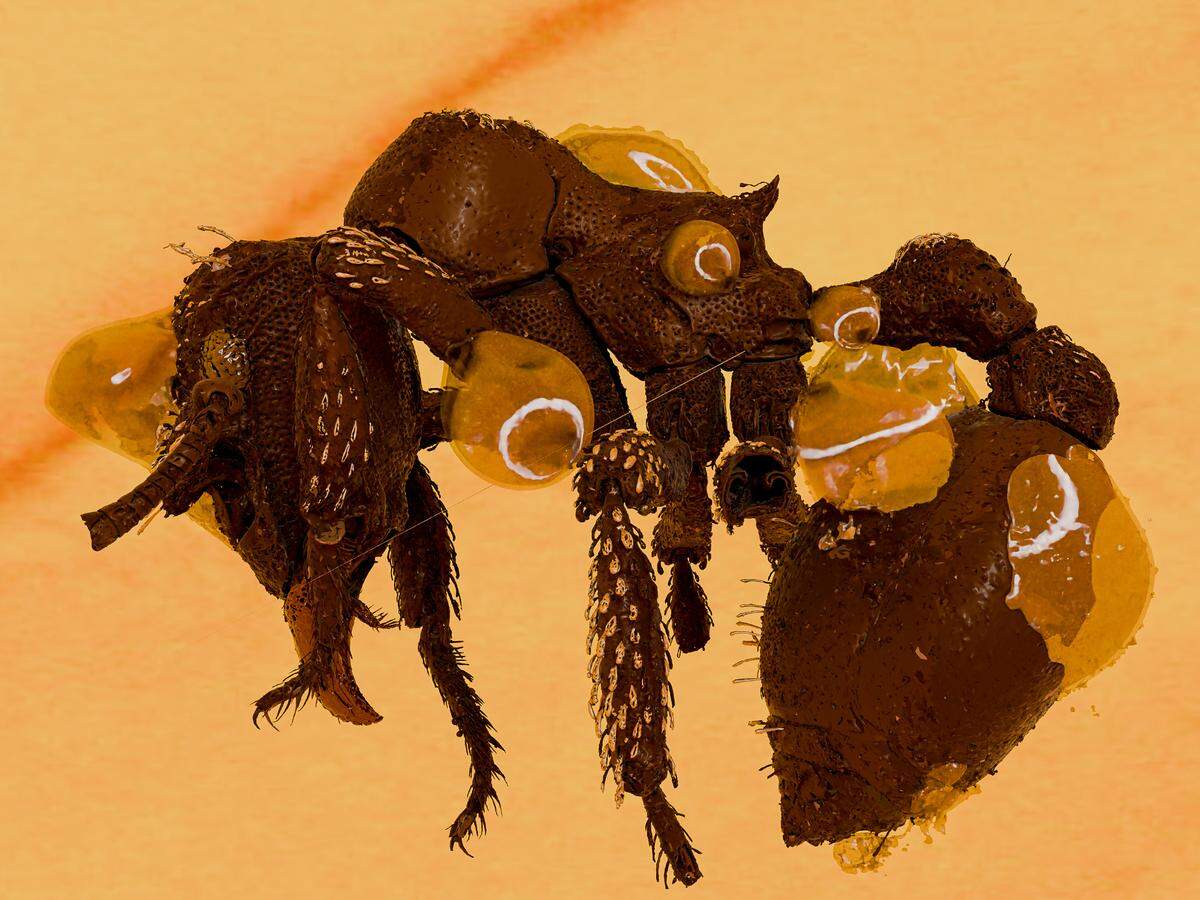
The species is only 5.13 millimeters long (0.21 inches), making it the smallest known species within the Basiceros genus, according to the release.
“Our results show that the embiggening of these ants was relatively rapid,” Fiorentino said. “They almost doubled in size in the span of 20 million years. This goes against the previous belief that the ants started larger and became smaller over time, Fiorentino explained.
The fossil also shows the ant’s ability to hide, or crypsis, has been a survival strategy for millions of years with little change as hairs hold particles close to their exoskeleton.
“What this shows is that playing dead and hiding pays off,” said Fiorentino.
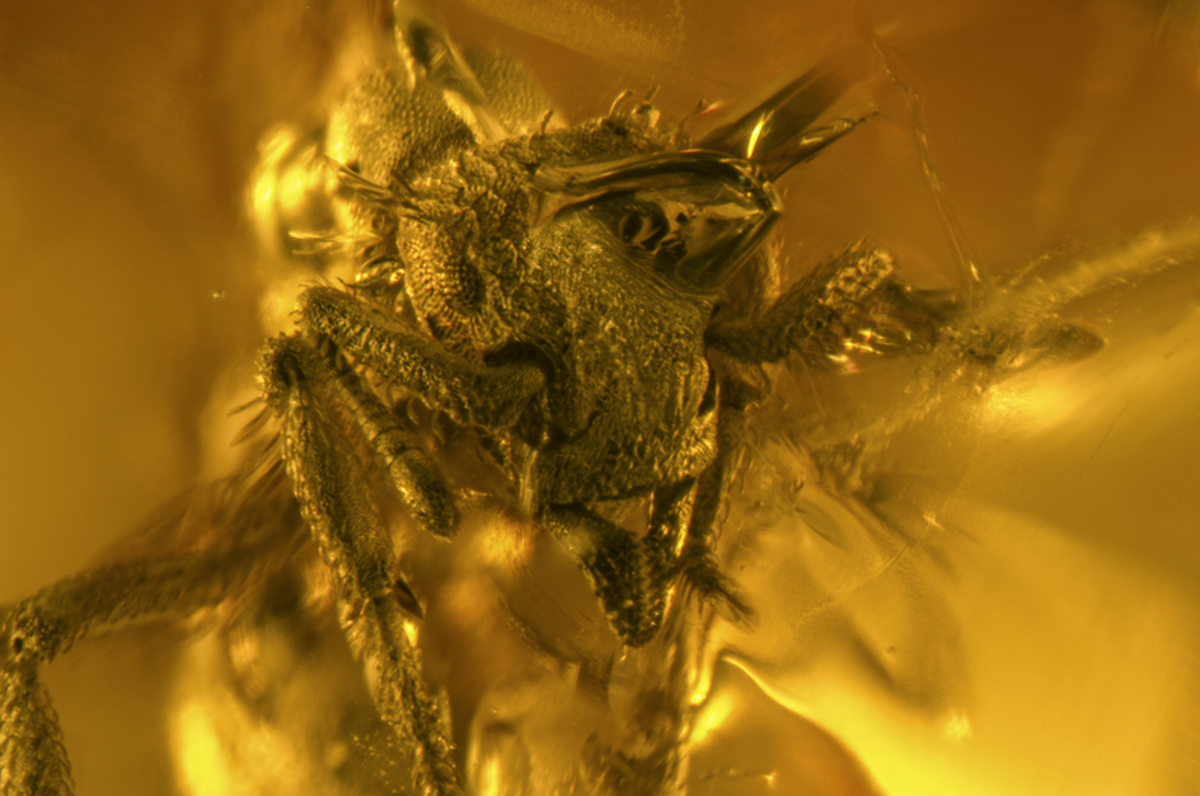
So far, the nine known species of dirt ants had only been found in rainforests from Costa Rica to southern Brazil, but the presence of the new species in the Dominican Republic means dirt ants once lived in the Caribbean, according to the release.
The find raises questions about where dirt ants originated, and how they got where they are today.
“Often lineages will have what appear to be fairly straightforward biogeographic histories. If you find a group of animals that only live in South America up to Costa Rica today, you really have no reason to expect that their early relatives lived in the Caribbean,” study author Phil Barden said in the release. “A fossil like this underscores how the distribution of living species can belie the complex evolutionary history of life on our planet.”
Researchers believe there may have been a land bridge between the Caribbean and Central America that would have allowed the ants to move from the mainland to the islands, but eventually, the species went extinct.
“These ants are predators, and an overall trend that we see from the Caribbean is a loss of predator ant diversity,” Fiorentino said.
The Dominican Republic is a nation in the Caribbean on the east side of a shared island with Haiti.
The research team includes Fiorentino, Barden, Rodolfo Probst, Adrian Richter and Evan P. Economo.
This story was originally published April 21, 2025 at 2:58 PM with the headline "‘Rare’ new species found in 16-million-year-old amber. ‘Like finding a diamond’."