Smoke-dried mummies — more than 10,000 years old — unearthed in southeast Asia
As the spooky season approaches, reruns of “The Mummy” and Halloween decorations represent some of the most famous ancient human remains.
Whether buried deep in a tomb or hanging in a window, the iconic image of a human outline wrapped in cloth has become synonymous with “mummy,” despite ancient Egyptians being far from the only culture to mummify their dead.
Now, new analysis of human remains in southeast Asia finds not only were other ancient cultures using their own process of mummification, but they were doing it thousands of years earlier.
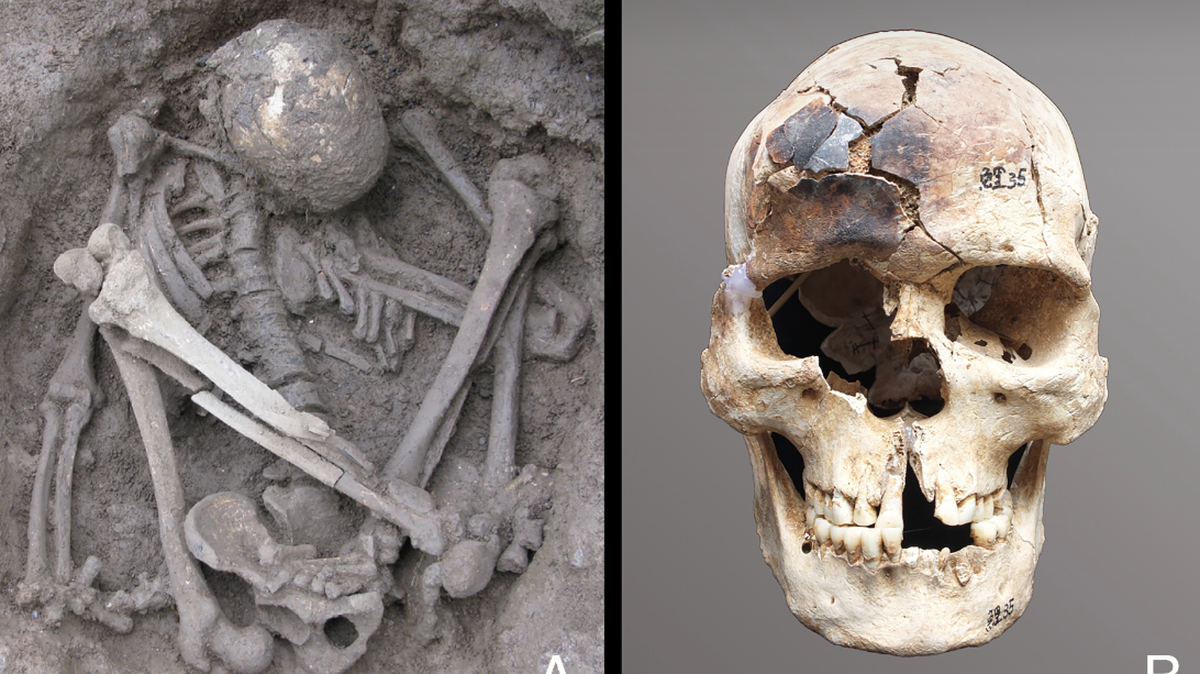
“In southern China and Southeast Asia (collectively, southeastern Asia), Terminal Pleistocene and Early to Middle Holocene (about 12,000 to 4,000 years before present) hunter-gatherer burials feature tightly crouched or squatting postures, sometimes with indications of post-mortem dismemberment,” researchers said in a Sept. 15 study published in the peer-reviewed journal Proceedings of the National Academy of Sciences.
Burials that occurred in the same region during the Neolithic period instead show remains placed on their backs and their limbs extended, researchers said, raising questions about what made these earlier burials unique.
Hoping to answer that question, the research team analyzed 54 pre-Neolithic burials from across 11 archaeological sites in the region, according to the study.
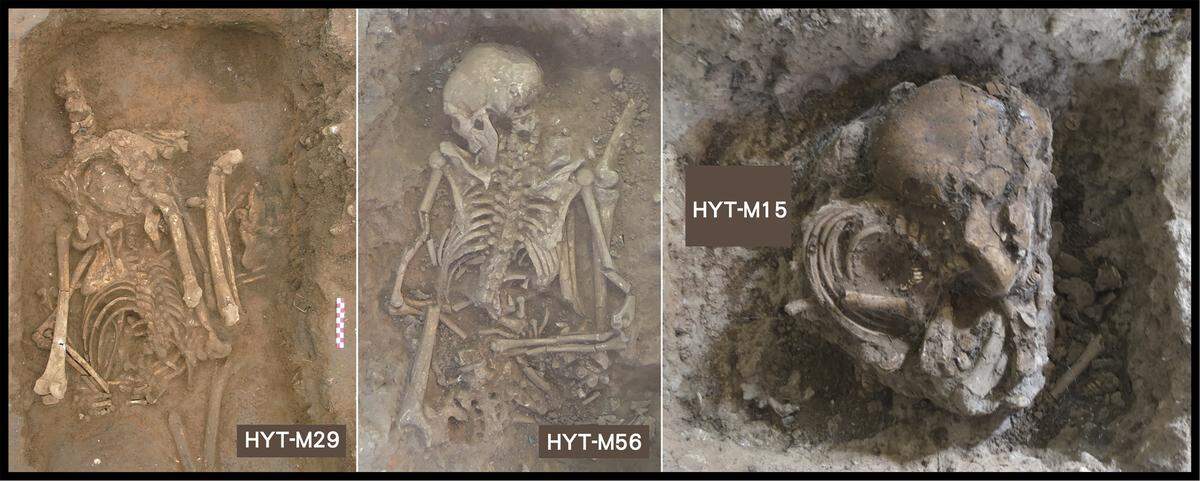
The remains were buried, but found in strangely compact positions, meaning they needed to be altered in some way before their internment, researchers said.
When human remains are buried, empty spaces are created between their bones as the soft tissues decay and disappear over time, according to the study.
“However, our observations at several sites in northern Vietnam and southern China … reveal that many of the hyper-flexed burials were so tightly contorted that no empty spaces existed between limbs and torsos,” researchers said. “This suggests that no soft tissues, apart perhaps from dried skin, remained around the skeletons when they were buried.”
But unlike Egypt or Chile, where extensive mummies have been uncovered, that have dry environments where the drying out can occur naturally, southeast Asia is humid, hot and wet, according to the study.
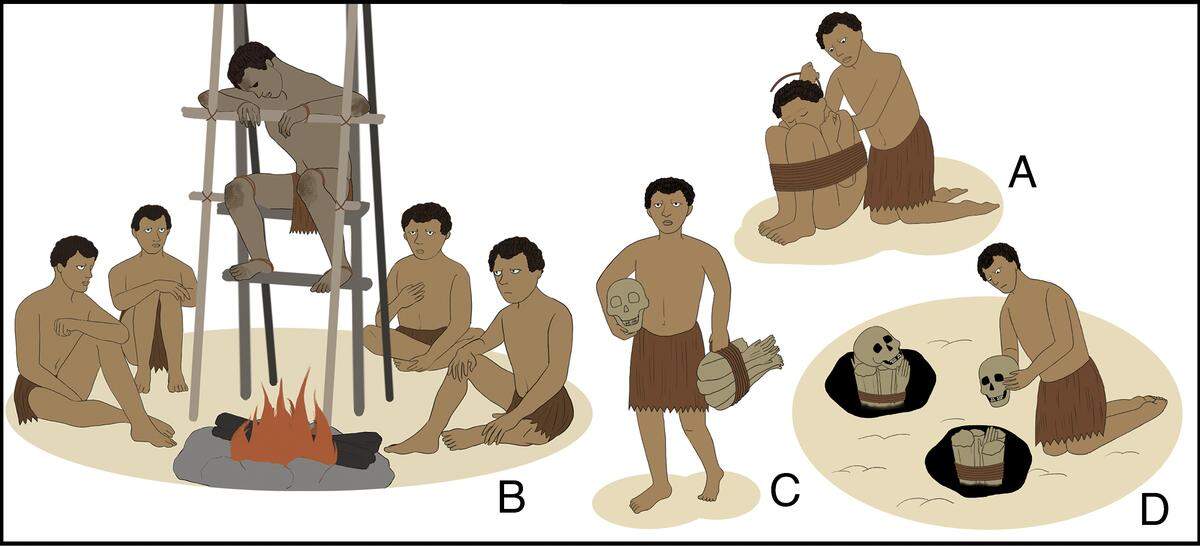
Instead, researchers believe the remains were smoked over a fire to dry out before they were buried.
“Smoked mummification takes about three months, during which time the body is slowly and continuously heated over a low fire,” study author Hsiao-chun Hung told IFLScience.
Researchers wanted to confirm their suspicions, so they headed to Indonesia where this practice is still used today, according to the study.
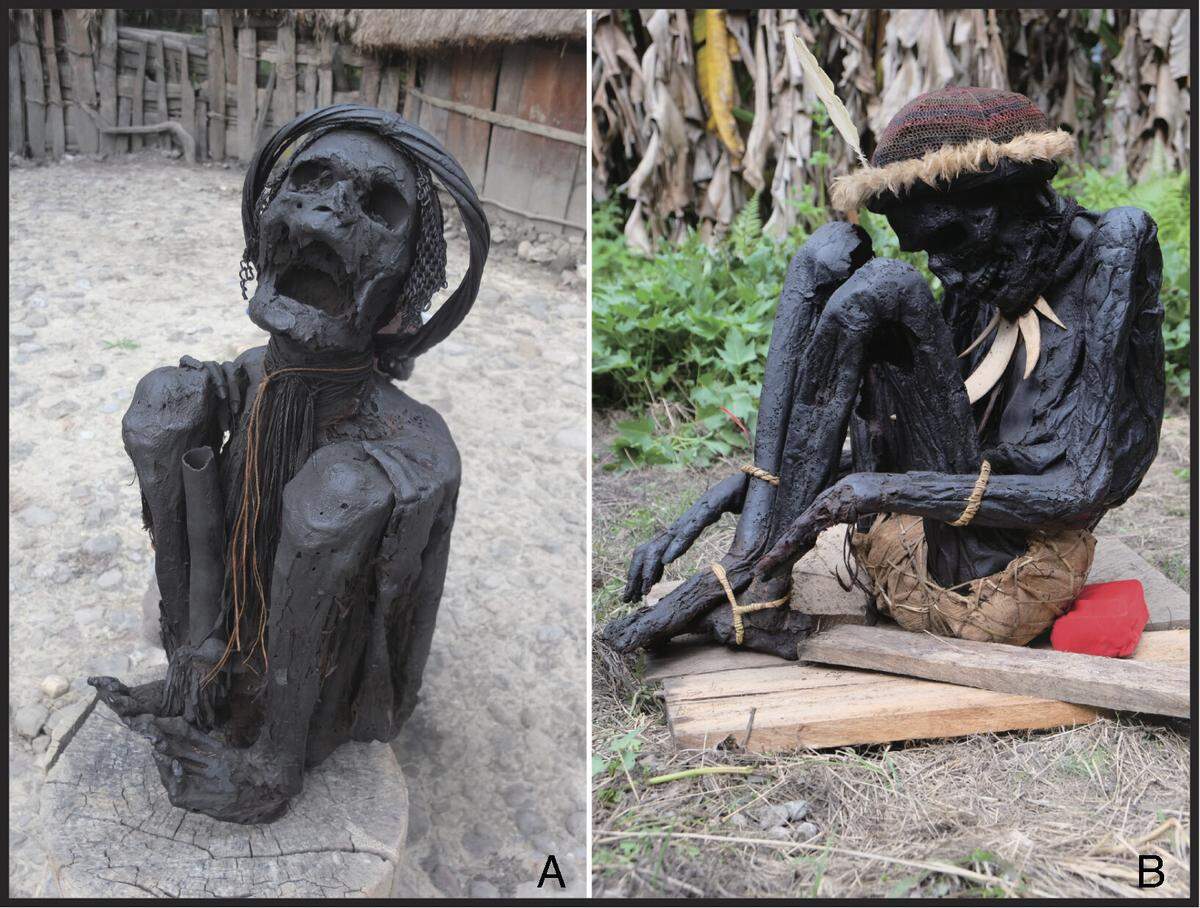
The mummies were created by the Dani and Pumo people who live in the highlands of the Indonesia side of Papua, according to the study.
“The Dani mummies were often tightly compressed with their four limbs bound to the trunk, an action presumably undertaken immediately after death and prior to the onset of rigor mortis, although the actual degrees of flexion varied and some appear to have been unbound,” researchers said. “Among the Dani, the descendants kept the mummy in a special room within the house, and would bring it out on special occasions.”
The Kukukuku people in eastern Papua New Guinea did the same thing, researchers said, and mummified their “revered ancestors.”
Warriors, shamans and village leaders were placed in a seated position above a burning fire for months at a time, according to the study.
The Kukukuku mummies were then placed on a protected ledge or cliff once “sufficiently mummified,” researchers said.
While the mummification process seems to be the same or similar thousands of years apart, the ancient mummies were buried while the new mummies are kept safe.
“Presumably, when they mummified them, they would have put them in the ground fairly quickly, rather than sitting them around the place like people have tended to do in ethnographic times in New Guinea and Australia,” study author Peter Bellwood told IFLScience.
“It is quite possible that we are seeing the descendants of the first modern humans in southeastern Asia,” Bellwood told the outlet. “The oldest dating for these burials is about 14,000 years ago, and these people are, we think, very close to the ancestors of the people who live today as Indigenous Australians and New Guineans.”
Researchers, however, said “one important question still remains,” according to the study.
Is this a shared cultural practice all the way from southern China to Australia, or is it simply a coincidence that cultures separated by space and time would develop the same preservation process in a humid environment?
“Our findings highlight a deep and enduring biological and cultural continuity, linking ancient hunter-gatherer populations in Southeastern Asia with modern Indigenous communities in New Guinea and Australia,” researchers said. “The tradition of smoked mummification serves as compelling evidence of long-term cultural persistence between ancient Southeastern Asian and ethnographic Papuan and Australian mortuary practices.”
The research team includes Hung, Bellwood, Zhenhua Deng, Yiheng Liu, Zhiyu Ran, Yue Zhang, Zhen Li, Yousuke Kaifu, Qiang Huang, Khanh Trung Kien Nguyen, Hai Dang Le, Guangmao Xie, Anh Tuan Nguyen, Mariko Yamagata, Truman Simanjuntak, Sofwan Noerwidi, Mohammad Ruly Fauzi, Marlin Tolla, Alpius Wetipo, Gang He, Junmei Sawada, Chi Zhang and Hirofumi Matsumura.
This story was originally published September 15, 2025 at 5:59 PM with the headline "Smoke-dried mummies — more than 10,000 years old — unearthed in southeast Asia."