
Will this lawsuit cause Kentucky’s state pension fund to collapse?
Kentucky’s beleaguered $2 billion pension fund for state workers, which has only 13% of the assets it needs for future obligations, faces a potential ticking time bomb in the courtroom.
The Kentucky Supreme Court has been asked to decide if Centerstone — the regional mental-health nonprofit in Louisville formerly known as Seven Counties Services — should get to use a bankruptcy reorganization to walk away from its estimated $130 million in liabilities to the Kentucky Retirement Systems, which manages the pension fund. Judges in other courts so far have approved it.
While $130 million is a hefty sum, an even bigger concern for state officials is whether the dozen regional mental-health nonprofits remaining in KRS would use bankruptcy as their own escape route if the Supreme Court permits it for Centerstone. Several have been fighting with KRS in court for years, attempting different strategies to move employees out of the state retirement system and cut their pension contribution costs. But no one else has tried bankruptcy — yet.
Those regional mental-health nonprofits represent about $1 billion of the total $15 billion in unfunded liabilities faced by the state pension fund, known as the Kentucky Employees Retirement System, or KERS. They were among the “quasi-governmental” entities allowed to join KRS over the years, despite some controversy because they are independently run, not part of state government.
“It’s a staggering possibility to consider what could happen. KERS is so far in the hole now, and here’s another pile of bricks that it’s maybe going to have to carry,” said state Rep. Jerry Miller, R-Louisville, co-chairman of the Public Pension Oversight Board.
“Are these retirees going to continue to be paid their pensions if their employer can declare bankruptcy on us? And if so, by whom? Are the rest of us now responsible for them?” Miller asked. “It has a profound impact on the viability of the rest of the pool.”
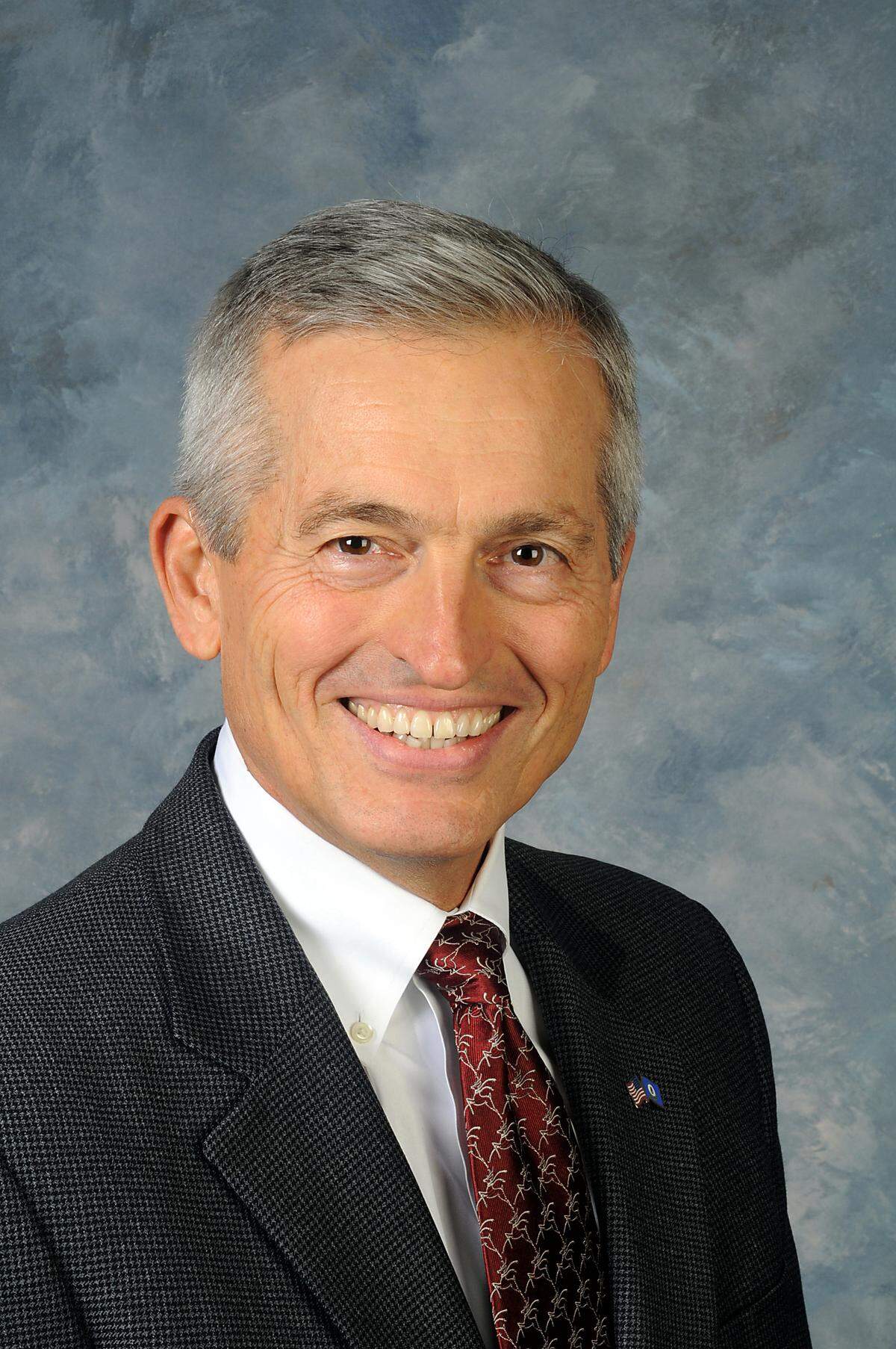
Steve Shannon, who runs a statewide group representing the regional mental-health nonprofits, said he’s not aware of anyone else planning a bankruptcy. To offer some much-needed relied, the Kentucky legislature capped KERS contribution rates for the nonprofits this year at 49 percent of payroll, compared to the 83 percent of payroll that state government agencies must pay, Shannon said.
“The decisions are driven by the individual boards of directors,” said Shannon, executive director of the Kentucky Association of Regional Programs. “But we are trying to work with the retirement system. Our focus is on making it affordable.”
Seven Counties stopped paying KRS in 2013 when it filed for Chapter 11 bankruptcy protection and moved its 1,400 employees into a defined contribution retirement plan, arguing that it no longer could afford the pension fund’s rising contribution rates.
That year, Seven Counties was supposed to pay 24 cents on every payroll dollar to cover the cost of pensions, collectively consuming more than two-thirds of its roughly $100 million budget. The agency’s president, Tony Zipple, called this “an impossible business model” because it left too little money to assist its 33,000 Louisville area clients.
So the financial burden shifted to KRS.
Without any contributions coming from Centerstone, as it’s now called, KRS continues to send benefits to the nonprofit’s retirees — and it’s committed to providing pensions and health insurance for currently vested Centerstone employees as they retire — at a cost to everyone else still in the state retirement system, which is subsidized by state taxpayers.
“As a consequence of Seven Counties’ actions, compliant participating employers are forced to absorb the costs of those retirement payments through increased contribution rates,” said David Eager, KRS executive director.
Centerstone spokeswoman Shannon White declined to comment on the pension situation this week.
KRS spent the last several years legally challenging Centerstone’s bankruptcy reorganization, trying to pry its wallet back open, without success. Judges in the bankruptcy and federal courts all sided with the nonprofit.
“Competing demands have placed Seven Counties’ board of directors in an impossible position,” U.S. Bankruptcy Judge Joan Lloyd of Louisville wrote in 2014. “Seven Counties can perform its charitable mission or pay system contributions that will force it to terminate operations. It cannot do both.”
Last month, a three-judge panel of the 6th Circuit U.S. Court of Appeals in Cincinnati likewise ruled that Centerstone was eligible for Chapter 11 bankruptcy. (KRS since has asked for the full appeals court to reconsider that decision.)
But on the key question of whether that bankruptcy severs its obligation to KRS — whether its pension contributions are required by a contract that can be dismissed or a law that cannot, just as the obligation to pay taxes cannot be waived by bankruptcy — it punted to the Kentucky Supreme Court, asking for that high court’s interpretation of state law.
“We are not aware of any precedent from Kentucky courts that provides clear guidance in answering this question,” the appeals court panel wrote.
“A conclusion that Seven Counties can reject its relationship with KERS could have a significant impact on the fiscal health of the Kentucky public pension system — and therefore on the retirement benefits of many state employees,” it wrote. “The contrary conclusion, that Seven Counties cannot reject its relationship with KERS, may imperil the existence of Seven Counties and the provision of mental health services for tens of thousands of people in and around Louisville.”
As of this week, the Supreme Court had not yet decided whether to take the case. A justice is reviewing the 6th Circuit’s request.
After Seven Counties filed for bankruptcy, the Kentucky legislature created a formal process for nonprofits to leave KRS if they are willing to pay the full amount of their outstanding liabilities. Two major employers have departed through this method, Eager said: Commonwealth Credit Union and Kentucky Employers’ Mutual Insurance, agreeing to pay more than $50 million between them.
However, lawmakers fear that process could unravel if the courts allow nonprofit agencies to leave their retirees behind at state expense through bankruptcy.
State Sen. Gerald Neal, a Louisville Democrat who also serves on the Public Pension Oversight Board, says he sympathizes with Centerstone and KRS alike.
“This is a tough one,” Neal said. “Both have valid concerns. From the state’s point of view, we have an obligation to protect the pension fund and everyone else who is putting their investments into it. On the other hand, on the local level, you have mental health services that Centerstone provides that are crucial to our community.”
“Do we seek a middle ground? Is that even possible here?” Neal asked. “It looks like we’re going to have one winner and one loser. I guess I’m rooting for both.”