
Lexington has a $5.3 million surplus. But the council is socking it away. Here’s why.
Lexington finished the fiscal year that ended June 30 with a $5.3 million surplus, but it won’t be spent anytime soon.
Pressures on the city’s finances — including a bump in pension payments to the state, rising health insurance costs and tax uncertainty — mean the city will put the money into its savings account.
A committee of the Lexington-Fayette Urban County Council voted Tuesday to put the excess money into the city’s reserve funds, buoying the amount the city has set aside to more than $64 million.
In prior years, the council and Mayor Jim Gray’s administration have spent surplus funds on one-time capital projects. For example, in 2015 the council voted to divvy up a $4 million surplus, giving each of 15 council members $266,666 to spend on projects in their districts.
On Tuesday, Finance Commissioner Bill O’Mara warned council members the city needs to save more.
This year, the city had to use one-time funds from pots of money to pay for homelessness and other programs. It needs to replenish those dollars so the programs can continue to be funded through the General Fund, O’Mara said.
Also, the city’s pension payments to the state will gradually climb over the next several years and it needs to put at least $4 million in a reserve fund to cover health insurance costs. Other unknowns include the city’s aging buildings — which have more than $22 million in deferred maintenance needs.
The city’s bond rating agencies also look at the amount of money it has set aside for tough times. That total amount has dropped from $87 million in 2016 to $64 million in 2017. Much of that drop was due to a nearly $17.7 million settlement with the Lexington Fire Department concerning overtime.
“We also have revenues exceeding expenses at about $1.8 million this year,” O’Mara told the council.
Still, some council members said there was about $500,000 of the $5.3 million that the council could set aside for current expenses.
Councilman James Brown listed several spending priorities, including that $2 million the council allocated for an affordable housing program has already been spent; a fund to help developers with infrastructure and other costs for infill development has never been funded; and a fund for sidewalks also needs more money.
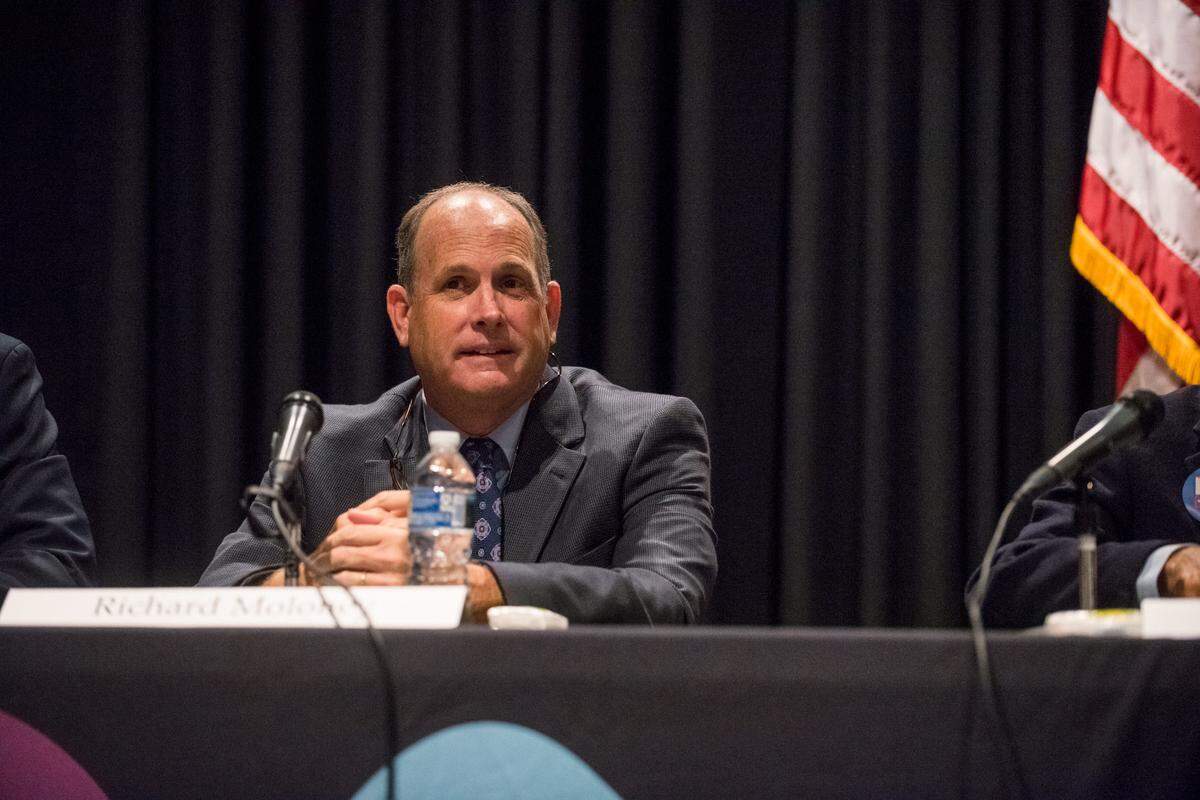
But Councilman Richard Moloney said he felt that saving the surplus was the right thing to do.
More than 600 people are expected to lose their jobs at the end of the year when Trane closes, Moloney said. That will translate to a big drop in occupational taxes, Moloney said.
“That will have a huge impact on our payroll,” Moloney said.
Councilwoman Amanda Bledose agreed with the need to save the surplus funds.
“This building is going to have more and more issues,” Bledsoe said of the government center building, which was built as a hotel in 1918. “I think revenue is going to stabilize if not go down.”
The committee’s recommendation to save the surplus will likely be voted on by the full council in early December.
This story was originally published October 30, 2018 at 4:49 PM.