
Republicans have spent big in the Kentucky governor race. Where are the Democrats?
Last week, the Republican Governors Association reminded any Kentuckian who tuned in to watch the Democratic presidential debates that they have to get through the 2019 race for Kentucky governor first.
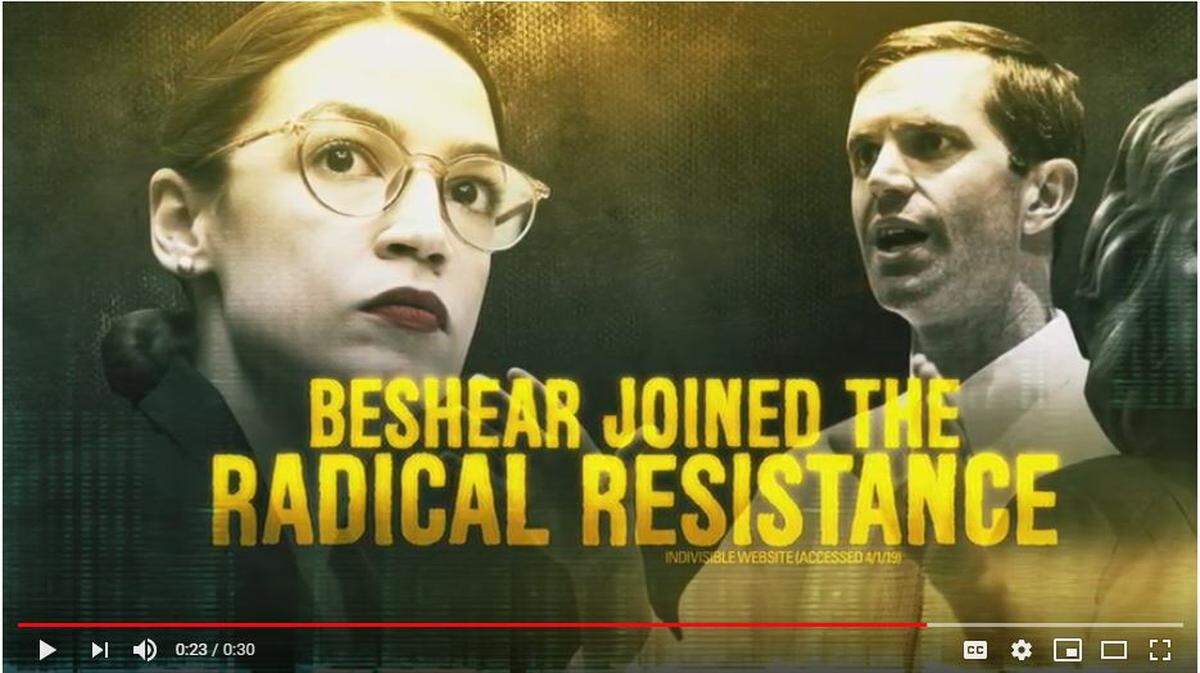
Since the primary, the Republican Governors Association has spent about $2 million on ads attacking Attorney General Andy Beshear, the Democratic nominee for governor. They’ve hit him on the perception of nepotism, his hiring of an aide who later went to prison for accepting political bribes and, in their latest ad, a pledge he made to stop the “negative policies” of President Donald Trump.
Those ads have gone unanswered on TV by Democrats until now, painting a one-sided picture of the race for governor.
The difference in early ad strategy presents a clear contrast in how the national groups are approaching November’s general election. The Democrats, saving their money, hope to make their case to Kentuckians this fall, when they’re more likely to be paying attention. The Republicans, following the traditional strategy of U.S. Sen. Mitch McConnell, are blasting their message early and often in an attempt to control the narrative of the race.
That narrative hinges on both tying Beshear to the national Democratic Party, which is still unpopular in the state, while undermining any lingering good feelings Kentuckians may have for Beshear’s father, former Gov. Steve Beshear, who left office as a popular two-term governor.
“Beshear currently enjoys the lingering benefit growing out of the popularity of his father and ties to the Democratic Party’s past image in the state,” said Stephen Voss, a political science professor at the University of Kentucky. “There’s room to drive a wedge between the old Kentucky Democrats and the modern wing of the Democratic Party.”
The differing approaches of national Republican and Democratic groups (the state political parties often support the campaigns, but rarely go on television with ads) reflects the disagreement among political experts about how much early advertising shapes a race.
“You’ll hear different experts argue that early ads are useless and others say early ads are critical,” Voss said.
David Turner, communications director for the Democratic Governors Association, said the group prefers to air ads later in the election cycle, when more people are paying attention. The conventional wisdom in Kentucky is that voters don’t begin showing interest until August.
The DGA purchased its first ads Friday, when a group named Bluegrass Values made a statewide TV ad buy, according to Medium Buying, which tracks political ad purchases. Bluegrass Values is an unauthorized campaign committee but the group, along with its chairman and treasurer, listed their address as the DGA’s Washington D.C. headquarters, according to the Kentucky Registry of Election Finance.
Turner pointed to three races in 2018 in which Democrats were outspent by Republicans early in the election but went on to win — Colorado, Michigan and Nevada.
“I think we have seen from 2018 that that is where we can have the most impact,” Turner said
But all three of those states elected Democrats in major statewide races, like the Senate, in recent years. Kentucky hasn’t.
Kentucky is unique because of the divide between party registration and party identity. Nearly half of registered voters are Democrats, but they often vote Republican in statewide and national races, Voss said.
“Things are scrambled here,” Voss said. “So that fight over image is a lot more important here than places where people can just use the D or the R.”
Those who argue it is critical to quickly define a political opponent in a negative light point to 2018, when former Marine pilot Amy McGrath challenged U.S. Rep. Andy Barr, R-Lexington, for his congressional seat. For a full month, his campaign and the Congressional Leadership Fund attacked McGrath in TV ads before the Democrats fully responded. The ad blitz helped define McGrath as “too liberal for Kentucky,” eliminating her early lead in the race and helping Barr eventually win by three percentage points.
The RGA seems to have embraced that approach. Communications Director Amelia Chassé Alcivar said the group has the “resources to define him (Beshear) early, which is exactly what we are doing.”
“The RGA is proud to support governors who are delivering results for the people they serve, which is why we are strongly supporting Governor Bevin,” Chassé Alcivar said. “Andy Beshear would take a hard left turn in the opposite direction and that’s something Kentucky cannot afford.”
Though they’re only now joining the battle on TV, national Democratic groups haven’t been completely absent in Kentucky. American Bridge, a national political action committee that supports Democratic candidates, has had a person following Bevin at major events with a video camera to catch any slips he might make, and had someone follow state Rep. Robert Goforth, R-East Bernstadt, as he campaigned hard against Bevin in the Republican primary.
The group has released digital ads against Bevin — calling him corrupt and highlighting his feud with the lieutenant governor — as well as a website knocking the governor.
Democrats argue the RGA’s early ads only indicate that Bevin is starting the race at a disadvantage. Bevin is considered one of the least popular governors in the country, making him vulnerable despite Kentucky’s conservative-trending electorate. He won just 52 percent of the vote in the Republican primary against a relatively unknown challenger.
“The RGA’s desperate smearing of Attorney General Beshear shows that even they know this governor can’t win on his failed record of gutting health care, tearing down public education, and bullying everyone from teachers to his own lieutenant governor,” said Beshear campaign manager Eric Hyers. “This slash-and-burn approach won’t work because Kentuckians know Andy Beshear has been in their corner as attorney general, fighting to protect their pensions, public schools, and access to affordable health care.”
Eventually, Kentuckians will be inundated by ads supporting both candidates. U.S. Senate Majority Leader Mitch McConnell, who has often overcome his own political unpopularity by bulldozing opponents with negative ads (there is a McConnell adage that goes “if you throw a pebble at me, I’ll throw a boulder at you”), said the limited number of statewide races in 2019 means national groups will pour resources into Kentucky.
“It’s not like an even numbered year when you have a whole lot of races and a whole lot of decisions about where to play,” McConnell said. “Mississippi and Louisiana and Kentucky are going to be awash in commercials all year long.”
This story was originally published July 5, 2019 at 1:55 PM.