Kentucky’s bail system is broken, clogging overcrowded jails. Will lawmakers fix it?
Kentucky lawmakers must decide this winter whether to fix a broken bail system that is clogging the state’s dangerously overcrowded jails with thousands of people who can’t afford to buy their freedom. But it’s unclear if they will support reform legislation given how those efforts have failed in the past.
“I think there’s a lot of nervousness about attempting a full overhaul, in part because of the push-back we’ve seen from judges and prosecutors,” said Josh Crawford, director of criminal justice policy for the Pegasus Institute in Louisville.
Crawford worked on last winter’s House Bill 94, a bail-reform measure that died without getting a vote in the House Judiciary Committee after local court officials opposed it.
The bill’s sponsor, state Rep. John Blanton, R-Salyersville, said he has no plans to try again this winter, and he doesn’t know of any legislative colleague willing to pick up where he left off. There is early talk among lawmakers of releasing some jail inmates into mental health and substance abuse treatment, but that proposal might not be ready for the 2020 legislative session.
“Introducing the (bail-reform) bill at least moved it into the light and started a conversation,” Blanton said. “We’re going to have to find a system that works and that’s consistent. We’re going to have to take the plunge at some point. We can’t keep putting it off.”
On any given day, Kentucky’s county jails hold more than 10,000 people who haven’t been convicted of a crime. They’re charged and awaiting the resolution of their case, which might be a year or more in the future. Most of them pose little risk, according to a report issued in September by the Kentucky Administrative Office of the Courts.
But they can’t afford bail.
They don’t have the $1,000, $5,000 or whatever sum a judge decided is appropriate to secure their freedom so they can hang onto their jobs, vehicles and homes and help their lawyers prepare their defense. People who have money get out; people who don’t are stuck.
Alex Elswick, a recovering opioid addict, recently shared his own bail story with a gathering of Lexington activists. Arrested on drug charges at the start of a three-day holiday weekend, Elswick said, he was able to go home because his parents produced “$50,000 cash in a suitcase” despite the banks being closed. Elswick noted that his family is white and affluent, “and that made the difference.”
“At this juncture, the only reason I’m outside the jail cell and the other guys I was locked up with are still inside the jail cell is money. Right? It’s money,” Elswick said. “It’s not the nature of the charges. It’s our wherewithal.”
By comparison, bail-reform advocate Shameka Parrish-Wright, speaking to the same gathering, said she felt pressured into signing a bad plea deal at age 18 after spending 38 days in jail. Parrish-Wright said she was arrested for using a weapon to fight back against her domestic abuser. She did not have $1,000 for bail, so a guilty plea was her only way to avoid waiting for months in lockup.
“We know that by the third day in jail, somebody’s life is falling apart,” Parrish-Wright said. “There are people incarcerated pre-trial who end up sitting in there so long that they are serving more time than the judge would have given them for their punishment.”
Data shows that bail decisions in Kentucky are arbitrary from courtroom to courtroom, depending on the discretion of the judge.
In Martin County, 68 percent of defendants are released before trial without having to pay bail. But at the other end of the state in McCracken County, only 5 percent get that chance. In Fayette County, which has a team of judges, a defendant’s chances depend on who is randomly assigned to hear his case. Overall, just 18 percent of Fayette County defendants are released without bail.
Also, there is no rational connection between the bail amounts assigned by judges and the risks that defendants are believed to pose either for re-offending or failing to appear in court, according to a study this year by the Kentucky Center for Economic Policy in Berea. Defendants who are rated as low, medium and high risk all are about as likely as each other to get bonds set at the same levels.
“By law, a person who is considered low or moderate risk for failing to appear in court or being rearrested is supposed to be released without money bail,” said Ashley Spalding, a senior policy analyst at KCEP who authored the bail study.
“If this happened, around 90 percent of people would be released pre-trial in Kentucky without money bail,” Spalding said. “However, what we see happening is just 40 percent of cases result in release without money bail statewide.”
Judges have various options when defendants are charged. Among them, they can release the defendant on his own recognizance, ordering him to return for future court dates; set an unsecured bond that only has to be paid if court dates are missed; require a set amount of cash bail that must be paid up front; or allow the defendant to pay only 10 percent of the assigned cash bail.
Many Kentucky jails already are badly overcrowded and a terrible strain on county budgets, in large part because the state Department of Corrections uses the jails to hold half of the state inmate population of more than 24,000.
Parking a pre-trial defendant in jail for a year might seem like the most cautious alternative, but it surely isn’t the cheapest. Kentucky jails report a daily incarceration cost per inmate that ranges from $36.70 to $45.70, depending on the programs they offer. Even at the low end, that’s $134 million a year in jail spending in order to house the current pre-trial population.
Failed reform effort
Kentucky lawmakers have passed over bail reform attempts in recent years. Most recently, last winter’s HB 94 would have clarified existing law to stress that cash bail could be imposed only to ensure that a defendant will come back to court for future hearings and trial.
Under the bill, if a risk assessment tool (essentially, a statistical score-sheet) used by Kentucky judges determined that a defendant was either a low or moderate risk, the defendant would have been released without bail. However, judges who worried that a defendant posed a public safety threat could have held a hearing and made the case, based on evidence, for a bail assignment that likely would keep the defendant in jail until trial.
“The bill itself, to be clear, does not do away with money bail in Kentucky,” Blanton, the bill’s sponsor, said on KET’s “Kentucky Tonight” during the 2019 General Assembly.
“We need to make sure that an adequate bail, if it’s required, is set,” Blanton said. “But we don’t want a bail system that sets a bond that is too high and one person simply isn’t able to afford that bail while someone else of greater means could make that bail if they were facing exactly the same charge and had exactly the same criminal history.”
The House Judiciary Committee heard testimony on the bill in February from local court officials who said they opposed it because they don’t want to surrender their authority to make bail decisions based on their personal knowledge of their communities and the defendants standing in front of them. They are the ones who will be held responsible if something goes wrong, officials said.
“We don’t think that any algorithm or any tool ought to be used to determine, to just input at the front end and output at the back end and it spits it out and that determines whether or not you get out of jail,” Kenton Commonwealth’s Attorney Rob Sanders told the House panel.
“Not every Class D felony is equal, not every Class C felony is equal, and the judges need the discretion to treat them as appropriately given their individual circumstances,” Sanders said.
The leaders of the Kentucky Senate and House judiciary committees say they are discussing one alternative to traditional bail reform.
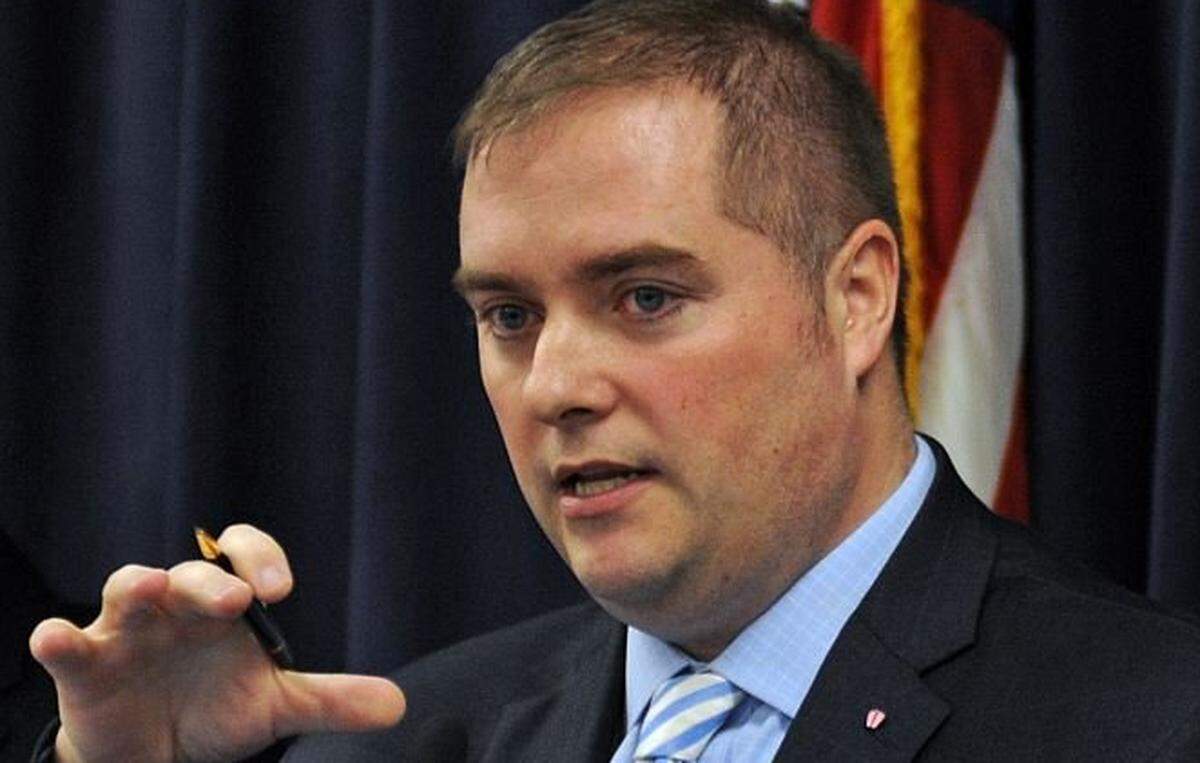
It’s possible the state could establish a pre-trial release program for some eligible jail inmates that offered mental health or substance abuse treatment, to get people back into the communities while also addressing the problems that led to their arrests, the lawmakers said recently.
“These are people who have not been found guilty yet, who are struggling with substance use disorder, mental health disorder, behavioral disorder,” said Senate Judiciary Chairman Whitney Westerfield, R-Hopkinsville. “So what we’re looking at is whether there’s some sort of way we can get some of them out of jail and into some sort of program where they could keep their job and obey all of the release conditions they’re supposed to.”
However, this idea is still in the early discussion stage, Westerfield said. Lawmakers aren’t sure how many inmates it might include, what additional treatment capacity might be needed, what that might cost or how readily the justice system would cooperate.
‘Pay for freedom’
If Kentucky’s legislature does not fix the bail problem this winter, then Parrish-Wright, the reform activist, is working on a short-term solution.
In 2018, she and several other people launched the Louisville chapter of The Bail Project. It’s a national nonprofit group that works to “disrupt” bail by raising tens of millions of dollars that are used to free carefully screened people from jail. The money establishes a revolving loan fund in local communities, relying on freed defendants to make their court appearances so that their bail money is released to the group and can be used again and again.
In Louisville, where The Bail Project has freed more than 1,600 people from jail over the last 18 months, the return rate so far is 93 percent, Parrish-Wright said. Because many defendants are poor people without reliable transportation, she added, she sometimes drives clients to the Jefferson County courthouse herself.
Being stuck in jail for many months doesn’t just cost people their jobs, vehicles, homes and family connections, Parrish-Wright said. Prosecutors use prolonged confinement as leverage to force defendants into harsh plea deals they never would have considered if their heads were resting on their own pillows at night, she said.
“Right now, we are helping to get people out who have just had babies, who have children at home, who give their Aunt Mary her medications, who are taking her to her appointments,” she said.
Parrish-Wright told about one of her colleagues bailing out a small group of people from the Louisville jail that week and overhearing a woman in the lobby tell officials that she finally had the money necessary to secure the release of a relative. The Bail Project employee recognized the relative’s name and realized that he was one of the inmates for whom the group had just paid. The woman could keep her cash.
“She was so happy, because now she could use the money to get their car out of impound and go to work,” Parrish-Wright said. “Those are your choices in poverty: Pay for the car to get to work or pay for freedom. It makes me want to cry.”
However, Parrish-Wright said, her group will keep lobbying Frankfort for bail reform so its work won’t be needed anymore.
“We do not want to become an arm of the justice system. We don’t want the judge to say, ‘Send them to The Bail Project.’ We want to work ourselves out of a job,” she said.